
PRODUCTHEAD: Forever problems and earning your keep
» Understanding cultural lenses is a must when working across geographical teams » Financially viable products…
» Understanding cultural lenses is a must when working across geographical teams » Financially viable products…
» Thinking purely in problems to solve can limit you » The words you use to…
» A prototype expresses a product concept far better and quicker than a product requirements document…
» The uncertainty of a problem should influence how we respond to it » Misdiagnosis of…
» Take a systematic approach to evaluating multiple solutions to the same opportunity » ‘Assumption’ is…
» Discovery is about understanding the problem space experienced by people » When on a tight…

At best, organisations do a bit of user research up front and no more, then set…
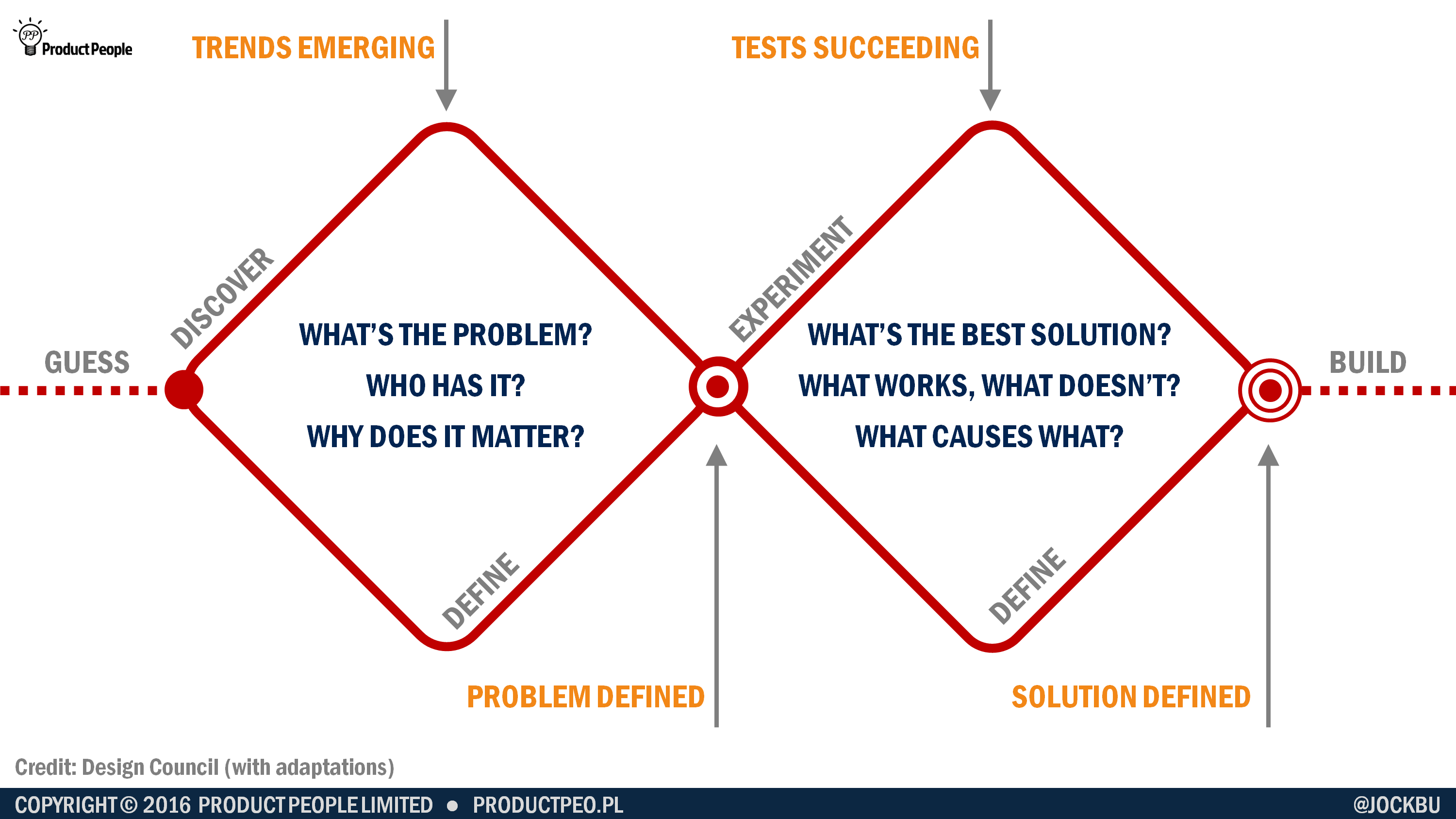
The more closely we examined the problem, the more complicated it became. When this happens to…

“Are you seeing any key trends from the user perspective that companies need to be thinking…
I was recently asked this question: During the problem exploration phase, what kinds of questions should…
