
PRODUCTHEAD: AI usage and the ‘bottleneck’
PRODUCTHEAD is a regular newsletter of product management goodness,
curated by Jock Busuttil.
meeting in the product #
every PRODUCTHEAD edition is online for you to refer back to
tl;dr
In complex human systems the constraint is often policy, mindset, or coordination, not a single bottleneck
Being the “human in the loop” means having genuine authority, time to think, and understanding the bigger picture well enough to question the system
hello
I’m about three levels deep in distractions at the moment. I got distracted from writing a long go-to-market piece by thinking about how AI agents are prone to forget their context between tasks – something I can relate to. Then I distracted myself again by starting another long-form article about how information overload in the cockpit for pilots holds many parallels for product people right now, and practical steps to do something about it.
Oh, and I’m very pleased that I’ve got the rights to The Practitioner’s Guide to Product Management back, concluding a process that has taken nearly two years. It means I’m free to write a well-overdue second edition. When the book was published in January 2015, I’d only been freelancing for a couple of years and had just started work at the UK’s Ministry of Justice. There’s so much more I’ve learned since writing the book that I want to share.
So many distractions! But all worthwhile ones.
For you this week #
John Cutler is peeved. Why? Because everyone is insisting on oversimplifying all the challenges of adapting to a world with AI in it to a matter of ‘the bottleneck shifting’. The reality is more complex, but admittedly harder to wrap your CEO’s head around. And that’s why the ‘bottleneck’ narrative is becoming a meme. What we’re really seeing is how the system of product creation as a whole is having to reorganise in response to AI.
Tey Bannerman has published a couple of useful ways of thinking about how we use AI on a day-to-day basis. One is a way of thinking about how and when to have a ‘human in the loop’, which balances the nature of the task with the negative impact if it were to go wrong. The other is his description of the four modes of working with AI: compression (of information); expansion (of options); reflection; and execution. He breaks down 100+ task-based scenarios into principles for thinking and sample prompts.
Back to John Cutler for an encore. John gave a talk recently about how most people using AI are either operating in ‘single-player mode’ (one person using AI, no context shared) or with shared context across a team, but still with individuals using AI in isolation from each other. He suggests that we should strive for true multiplayer use of AI, where in-person collaboration across teams is restored, and understanding, reasoning and decision-making are shared across people.
One of the articles I’ve found helpful for understanding a particular technological leap in agentic AI is this excellent summary by Allan Smeyatsky. The problem was that AI agents are forgetful between tasks and need to be reminded of context before tackling the next task. This constant need for reminders was resulting in a sprawl of markdown files that was becoming increasingly difficult for developers to manage. So amongst others contributors, Steve Yegge and Geoffrey Huntley came up with a solution for the amnesia problem. Steve’s own articles are worth your time also, although they come across like he was irresponsibly caffeinated while writing them.
Speak to you soon,
Jock
what to think about this week
The Bottleneck Strike Again! [sic]
My goodness. If I see another slide with a 2005-era SDLC diagram sprinkled with little AI logos and a bunch of words suggesting “the bottleneck has moved” or that this has all been figured out, when in reality every week there’s something new like Loop Engineering, or _____________.
I’m trying to understand why we are so quick to be seduced by the idea that “engineering is no longer the bottleneck.”
Something has changed, but we don’t know what the heck is going to happen
[John Cutler / The Beautiful Mess]
“Human in the loop”.
I hear and this phrase dozens of times per week. In LinkedIn posts. In board meetings about AI strategy. In product requirements. In compliance documents that tick the “responsible AI” box. It’s become the go-to phrase for any situation where humans interact with AI decisions.
But there’s a story I think of when I hear “human in the loop” which makes me think we’re grossly over-simplifying things. It’s a story about the man who saved the world.
What are you optimising for, and what’s at stake?
Also: The four modes: a framework for working with AI tools
[Tey Bannerman]
Single Player to Multiplayer: AI, Context and Collaboration
Product expert John Cutler delivers a thought-provoking talk on one of the most underexamined risks of the AI boom: that the same tools promising to supercharge teams are quietly pushing people into single player mode.
Using a sci-fi movie framing and cognitive science concepts like the four E’s of cognition (embodied, embedded, extended, and enactive), John makes the case that real understanding isn’t something individuals bring to a room — it’s something teams produce through interaction.
[VIDEO] Resist the urge to isolate
[John Cutler / ShipSummit | Rise8]
The Architectures of Agentic Persistence: A Deep Dive into Gas Town, Beads, and the Ralph Wiggum Ecosystem
The software engineering landscape of 2025 and 2026 has been defined by a fundamental transition from manual code construction to the orchestration of autonomous agentic swarms. This evolution is perhaps most vividly embodied in the technical ecosystem developed by Steve Yegge and the broader community of ‘vibe coders.’
Central to this paradigm shift is a triad of architectural components: Beads, the distributed memory layer; the Ralph Wiggum loop, the execution primitive of naive persistence; and Gas Town, the multi-agent orchestration framework designed for industrialized software production.
Together, these tools address the inherent cognitive limitations of large language models (LLMs), specifically their propensity for ‘amnesia’ and their performance degradation over long context windows, by externalizing state into version-controlled, structured data planes.
Solving AI agents’ amnesia problem
[Allan Smeyatsky / LinkedIn]
recent posts
We’re all addicted to AI, but it’s going to be okay
We seem to stuck in a contradiction in which we worry about AI’s effect on our critical thinking, while finding it equally hard to resist using. Why is that?
[I Manage Products]
Canary in the mine: AAA game developers are unionising
Product management has had its own fair share of problems over the last few years. Nevertheless, there are early warning signs from AAA game studios that there may be another storm brewing in tech for us to weather.
Union-busting just isn’t a good look
[I Manage Products]
can we help you?
Product People is a product management services company. We can help you through consultancy, training and coaching. Just contact us if you need our help!

Helping people build better products, more successfully, since 2012.
PRODUCTHEAD is a newsletter for product people of all varieties, and is lovingly crafted from a book to call my own.
Read more from Jock
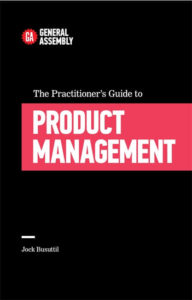
The Practitioner's Guide To Product Management
by Jock Busuttil
“I wish this book was published when I started out in product management. It gives a really wonderful overview of what product management is and involves on a day to day basis.”
— Keji Adedeji, product leader & coach

Jock Busuttil is a product management and leadership coach, product leader and author. He has spent over two decades working with technology companies to improve their product management practices, from startups to multinationals. In 2012 Jock founded Product People Limited, which provides product management consultancy, coaching and training. Its clients include BBC, University of Cambridge, Ometria, Prolific and the UK’s Ministry of Justice and Government Digital Service (GDS). Jock holds a master’s degree in Classics from the University of Cambridge. He is the author of the popular book The Practitioner’s Guide To Product Management, which was published in January 2015 by Grand Central Publishing in the US and Piatkus in the UK. He writes the blog I Manage Products and weekly product management newsletter PRODUCTHEAD. You can find him on Mastodon, X (formerly Twitter) and LinkedIn.