
Canary in the mine: AAA game developers are unionising
Product management has had its own fair share of problems over the last few years. Nevertheless, there are early warning signs from AAA game studios that there may be another storm brewing in tech for us to weather.
In this article
- Introduction
- It’s not exactly been a walk in the park recently
- What could be coming next?
- Every launch is ‘make or break’
- Rockstar Games: union-busting or gross misconduct?
- Nintendo’s two-tier workforce
- Collective protection at ZeniMax
- Brain drain
- Union-busting just isn’t a good look
- Final thoughts
- Further reading
It’s not exactly been a walk in the park recently
The last few years post-pandemic have been somewhat turbulent for the product management profession. A surge in the popularity, coupled with no real bar to entry for blaggers created over-supply, and – with the benefit of hindsight – a giddy hiring spree while interest rates were low to zero meant that a job market correction through mass layoffs was always on the cards.
The already messy state of the art has only been muddied further. There has been a sudden lurch to the political right, and a resurgence of the broligarchy with their disdain for anything standing in the way of their company valuations and profits. Add to all that the baseless belief that generative AI in its current form can escape the confines of its large language model and replace true human creativity and empathy. For a little while, then, the product management imperative to be humane above all else was seen by some as either irrelevant or able to be approximated with AI technology.
It’s not all doom and gloom, though.
As at the time of writing, the job market for product managers does seem to be stabilising. There may still be hundreds of applicants for each role advertised, however there genuinely seems to be more roles at all levels becoming available again. And while it may be wishful thinking on my part, it would also appear that the horde of superficial blaggers have found out the hard way that the job involves somewhat more than parroting ‘outcomes over outputs’ and have gone off to bother another profession.
What could be coming next?
For years, the AAA games industry lived inside a bubble of its own making. It was a world of tech exceptionalism, in which developers were treated – and saw themselves – as elite creatives rather than traditional workers. Companies fostered a myth, the ‘Californian Ideology’, which celebrated individual genius and entrepreneurial risk-taking (the so-called ‘rock star’ developer), as a way to hide the inherently precarious job security of the industry. With each developer believing they were immune to firing, this served as a powerful cultural barrier to unionisation.
That bubble has burst.
Between 2022 and 2025, an estimated 45,000 jobs were lost as the industry underwent a brutal reset. This mass instability triggered a wave of unionisation, and in turn has led to a series of high-profile, allegedly retaliatory firings. This could be signalling the end of the Californian Ideology, initially for game studios and potentially for the broader tech industry.
Every launch is ‘make or break’
Why is this happening now? To put it simply: the numbers no longer add up. During the pandemic, the game industry experienced a surge in demand (everyone was stuck at home), leading to aggressive hiring and massive acquisitions. But as the world reopened, that growth proved unsustainable.
Today, the stakes are higher than ever. AAA game budgets have ballooned; where a top-tier title used to cost $50-150 million, modern projects like Call of Duty or Grand Theft Auto VI can surpass $250 million, with total investments, including marketing, reaching up to $660 million. All this investment is front-loaded. In product management terms, AAA game development doesn’t do iteration – it builds up to a single ‘big bang’ launch. Few titles recover from a botched release.
In this context, senior leadership has become increasingly intolerant of internal disruptions – such as unions – that might threaten production timelines and the ability to unlock their return on substantial investment.
Rockstar Games: union-busting or gross misconduct?
Things reached breaking point at Rockstar Games, the developer behind the Grand Theft Auto series. In late 2025, the studio fired approximately 34 employees across its UK and Canadian offices. The Independent Workers’ Union of Great Britain (IWGB) claims these firings were a calculated move to crush a union that was nearly at the 10% membership threshold required for statutory recognition in the UK. Rockstar’s parent company, Take-Two Interactive, insisted the dismissals were for “gross misconduct” involving the leaking of confidential game features on a private Discord server.
At a preliminary hearing, the Glasgow Employment Tribunal denied interim relief* to the fired workers. Judge Eccles noted it was not likely that the union could prove at that stage that union membership was the principal reason for the firings, partly because Rockstar had also fired non-union members and kept other union organisers.
* In the UK, continued payroll and working visa entitlement during the legal process
Nintendo’s two-tier workforce
Nintendo of America faced its own battle. The company has long relied on a cyclical employment model for its army of contractors, who handle everything from game testing to customer support.
Workers allege that Nintendo uses 11-month contracts with mandatory two-month breaks to avoid hiring people as full-time staff with benefits. In both 2022 and late 2025, the US National Labor Relations Board (NLRB) received complaints alleging that Nintendo retaliated against workers who discussed unionisation. While Nintendo settled a 2022 case, they consistently maintain that any terminations were strictly due to breaches of confidentiality.
article continues after the break
Collective protection at ZeniMax
Not all these stories have the same ending. ZeniMax Media (a Microsoft subsidiary) provides a look at what happens when a union is actually recognised.
When Microsoft announced mass layoffs in 2025, the Zenimax Workers United-CWA was able to negotiate significant protections: laid-off workers were kept on the payroll for two additional months to allow for bargaining; displaced workers were given a 18-month priority guarantee for any relevant future job openings; and the union secured transfers for 25 people who would have otherwise been unemployed.
Brain drain
The long-term effects of these retaliatory tactics go beyond a few legal battles. The AAA game industry is (as of late 2025) facing a massive talent exodus. Data from 2025 suggests that 39% of junior-level professionals left the industry entirely in a single year.
When young talent sees record profits paired with zero job security and aggressive anti-union stances, they move to other sectors like Fintech or more general software engineering. At a point when games are becoming more expansive and complex to build, there may be no new generation of senior developers left to build them.
The turmoil and pressure of the mid-2020s have fundamentally changed the outlook of game developers. They are moving away from individualistic careers toward a collective labour model, demanding a stake in an industry they helped build.
Union-busting just isn’t a good look
In the US, ‘at-will’ employment makes it notoriously difficult to prove retaliation. In any case, the penalties for illegal firings are often seen by corporations as simply a small, inconvenient tax to pay in order to keep unions out.
The law is more protective in the UK, requiring dismissals to be both procedurally fair and substantively justified. However, as the recent Rockstar case shows, ‘mixed-motive’ firings can still be used to cast doubt and bypass immediate legal protections for affected workers such as interim relief.
It looks like the game developers are not on their own. In the US, Gallup research from 2023 suggests that broader public approval for unions has reached levels not seen since the mid-1960s, particularly with younger workers. Major corporations face increasing public scrutiny for allegedly using aggressive union-busting tactics. In 2022, Harris Poll identified that 42% of Americans said they would be less likely to shop at a company with a reputation for blocking worker unionisation.
Final thoughts
If nothing else, the last few years have demonstrated that there is an established global community of broadly like-minded product practitioners, all struggling coping with the challenges of their respective companies and markets. Despite there typically only being one or a small handful of product managers in any given organisation, it is now comparatively easy to connect with other product people both locally and globally. We are no longer individually isolated and unsupported.
We’re also painfully aware of the precarious nature of our employment. There’s no escaping that we’re middle managers and by definition always in the firing line when lay-offs come around. Nor that the value we bring to teams, products and organisations through our many interactions with other people is less obvious than, say, a sales person with a deal they’ve closed or a developer with the code they’ve written. There may be room for us to improve at highlighting our value to our bosses, but that’s beside the point.
It feels to me that we’re approaching the time when we can start forming some kind of collective representation for our profession. We don’t even need to codify our working practices to do so. Plenty of professions with diversity of practise (such as authors, for example) have preserved the variety of their work while still seeing benefit from unions that advocate for their working rights. It would be nice to have a professional body providing support to more vulnerable practitioners, advancing the state of the art, and advocating on our behalf for better working conditions and predictable, competitive salaries.
So what do you reckon – is it time for product people to unionise?
Further reading
‘2022–2025 video game industry layoffs’ (2026) Wikipedia. (Accessed: 27 January 2026)
‘Anonymous Rockstar employee talks about recent lay-offs/union busting’ (2025) Reddit r/Games. (Accessed: 27 January 2026)
Barbrook, R. and Cameron, A. (1996) ‘The Californian Ideology’, Science As Culture, 6, pp. 44–72. (Accessed: 27 January 2026)
‘Big Games Industry Employment Survey 2025‘ (2025) InGame Job, 19 December. (Accessed: 27 January 2026)
Blake, V. (2026) ‘Two labor complaints have been filed against Nintendo of America and contractor Teksystems‘, GamesIndustry.biz, 14 January. (Accessed: 27 January 2026)
‘Broken Labor Law, Corporate Union-Busting Keep Union Density Flat Despite Renewed Organizing Push, Popularity of Unions‘ (2025) AFL-CIO, 28 January. (Accessed: 27 January 2026)
‘Contractors cut but full-time roles created in Nintendo restructuring‘ (2024) HR Grapevine, 28 March. (Accessed: 27 January 2026).
Daniels, J. (2025) ‘Rockstar Games Denies Union Busting, Says Fired Employees Breached Company Policy’, GamingBolt, 12 December. (Accessed: 27 January 2026)
Dillet, B. (2025) ‘Technofascism and the AI Stage of Late Capitalism’, Blog of the APA, 10 March. (Accessed: 27 January 2026)
‘Employment law the US vs the UK’ (2021) Gravita, 20 October. (Accessed: 27 January 2026)
Francis, B. (2022) ‘Nintendo’s contract workers are speaking up about poor conditions‘, Game Developer, 12 May. (Accessed: 27 January 2026).
Francis, B. (2025) ‘Rockstar faces legal claims for firing unionizing devs‘, Game Developer, 12 November. (Accessed: 27 January 2026)
Gonzalez, C. (2025) ‘New Report Details ‘Chaotic’ ZeniMax Layoffs and Impact on Morale for Remaining Employees‘, MMORPG.com, 23 July. (Accessed: 27 January 2026)
Grayson, N. (2025) ‘Months After Microsoft Layoffs, Zenimax Unions Never Stopped Fighting For Impacted Workers‘, Aftermath, 17 September. (Accessed: 27 January 2026)
‘GTA VI developer Rockstar accused of firing workers for trying to form union’ (2025), The Times of India, 1 November. (Accessed: 27 January 2026)
Hicks, K. and Meyers, A. (2022) ‘Anti-union stances can affect brand sentiment, study shows‘, Marketing Brew, 22 February. (Accessed: 27 January 2026)
Kamalikaa (2026) ‘Nintendo of America Faces New Labor Complaints‘, Outlook Respawn, 11 January. (Accessed: 27 January 2026)
Kerr, C. (2025) ‘‘Our lives were upended:’ ZeniMax union workers respond to Microsoft layoffs‘, Game Developer, 15 July. (Accessed: 27 January 2026)
Logan, J. (2025) ‘Corporate union busting in plain sight: How Amazon, Starbucks, and Trader Joe’s crushed dynamic grassroots worker organizing campaigns‘, Economic Policy Institute, 28 January. (Accessed: 27 January 2026)
Mercante, A. (2025) ‘“Our industry has been strip-mined”: video game workers protest at The Game Awards’, The Guardian, 15 December. (Accessed: 27 January 2026)
‘Rockstar provides evidence in union-related court proceedings’ (2026) WN Hub, 15 January. (Accessed: 27 January 2026)
Rousseau, J. (2022) ‘Nintendo contractors report harsh working environment‘, GamesIndustry.biz. (Accessed: 27 January 2026)
Saad, L. (2023) ‘More in U.S. See Unions Strengthening and Want It That Way‘, Gallup.com. (Accessed: 27 January 2026)
Scheiber, N. (2022) ‘The Revolt of the College-Educated Working Class’, The New York Times, 28 April. (Accessed: 27 January 2026)
Spencer, G. (2024) ‘NLRB Again Caught with Hand in the Cookie Jar‘, U.S. Chamber of Commerce, 9 April. (Accessed: 27 January 2026)
Sum, C.M. et al. (2025) ‘The Future of Tech Labor: How Workers are Organizing and Transforming the Computing Industry’, Proc. ACM Hum.-Comput. Interact., 9(7), p. CSCW490:1-CSCW490:30.
Tarnoff, B. (2020) ‘The Making of the Tech Worker Movement‘, Logic(s) Magazine, 4 May. (Accessed: 27 January 2026)
Yin-Poole, W. (2026) ‘Rockstar Says ‘We Stand by Our Course of Action’ as Judge Rejects Fired GTA 6 Developers’ Application for Interim Relief‘, IGN, 12 January. (Accessed: 27 January 2026)
Read more from Jock
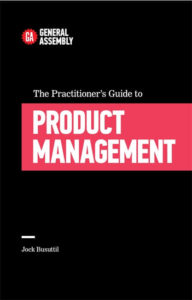
The Practitioner's Guide To Product Management
by Jock Busuttil
“I wish this book was published when I started out in product management. It gives a really wonderful overview of what product management is and involves on a day to day basis.”
— Keji Adedeji, product leader & coach

Jock Busuttil is a product management and leadership coach, product leader and author. He has spent over two decades working with technology companies to improve their product management practices, from startups to multinationals. In 2012 Jock founded Product People Limited, which provides product management consultancy, coaching and training. Its clients include BBC, University of Cambridge, Ometria, Prolific and the UK’s Ministry of Justice and Government Digital Service (GDS). Jock holds a master’s degree in Classics from the University of Cambridge. He is the author of the popular book The Practitioner’s Guide To Product Management, which was published in January 2015 by Grand Central Publishing in the US and Piatkus in the UK. He writes the blog I Manage Products and weekly product management newsletter PRODUCTHEAD. You can find him on Mastodon, X (formerly Twitter) and LinkedIn.
