
Navigating your product management career
Ross Webb and I have been chatting about product management career progression.
We cover topics including:
» Thinking of visibility as a strategic competency, not self-promotion
» Controlling your narrative through regular updates
» Building cross-organisational relationships deliberately
» Mapping your stakeholders’ preferred communication styles:
- The Numbers Player: Loves metrics and data
- The Story Lover: Connects through narratives
- The Executive Summary Fan: Needs the headline first
- The Detail Devotee: Wants to dive deep from the start
Video #
Transcript #
[Ross Webb]
And then I’m going to introduce the awesome legend, in my mind anyway, that is Jock Busuttil to me. So thank you very much, everyone, for joining. I’m thrilled to welcome the brilliant in my book.
Anyway, Jock is way too humble to say this about himself, by the way. So I’m going to say it, and Jock, I’m really trying not to make you cringe or anything, but here we go. So thanks so much for joining our community today, which promises to be, I think, a really, really great roundtable on navigating your product management career.
I know there’s a few people who’ve joined us already who I’ve had conversations with either via Zoom or Google Meet or in the community about things with their careers. So I hope everybody’s come armed with questions. And Jock has founded Product People, and he can talk a little bit more about that.
And he also authored in the background there, The Practitioner’s Guide to Product Management, which I really, really loved. I read that probably five years ago now, I think. And based on that, I actually reached out to him, and Jock was the first guest on the Product Team Success, which has now become a YouTube channel, but on the podcast, he was generous enough to actually give his time and take a chance with some South African chap who said, hey, come on the podcast.
And subsequent to that, I’ve had Jock also give talks at other events that we’ve done together, and that was incredibly well received. So I wanted to have him back in the community and having a conversation. So Jock is going to be sharing invaluable insights on what I’m going to call climbing the product leadership ladder.
Jock might prefer to call it something else, and that’s absolutely fine. But around that, performance reviews, and also addressing your specific career challenges. Jock has had a lot of experience with a lot of companies from giants like the BBC, Ministry of Justice, and a lot of others, smaller and also startups.
But I’ll let Jock talk a little bit more about his experience. Just while everybody’s on here, a couple of housekeeping things, then I’ll hand over to Jock. This Friday, we got a fantastic roadmapping event that actually Jock clearly is very keen to join.
He almost joined earlier. But it’s going to be great. It’s a first part of a two-part roadmapping series with Phil Hornby and Justin Woods, who are also pretty brilliant when it comes to roadmapping and the communications.
I think those are going to be great. Okay, cool. So there’s an introduction to you, Jock.
I don’t know if you wouldn’t mind taking it away. I am recording this for everybody. I will pop the summary in the community hopefully today, maybe tomorrow.
And yeah, please, let’s try and make this as interactive as we can. Normally what we do in some of these events is we kind of go, let the presenters present, and then at the end, we kind of open up for Q&A. But I’ll let Jock handle that however he wants to do it.
And from me, I am going to put myself back on mute and over to you, Jock. Good to see you. Yeah, perfect.
[Jock Busuttil]
Thank you. Thank you so much, Ross. To be honest, I don’t have very much to add over and above that.
Yes, I’ve been running Product People now for about 12 years. That’s my little product management company. I started freelancing in product before freelancing in product was a thing.
So it seems to be going okay. I’m still here. Before that, I had worked at other companies as well.
So I’ve been running a team at Experian, and before that at other companies, all the way back to when I was an egg just out of university. So I’ve had a chance to work with lots of different places, lots of different teams, and coach a lot of people as well. So a lot of what I do at the moment is coaching people one-to-one, which I’m sure is a topic close to Ross’s heart as well.
And yeah, also going into organizations and helping them out with their product function, helping their teams work a bit better, helping their products work a bit better, and really going from there. So yeah, it gives me the chance to meet lots of good people, which is great, and I always appreciate being able to help out. So the way I wanted to do this is obviously this is an opportunity for you to ask your questions as much as me to talk about the topic.
So what I suggest is I’m broadly going to sort of be talking around three areas, and Ross, anyone else, if you want to jump in with questions, raise your hand, jump in, whatever makes the best sense. The three broad areas I’m going to try and get to, if we’ve got time, is thinking about your career path. So how do you get from where you are now to where you want to be as a product leader?
We’re going to think a bit about how you ace your product review, sorry, your performance reviews. So in other words, what kind of things can you be doing to give yourself a better chance at those either six-monthly or annual review meetings that make such a difference on your career and so on? And then we might, if it’s relevant and makes sense, we can talk a little bit about the path to a very senior leadership role, so becoming CPO.
What does that look like? How does that change? But what I’d say is, I’ll try and leave gaps for us to review and reflect and ask questions, but if you have any questions, just pop your hand up, and yes, and hopefully, Ross, maybe if you keep an eye on the chat as well, if anything comes up in there, then yeah, by all means, just jump in and ask the question.
Otherwise, I’ll just keep going.
[Ross]
Absolutely, I’ll keep an eye on that.
[Jock]
Cool. Perfect. Okie dokes.
Well, so the first thing, so your career path. Now, the thing I find about this when I’m working with organizations is some places ‘get it’ in that they understand the role of product management, they understand how to provide a sensible career path for product people within their organization, and then there are some companies that don’t, and whilst product management is a lot better known than it has been in the last 10 years or so, there are still companies that are relatively new to it, and they don’t necessarily know how to manage product managers, and part of that is not necessarily having a well-defined career path.
So often, what comes up or a problem I see quite often is that they see the path of a product manager being you start off, you manage a bit of product, you manage maybe a bit more complex or maybe multiple products, and then your only path upwards is to become a manager of product managers. So in other words, you don’t have any option to continue progressing as an individual contributor. So there are other ways, your path to leadership is not purely the path through team management.
So often, when I’m working with people, they have the option to maybe influence or try and create a path for themselves with their managers. So think about if this is you and you’re sort of wondering, well, I don’t want to become a team manager yet. I want to continue doing what I’m doing at the moment as a hands-on individual contributor.
Then think about ways in which you can have that conversation with your manager or with HR to actually start building that career path and to say, look, can we, is there a way for me to progress? Because otherwise, really, the only other option you have, if you want to continue becoming more senior and more experienced as an individual contributor, is probably to make a move to another company, and I appreciate at the moment that that’s not necessarily a fantastically attractive option, given the turmoil in the job markets at the moment. So try and have that constructive conversation if you’re not seeing the job path you want, but becoming more senior doesn’t mean just you have to become a team manager.
What else? There’s also the other situation, which is when companies don’t have necessarily a well-defined progression path for product people, it kind of becomes, if you forgive the phrase, a bit like dead man’s shoes. So in other words, to get that senior product manager role, or that lead product manager role, or that principal product manager role, or whatever, you have to wait till someone else leaves, because the company isn’t expanding, and they can only have a smaller number of senior positions available.
So again, that speaks a little bit to the maturity of the organization. Sometimes more well thought through organizations have a path that recognizes increasing experience and value to the company, independently of job title, or position in the company. So in other words, if you’ve got a bunch of really experienced product managers, they should all get more senior and they should be given the appropriate recognition and remuneration, and indeed job title to recognize that.
So because they can’t be a junior PM forever. And so thinking about, does that exist in your company? If that doesn’t exist, is there a way to maybe think about that?
Obviously, there’s cost implications for the company in terms of salaries. But to be honest, for them, it’s like they’ve invested so much time in you, and you’ve got so much knowledge and value now for the organization, it’s like crazy to let that walk out the door, because they haven’t really thought through a sensible path to recognize your increasing value to the organization. So those are a couple of observations.
Maybe now’s a good time to open up and say does anyone have any questions about their specific career path, about their options, about how they can progress?
[Ross]
Anybody want to go first? Monika, it looks like Monika, over to you.
[Monika]
Yes. So, yeah, like you mentioned this, they’re growing as a product manager. So they go from product, senior product, then to CPO.
So what I’m facing right now is that they like you need to be like in this role. So this is like growing like this, but there’s like this horizontal line when you need to specialize in something. So if I work in healthcare for the last five years, then I’m like struggling, for example, to find a job in, I don’t know, e-commerce, for example.
So do like how to maybe navigate this, or like what are the horizontal lines here that maybe, yeah, like I could like expand or like show that, okay, I can also work here, just needs one month, give me all the knowledge, I’m just going to process it, and then I can also work for e-commerce, for example. Or maybe that’s not possible.
[Jock]
So you’re right. There is this thing where often companies are expecting domain knowledge, industry experience. I quite like the fact that everyone wants at least 15 to 20 years’ worth of AI experience at the moment in jobs.
And so there’s a little bit of unicorn hunting, I think, going on. And that’s also slightly reflective of the fact that it’s a bit of a sort of hiring, hirer’s market at the moment. It’s not a job seeker’s market.
There’s a lot more supply than there is demand. And so companies hiring are maybe being a bit overly selective. But to get back to your point of, well, say you do have a background in healthcare and you want to make a move into other areas.
Well, again, I think it comes back to there are companies that get it, and there are companies that don’t. Companies that get it realize that there’s a lot of transferable skills from a product manager. And domain knowledge isn’t necessarily, isn’t the main deciding factor.
If you’ve been a product manager in healthcare, or you’ve been a product manager in e-commerce, or you’ve been a product manager elsewhere, you have been solving problems. The question is, does the fact that you’ve been operating that particular industry mean that you somehow are less rounded as a product manager? Probably not, because whilst the nature of those challenges may have been different, the fundamental thing is you’re still solving those problems.
Now, I think there is maybe an exception to this. For example, if you wanted to go into a deeply technical kind of role, for example, if you want to work in a pharma company, pharmaceutical company, or you’re building, semiconductors, computer processors, where basically everyone in your organization already has a PhD, including the sales teams, in those situations, then yeah, I guess there’s maybe a bit of a higher hurdle to get into those roles without domain experience. But for the most part, broadly speaking, if you are working in product management in one type of industry, a lot of what you’re doing is basically the same elsewhere. Fine, you might be monitoring different metrics, you might be talking to different people, but generally speaking, even if you were to move different organizations within the same industry, there would still be an element of getting up to speed with the specifics of that particular company’s market segment, that specific company’s customer base, that specific company’s products.
So in reality, whenever you start a new role, you’re going to be coming up to speed on the domain stuff anyway. Now, stepping back for the interview side of things, clearly, you need to be able to show them that you are a value, you have a good base of products, but general products management understanding and skills, and that you can apply those to different situations. And often they’ll have some things like interview scenarios, where they’ll say, what would you do in this particular situation, and those are your opportunities to shine and demonstrate how the principles that you use to work as a product manager, transcend the domain knowledge.
Now, if the interviewer is, well, what can you tell us about our industry? And, have you done your homework? Then, it comes down to preparation and how deeply you’ve dived into that before going into the interview.
But frankly, I think if interviewers are electing primarily on the main experience, I think they’re missing a trick, because all they’re really doing is narrowing the potential pool of really good products people to draw on. And you possibly have the effect of losing the advantage of external perspectives or different ways of thinking that people can bring in from different industries. So I don’t think there’s a huge amount you can do other than prepare, do your homework, try and get to grips with the dynamics of the industry or the market or the segments that your particular chosen company is working in.
But at the same time, I think a lot of it’s on the employer side. If they realize and understand the benefits of product management and what product managers can bring, they should be able to recognize good talent, regardless of what domain they come from. Does that answer your question, Monika?
[Monika]
Yes, yes. I have the next one, but I don’t want to take the whole stage.
[Bart-Jans]
May I maybe ask a related question, Monika, because I think it links quite nicely to what you asked, actually, about different verticals. Sorry, sorry, Ross, maybe I took the stage without…
[Ross]
No, it’s cool, man. That’s fine. It’s absolutely great.
It’s great to see you, man. Please go ahead.
[Bart-Jans]
Very nice to see everyone and good to see you, Ross. Thank you very much, Jock, for what you’ve been sharing so far already. So Monika, I think, asked about specific verticals.
Myself, working in fintech, I see it’s even more narrow than that, right? It’s even sub-verticals specifically that I asked for. Another aspect is a different access to credit.
I see the same type of thing, which is the question B2B versus B2C, that type of space, that’s crossing across verticals. But still, that’s the same type of specificity that was asked for. How do you look at that?
How do you position yourself as a product person, taking B2C experience into B2B or vice versa?
[Jock]
Yeah, I think that’s a challenging one always. And as I said before, I think part of the reason why it’s particularly challenging at the moment is that with the dynamics of the job market at the moment, employers can choose to be more selective for better or worse. Specifically, making the jump between B2B and B2C, I mean, there are very different dynamics at play.
So in B2B, for example, one of the big things is that you’re dealing with a very different type of shape of organization versus B2C, where you’re dealing with basically the end users directly. There are also, I think, maybe different dynamics in terms of how quickly those markets move and to what extent you need to capitalize on trends in B2C versus B2B. So the thing is, though, is I think the two are converging to an extent.
I think there’s a lot that B2B businesses should be taking the cues from business to consumer in that a lot more of B2B products are self-service, subscription-based, they have to sell themselves in the same way that maybe B2C products need to do to attract that kind of uptake. So maybe it is more difficult to move from B2B to B2C, but maybe a little bit easier to go the other way. I guess when it comes down to it, again, it’s the fundamentals of can you demonstrate that you understand the markets, you understand how to get in front of the needs of the groups of people you’re working with.
If you’ve not worked in either one or the other, you understand the challenges of engaging with those customers. So often people find themselves moving into B2C and be slightly perplexed about, well, where do I find these people? How do I get in front of this as yet undetermined niche of people who need this particular app?
But in B2B, you kind of have a different problem, which is lots of layers of indirection and gateways and gatekeepers to get to the people that are either deciding whether to buy your products or actually using your product. And so the challenge there might be, where they are, but you just can’t get in the door to talk to them. But fundamentally, you need to be able to overcome those issues one way or another.
You need to go to where the users are. You need to figure out who the decision makers are, whether it’s the same person as a user or someone different. And fundamentally, you need to figure out what the right price points are going to be based on the value of your product and the value to them.
So there’s certainly, I think, a perception that these two worlds are so vastly different. That it’s very difficult to make the leap across. But when you start delving into it, there’s a lot of commonality.
There’s a lot that’s the same. And actually, maybe we emphasize the difference too much. Now, again, whether employers see that the same way as a different matter entirely.
But I think you can certainly not get, you can certainly have the confidence that it’s not a complete leap into the unknown, making the move from one to the other. I mean, this might be a great point for anyone else who’s got their own perspective on this to jump in as well. I’m only one opinion.
[Ross]
100%. I see Nick’s busy doing childcare, but he had a question that, do you have any tips or thoughts on how to determine an organization that gets it? So he’s looking for a role and is keen on ways to filter decent prospects.
I just want to say one thing. I’d like, Nick, I’d like to refer you to the interview I did with Teresa Torres, where she actually spoke about how to do like continual discovery, but with companies that you’re going to work with. And she had a couple of very specific questions that she had that I thought were absolutely fantastic.
Wish I could remember them word for word now, rather than must quote her, I’d suggest go and listen to that podcast or that video. And on that note, over to you, Jacques.
[Jock]
Yeah, no, perfect. So my view on this, which I admit is slightly coloured by the fact I’ve been sort of freelancing for quite a long time. I think that any job interview is very much about the candidate interviewing the company, as well as the company interviewing the candidate.
And so what I mean by that is, when I go in, when I approach an interview scenario, really a client conversation, as the person coming in, I want to ask the kind of questions that reveal to me what the organization thinks and how it works. So for example, good questions that I found provoke a reaction, shall we say. And sometimes that means that they get a bit bristly, and it can potentially mean you don’t get that role.
But actually, I think that’s probably a good thing. So for example, once we’ve got into the point where they’re saying in a job interview, do you have any questions for us? The kind of things I’d like to find out is, what’s the culture like here?
How do you celebrate wins? How do you recognize success in the organization? Things like, what problems are currently facing this product or this product team?
Because if they say there’s no problem at all, it’s like they’re lying, because everyone’s got problems with their products. And so the question is, what you’re really asking is, how open and transparent are you? So when you ask the question, tell me about something uncomfortable, potentially uncomfortable, if you go, well, what, this product’s really struggling.
It’s not found product market fit. We’re hunting around, we’re a bit listless. And to be honest, that’s the reason why we’re hiring for this role.
We need someone who can really help figure out what to do with this product and start to either decide what to do with it or kill it off, frankly. If I got that kind of answer from an organization, I’d be going, great. You seem to be reasonably self-aware, and you seem to be happy to talk about things and be honest.
If, however, you get the answer back saying, well, no, this product’s marvellous. We want it to look as wonderful as possible, so we can attract a lovely product manager to take it over. And then inevitably, you join in.
It’s an absolute dumpster fire. It’s that openness and transparency that you’re trying to, or I try to find at least, when I’m talking to my clients and equally when I’ll be looking for a place to work. Equally, there’s other things I like to do in the interview.
Say, can I talk to some members of the team? Or can I come in for a day and follow the team around? And again, they might go, oh, no, we can’t do that.
That’d be terrible. You might find out what it’s really like to work here. Or equally, they might be going, yeah, it’s a great idea.
Come meet the team. I’ll come and show you around now. Then again, it’s giving you a sense of what they’re like as an organization.
Similarly, who’s actually in the interview. Again, organizations that don’t really get product management won’t necessarily have product people in the room if they don’t really understand. There might be a senior manager, but they might not necessarily be a particularly experienced product person themselves.
And so sometimes I find that asking questions about, well, tell me about what’s important to you as a product manager. How do you approach problems? What’s your decision-making process look like?
Again, if they don’t really have a way of explaining how they work or how they think about things, they might not necessarily have a good grasp of product management. You might be coming into an organization where you’re probably going to know more about product management than the people who’ve hired you. So again, it varies.
But I see the interview as being very much a two-way thing. You’re interviewing them to see whether you want to work for them, that group of people, that particular culture, as much as they’re interviewing you to see if you’ve got the required skill sets and so on to take the job. Does that answer your question?
[Ross]
I think Nick’s, as you said, he’s busy doing childcare. He said yes, thank you, in the comments. Thanks, Nick.
Is there anything else, Jock, that you’d like to add or should we keep going with some more questions?
[Jock]
I don’t think there’s anything on that in particular. If there’s any more questions, I’m happy to take them or I can move on to the next topic.
[Ross]
I think let’s move on to the next topic and then we can get into questions once we finish that.
[Jock]
Okay. So the next one I wanted to talk about, which I think is quite useful, is performance reviews. So again, I get quite a lot of people in the coaching sessions saying, [they’re] dreading the build-up and the preparation and the actual review because, well, it has a lot of bearing on their livelihood.
It potentially has a bearing on their remuneration. If there’s only once a year that you’ve got a potential salary review, then they obviously want to do the best they can. So it’s the thing that I hear often or hear most often is that people come into their performance review and they get a whole bunch of feedback and they go, well, if you told me about this six months ago, I’d have been able to do something about it.
Why am I hearing it for the first time now? So there’s an element of, from the manager’s side of things, what you really, what your tactic almost is, is to try and put, to make the job of your manager or whoever conducts your review as easy as possible. And so that means actually way before your review is due, doing some things in advance, the preparation is the vital bit.
What you’re really trying to achieve is you’re trying to make it as easy as possible for your manager to make the best possible case for you. And that’s probably in the context of things like, they’ve probably been told you’ve got 10 product managers, you have to basically assign them on a normal distribution. So you’ll have maybe one or two high performers several mid-level performers and a few low performers.
And you’ve got to apply that normal distribution almost regardless of whether your team is, or how your team is performing. And obviously that doesn’t make sense because if you’ve generally got a bunch of really dedicated, really hard-working product managers, they don’t fit a normal distribution. They’re all working their bits off to do the best possible job they can and doing so in challenging circumstances.
So often the manager is almost putting this artificial sort of quota or distribution on the way they assign performance reviews and grades, as it were, for that process. And that can be quite limiting. And when it comes down to it, if you’re in that situation, it’s like, well, if I don’t make the case for myself, probably no one else is going to.
So really it’s the case of how can you get ahead of the game a little bit. And it feels a little bit, it doesn’t feel great because you’re basically saying I have to out-compete these other people, my peers. But ultimately, if I don’t do that, then no one else is going to.
And you shouldn’t be in that position in the first place. If the organisation was set up well, they should be able to recognise performance independently of a number of people in the team and so on. Anyway, so assuming you’re in that slightly dysfunctional set up for performance reviews, throughout the course of the period between reviews, just maintain yourself a journal, maintain like almost like a weekly week note journal of what you’ve been doing, what you’ve achieved, what whether it’s small wins, big wins, whatever, things you’re proud of, things you’d like to talk about, and just do that as a handy journaling habit throughout the entire time. Because then when it comes back to bringing together your sizzle reel, if you like, of all of the things that you’ve been working on and the things you’re particularly proud of, you don’t have to be remembering, well, what was I doing six months ago?
What was I doing nine, 12 months ago? You actually got this nicely detailed blog that you can probably summarise with ChatGPT and pull out all of the useful stuff into a nice summary you can send to your manager’s preparation to make your case. Some people take that a step further.
Some people try to make sure that they’re in control of their narrative within the organisation. In other words, they are defining how they are seen and perceived in the organisation. And one of the ways they do that is to actually publish those week notes and just send them as a broad open email to possibly the main influencers, their team, their main stakeholders, their boss, maybe even all the way up to more senior leadership, if the organisation is structured that way and doesn’t mind that email coming through.
And so what that means is that there’s this recency bias that almost comes into performance reviews where, in other words, you’re only as good as the last thing people heard about you. And sometimes that works in your favour, but probably more often than not, if you don’t make an effort to broadcast what you’ve been up to and the fact you have been working and doing stuff and keeping yourself top of mind for people, sometimes people just forget you’re there and sometimes don’t realise that you’ve been working so hard. So it’s in your own interest to remind people of all the good stuff you’ve been doing.
And so week notes, things like that, where you’re not just talking about yourself, you’re talking about your team, you’re talking about the achievements of your product, you’re saying thank you to people that need thanks and you’re just generally reminding people that you’re there doing good stuff with your team and you’re being a good, productive, pleasant member of the team. Yeah?
And it’s just that little act of being more active with the narrative and help you over time so that when people say, think of Jock, how’s Jock been performing? Oh, Jock’s great. I always know what he’s up to.
He’s been doing some, I saw that he did this thing last week and it was really good and he was really proud of it. That’s the recency you want to have when they’re coming into this performance review because the reality is your manager’s probably got a million and one things on their plate. They’ve left all of their performance review preparation to the last minute.
They’re a bit flustered and they just want to grab on whatever there is. Yeah? So if you’ve already got this lovely package of information available for them, then it makes their job a lot easier.
So there’s that. The other piece of this is one of the things that has become a lot more different is like, there’s a lot if you look at LinkedIn, for example, there’s a lot more virtue signalling. There’s a lot of noise.
There’s a lot of people who’ve just basically adopting an influencer style approach to how they promote themselves. And whilst I’m not necessarily advocating adding to the noise, again, if you don’t have at least a foothold in that way of working and speaking about yourself, it’s very easy to be drowned out. And there’s various cliches like the squeaky wheel gets the oil or whatever.
But the point being is if you’re basically silent and everyone else is shouting about how great they are, it has an influence and effect, even if it’s not fair. And so I think whilst product managers have traditionally, in my view, been pretty crap at self-promotion because we either say, oh, it was the team’s effort or it wasn’t me, it was the team. And they’re very humble and all that, which is the right way to be, by the way.
That’s how it should be. Nevertheless, we also still need to be a little bit best foot forward about saying, you know what, I knocked that launch out of the park. Or, you know what, I did a really good job and I got him, that salesperson over there, their commission this month because I pulled them out of a massive problem with their customers.
I did that. And it’s really important to remind people of this kind of stuff. So I do think that we can be a bit better at blowing our own trumpets a bit.
So I’ll probably shut up there and get some questions. Any questions on trumpet blowing? Yeah, exactly.
[Ross]
Any questions on technique? Yeah, maybe not on trumpet playing, but anything else?
[Ahmad]
I mean, I can definitely say that, I mean, having a weekly summary definitely does help. And it helps build that impetus in the organization. And actually it builds with your teams or your teams of teams can actually bring everyone together.
So I think that’s useful to do regardless. It’s just a mechanism of aligning everyone on vision and mission. And then if all you’re doing is prior to your review, I can’t say I’ve ever done this, is collating your weekly emails or your bi-weekly emails and just picking the best bits gives you an easy list to select from.
I guess the other key thing is make sure you’ve got the metrics because I’m a, I mean, I can never remember metrics in terms of ARR or any of these things generally. And having to go back and actually ask former colleagues, I mean, what did we sell that for is a pretty tough ask at times.
[Jock]
Yeah, for sure. One thing that you’ve just reminded me of actually is, which is related to what you’re talking about, what metrics, what things do you need to highlight is it’s worth considering how you view your manager. So the person who’s going to be conducting your performance review is going to be dictating whether you get a bonus or a salary uplift or whatever.
What extent are they fighting your corner? And to what extent are they just another stakeholder to manage? And I mean that in the nicest possible way, but sometimes you’ve got managers who are indifferent to the people that they manage.
And so you need to almost think of them as being not hostile, but not necessarily fighting your corner. The second piece of that is if you do start to think of them more as a stakeholder, less as a manager, then think about, as you would do, when you do your stakeholder mapping, figure out how, what kind of information they respond to best. So for example, if I was doing a pitch to the senior leadership team, I’d like to know around the room, who’s the numbers person?
Who needs metrics? Who needs data to believe the point I’m making? Who needs the really emotional story?
Who needs the strong narrative and strong storytelling? Who needs the summary up front and then detail later when they want to? Who needs the depth of detail up front and wants to show that you’re working?
You get different styles of people who want information in different kinds of way. What way is your, what style of information does your manager want and is used to? Because depending on whether they need a good story, whether they need data, hard facts, whether they need a good summary and then backup detail later on, or whether they just need the depth of detail at the beginning, each of those four different ways of operating could be how your manager works.
If you understand that and you can tailor how you give them the information, again, you’re making their job easier.
[Ross]
Can I add one thing to that?
[Jock]
Please do, Ross.
[Ross]
I’m going to say something, which I’m going to subtitle under blowing one’s own trumpet again. One of the things that I’ve seen that works really well, especially with working with companies in the States, is when I’ve like say presented roadmaps or strategy documents or whatever to vice presidents or basically like senior leadership, and if I get very positive feedback from them, I ask them to please share that with my manager.
And when I’ve first started doing that, I felt like a real dick because I felt like it was like, hey, look at me, I’m big type of thing, which I don’t feel very comfortable with. But I remember doing that, and most of the people were like, oh, that’s really great. That’s cool.
And then I remember having, I was like, great, well, I’m going to follow up with you in a week’s time, just on the roadmap and stuff. And I’d always say, oh, by the way, did you manage to have a chat with whoever the manager was? And that usually jogs their memory, and they usually do it the first, usually in corporates, people don’t do it the first time, and second time, they’ll probably remember that, so they’re committed to doing it.
And while I felt super uncomfortable about that, my approach to that was not, look how great I am, it is, just like you said, I mean, there’s a lot of quantitative data, people like numbers, but what people really like is to get messages from their senior managers that, oh, they’ve got an employee or someone on their team that is doing really great and saying, like, hey Kiran, that Ross guy is really awesome, good hire, like really enjoying working with him, this is good. And I think that goes an incredibly, incredibly long way. And like I said, in the beginning, I struggled with doing it, now it’s more like someone said something positive.
Oh, that’s fantastic. Would you mind letting Bob know that? Cool.
Back to you, Jock.
[Jock]
Yeah, no, I agree 100%. When it’s actually been coming up in a sort of different context in when making a pitch for a new product into a company, the actual shadow objective is how do I make the person sponsoring this look good? Yeah?
Not how do I make the product pitch look good? How do I make sure we hit numbers, targets, how do we get an exit in three years’ time? It’s for the person who stuck their neck out to sponsor this, how do you first and foremost, I make them look good to their bosses, to their peers?
Yeah? And so exactly in the same way, if you can pause through senior VPs giving feedback to your manager about you, you are by extension making them look good. So I absolutely agree with what Ross is saying.
And it’s like, you get, you get that recognition by association, if you know what I mean. And there’s — so I’m always funny about this, because personally, I hate office politics. And I hate the fact that performance reviews are basically a beauty contest.
And if your face looks right, and this face don’t usually fit right anywhere, as a result, it’s like, do I have to make the effort to be nice to everyone and to be and to not piss off the sales guys and whatever this and do I have to just get on with doing my job and not have to worry about all this other stuff? But no, unfortunately, you do. Because particularly as you get more senior, actually, it’s the relationships and the people stuff that becomes far more significant.
It doesn’t matter whether you’ve knocked your profit out of the park this month or this quarter. If people think you’re a bit hard to work with, that’s the story that will get told. So you’ve got to reclaim that narrative for yourself and make sure they’re saying, yeah, Jock’s great to work with.
He’s a safe pair of hands. He does this and this. He’s really responsive.
He goes out of his way to help us. It’s just the way you’ve got to play the game, I think. Any other questions?
[Kiron]
No questions. Just comments. I think it’s really great advice.
Thank you, Jock. Particularly the just writing every week your own notes is one. Just to remind yourself what you’ve actually done over the weeks because sometimes you forget.
And then actually publishing them. I do see colleagues doing that and on Slack channels every week. And it is really effective.
So that’s both great. And Ross, I like what you said there about asking people just to give feedback. I actually do that a lot to colleagues.
I’ll speak to their managers. I’m working with these doing really well and it’s like, I don’t know if anyone’s doing it to me, but you can.
[Ross]
Do you ever ask for it though, dude?
[Kiron]
No, exactly. No, I don’t. But I do it naturally about others because if someone’s working really well with me, I want to tell their boss because I know it’s a great thing to do.
But no, Ross, thank you. That’s a good idea. It is a bit cringe, but I think if you do it in the right way, it can be all right.
It can feel like that at the beginning, I’m sure.
[Jock]
Yeah. Assume nobody’s advocating for you and just work on that basis.
[Ross]
Yeah. Bart-Jans nodding his head big time there.
[Bart-Jans]
Yeah. And I think that’s a big learning actually from my personal history. So you really have to take that space yourself and make yourself visible.
I think one thing that I learned really is not to just do that to your manager, not even to just do that to your peer or your manager’s peers, but really also skipping the levels from time to time and advocating for yourself to your manager’s manager and above because you want to control what they think about you as much as possible, at least influence it. And don’t be dependent on what your manager conveys about you.
[Jock]
Absolutely. This is where I like to talk about the reason why I drink so much tea. There is a point to this.
So I appreciate when you’re with remote working, it’s changed a bit, but assuming you still go into the office occasionally and there are actually people there. The reason I make so much tea is because it gives you an opportunity to bump into people without the constraints of hierarchy getting in the way. And so if you spot your MD, your CEO, whoever, your CFO, whoever making themselves a coffee or a cup of tea, just wander over and say, oh, hey, did you know?
And just tell them something that your team’s done or something your team’s achieved or something you’ve achieved. Did you know we just found this out? It’s really useful or, you know, and just leave them with that 30 second snapshot of something that you’ve done or achieved.
And then they’ll just wander off thinking about that while they’re drinking a tea or their coffee later on. And honestly, I can’t quantify the impact of that, but if you do it serendipitously every time you bump into them, oh, hey, did you know that we’ve been doing this or this has happened, or we finally got that launch and it’s everyone’s really happy with it. It doesn’t need to be detailed, but it just gives them that reinforcement over time.
But that’s the real reason why I drink so much tea because I’m always at the tea point or the coffee point making a cuppa.
[Ross]
And in remote?
[Jock]
And remote, yeah, harder.
Because like you’re not going to be necessarily in the Slack groups. You don’t have those chance opportunities. So, this is where I think the broadcast emails, the weeknotes, and just copying a bunch of people.
They’ll tell you to stop if they want to. But you’ll probably find that you can copy in most of your senior leadership team and you won’t get you won’t get any comeback from it, as it were negative comeback. They’ll just, they might not say anything at all.
So, I had this exact thing at University of Cambridge. So, working for the information services team there, which is actually a massive organization because the campus is quite spread out and quite technical. And so, I was there to remedy this failing product launch that they were trying to get out the door.
And what I did was I just sent the weeknotes from me and the team to the entire senior leadership team. And I don’t think I got a single reply for like the three or four months I was there. But when I happened to bump into one of them when walking down the corridor, they said, oh, it was really good to hear that this and this is happening and that you’re making good progress now.
So, even though they didn’t say anything directly, it had been sinking in and they’d been taking note of it. So, even in a remote situation, doing those regular updates, those transparent updates about what you’re doing, will be having some effect, even if subliminally. Yeah.
But you may not necessarily see the direct results of that unless you had a conversation with them and they happen to demonstrate that they’ve been reading them all along. So, think about the other things. So, think about your weeknotes.
It’s not like a blog or something like that, but try and keep them engaging. Try and write them for an audience other than yourself. Yeah.
And so, if you think about the structure of it, the summary at the top, a bit of extra detail, a few shout outs, so that people will read it and flick through it. Again, if you think about how the information is consumed, it might just be going in with the right people. So, in a remote environment, find the channels of communication to make up for the serendipitous team making.
[Ross]
Cool. Yeah. I like that.
Any other questions? I realize we’ve got about 10 minutes left. By the way, one recommendation while we’re thinking about the questions, I’d highly recommend Jock’s weekly newsletter.
It’s one of the few product newsletters that I actually read and look forward to, and I’ve been reading for the couple of years that I receive it every single Monday. So, I highly recommend Jock’s newsletter.
[Jock]
Thank you very much. I’ve just put the URL in the chat because, hey, you don’t miss out on these recommendations.
[Ross]
Yeah. And he didn’t ask me. Just like that.
Any other questions before we end up for today? I know that quite a few people in this chat are looking for roles and stuff, and one should never let a friend look for a role alone.
[Jock]
So, in the absence of any … Obviously, do shout if you have any questions. In the absence of any questions, I’d be really interested to hear how you’re finding, if you’re actively looking for jobs at the moment, how you’re finding the market, what kind of feedback you’re getting.
Are you finding yourself being ghosted or applying to ghost jobs all the time, like the news is telling us? If anyone’s got any comments on how it’s going for them, that’s always valuable.
[Monika]
So, I can share a bit because now … So, I work in healthcare. I work with AI, ML, and so on, and now I just realized, okay, I need to get more technical skills.
So, I’m advancing my skills in data science and going more deeply in like developer mode, and I have this hypothesis, and I want to check this with you. If there’s going to be more AI positions for product managers in the future, because I could see even now there is more and more. I think it was like this a couple of years ago, but do you see future in and maybe how this is transforming soft skills and maybe hard skills for the product managers?
So, yeah.
[Jock]
Yeah, great question. Great question. So, my view on this is I think we will probably see a bit more of the the hype bubble around AI.
So, in that, there will be a lot of investments, I think, still being funnelled into AI-related products and AI-related companies. That will probably continue for a bit longer, and so if you can highlight your experience in AI, machine learning, large language models, whatever it might be, then, yeah, that seems to be prudent, particularly at the moment. Looking forward a bit, I think the hype will die down a bit.
I don’t think AI, by any stretch, goes away. I think it just becomes part of the toolkit, if you like. There are certain sets of problems that happen to be solved well with the AI and machine learning that we have available to us, and so if you don’t have some experience of how to use that particular tool in your toolkit as a product manager, then you probably should gain some experience in it simply because it’s just going to be there and it’s not going away now.
But that’s fine. I don’t think you necessarily need to go and retrospectively do a computer science PhD to go and make up for the 20 years of experience you don’t have in machine learning, but the more you can understand the concepts, where the tools that are available work well, how they can help in different scenarios, what problems are good at solving, what problems they’re not so great at solving, think about it in those terms because the Pandora’s box is open, as it were, it’s not going to go back in again, but it’s something we just need to know where are the right situations to apply this and where is it not suitable.
[Monika]
Thank you.
[Kiron]
Just one, at the beginning, was there something you were going to talk about regarding senior roles past? Yeah, so if you’ve got time, I just took a note earlier, you might be interesting.
[Jock]
Yeah, so there’s an element of the CPO stuff. And to be honest, I’m conscious that we don’t have a huge amount of time left. What I will do is to summarise, I wrote an article about moving up to a CPO role relatively recently.
And so maybe reading that on the site might be that, it’s literally called moving up to a CPO role on my blog, imanageproducts.com. But the summary of it, the TLDR, if you like, of it is that some people have this conception of moving up to a leadership role in product and thinking, finally, I can take decisions and finally, I’ll have the power and the control I’ve been looking for all this time to actually get stuff done without having to influence everyone. And the slightly sad reality is, to an extent, but you still have a peer group of the C-suite, who are your peers, and you have to influence to get stuff done.
You still don’t have complete control over what you’re doing. You still need to work with all of the other departments and disciplines to get stuff done. You’re just operating at that much higher level.
So there’s an element of, it’s the same but different. The way I describe it is, it’s like it amplifies, moving up to a CPO amplifies all the stuff that you’ve been doing anyway, on your path up to leadership. So there’s that aspect.
The other thing I think is quite a significant change that some people don’t realize is how they’re regarded by the people in the team, by people in the organization. So one example is I was coaching someone who’s recently moved up to that role, and I said, look, when you’re having that chat with people, you’ve got to be really careful of offhand comments, because an offhand comment from the CPO might trigger off this whole panicked rush to redesign the product because of something you just said whilst you’re thinking out loud. So you’ve got to be much more aware of the potential effect and the level of influence what you say has on the people that work with you.
And while people have grown up with you, as it were, in a company and are reasonably familiar with you, might be perfectly comfortable having chats with you, some junior product manager who’s just started, some associate PM, is going to be shit scared of having a chat with you because you’re the CPO, right? And so you’ve got to find ways to re-establish the psychological safety that you took for granted when you’re more of a peer rather than a leader, and figure out ways, if you can’t do it directly because no one talks when you’re in the room, to allow for spaces to let them have those conversations and then get the situational awareness you need from your direct reports. So it’s a little bit weird because you can’t work, you can’t be the guy that really approachable open door person because you’re still the CPO and you’re scary in that way.
You shouldn’t be, but that’s the way it works. So I think preparing for that transition of perception and how you interact with people and just being super careful about the outsized influence you have on behaviour. If you do something weird or wrong or offensive or anything like that, it’s setting the example for everyone in your organization.
If you’re doing things, however, really methodically and ethically and well-behaved and sensibly and politely and maturely, then equally you set that influence for the rest of your product organization. So just be really conscious of that outsized influence you have when you’re moving up into that situation.
[Ross]
Awesome. I think we should probably close off at the stage, just from the time perspective. Jock, are you happy if people in the community just message you via the chat in the community or take questions?
[Jock]
Yeah, by all means. Yeah, absolutely. I’ve joined up onto the TopProds community.
So by all means, give me a shout. If you have any other questions, I’ll probably pop up a couple of links to the background stuff with some things we’ve been talking about. But yeah, by all means, give me a shout.
I’m more than happy to help.
[Ross]
Thanks. On behalf of everyone here today, thank you so much, Jock. I don’t know if we are going to see you on Friday again, because I know you joined that.
But for everybody else, looking forward to seeing you on Friday, I think the event with Phil Hornby or Justin Woods, who are absolutely brilliant, brilliant guys in our first of a two-part roadmapping thing. So really looking forward to seeing everybody there on Friday. And Jock, thanks so much.
And everybody else, have an absolutely fantastic day. Catch you later. Perfect.
Thank you very much.
Read more from Jock
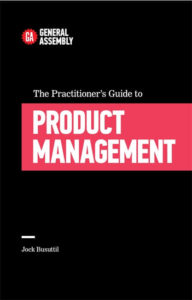
The Practitioner's Guide To Product Management
by Jock Busuttil
“I wish this book was published when I started out in product management. It gives a really wonderful overview of what product management is and involves on a day to day basis.”
— Keji Adedeji, product leader & coach

Jock Busuttil is a product management and leadership coach, product leader and author. He has spent over two decades working with technology companies to improve their product management practices, from startups to multinationals. In 2012 Jock founded Product People Limited, which provides product management consultancy, coaching and training. Its clients include BBC, University of Cambridge, Ometria, Prolific and the UK’s Ministry of Justice and Government Digital Service (GDS). Jock holds a master’s degree in Classics from the University of Cambridge. He is the author of the popular book The Practitioner’s Guide To Product Management, which was published in January 2015 by Grand Central Publishing in the US and Piatkus in the UK. He writes the blog I Manage Products and weekly product management newsletter PRODUCTHEAD. You can find him on Mastodon, X (formerly Twitter) and LinkedIn.

Great discussion. Thanks for posting the transcript!