
PRODUCTHEAD: How commercial does a product manager need to be?
PRODUCTHEAD is a regular newsletter of product management goodness,
curated by Jock Busuttil.
the amazing sounds of product #
every PRODUCTHEAD edition is online for you to refer back to
tl;dr
Product managers need a blend of skills, of which commercial acumen is a part
Which does your company pay more attention to: the immediate or the long-term?
Selling to everybody is selling to nobody
hello
This week I have a go at answering the question posed by today’s newsletter; Rich Mironov explores a fundamental misalignment between the bits of the company that focus on one customer at a time, and those looking at the market as a whole; and Jason Cohen talks through the power of targeting an ideal customer profile (ICP).
Speak to you soon,
Jock
Product management requires a blend of skills #
I share the belief with many others that a good product manager should have a balanced blend of skills that focus on how to:
discover, validate and meet the needs of users;
exploit the potential of technology to solve problems as effectively as possible in the given context; and
do all of the above while establishing a business model that allows the product to self-sustain (at the very least) and ideally to turn a healthy profit.
Find ways to fill the skill gaps #
It is perfectly normal to come into product management lacking experience or skills in one area or another. Some people worry that they’re not technical enough for the role. If your gap is on the commercial side instead, then my advice is similar: product managers need to know enough to be able to call bullsh*t when they hear it. Or to put it slightly less indelicately, to know enough to have a sensible conversation with a sales or business development person about the approach they’re taking.
My career progression as a product manager was driven mainly by looking at the most obvious gaps in my experience and trying to fill them. I had reasonable technical chops at the outset but lacked commercial experience, so when the opportunity presented itself, I shadowed the finance team and asked to be mentored by the VP of sales for a while. I also put myself on courses to help me learn enough to close the skill gaps. I certainly didn’t claim to be an expert, but it was enough to get me by at the time.
A successful, loss-generating product #
When I was working at Iron Mountain, a company better-known for storing paper in boxes at extreme scale, I remember one of my fellow product managers being proud of the growth in customer numbers of the cloud data storage product they’d recently launched. As was the case with many of the services and products there, profit margins were razor-thin, but at scale a product could turn a healthy profit while also undercutting competitor pricing.
The thing about the cloud storage product was that the profit margins had been calculated on the assumption that customer data would be compressed by a certain amount on average, and thus take up less disk space. The fly in the ointment was that the compression had never been implemented. The resulting increase in storage costs was enough to turn the slight profit into a slight loss. Despite the product being successful with customers, every new customer (and there were plenty) meant greater operating costs and financial loss for the product.
Has everyone forgotten about commercial acumen? #
Maybe it’s because everyone’s been seduced by the fairy tales* from Silicon Valley about growth at all costs. Perhaps product managers have developed an unhealthy fascination with technology to the detriment of everything else. Or maybe it’s just the simple fact that venture capitalists have been willing to throw money at anything currently on trend.
Whatever the reason, it would seem that some product managers end up in role without sufficient commercial understanding or any major impetus to gain it. Commercial acumen should encompass not just an appreciation of what factors drive the sales of your product to customers, but also a firm grasp of what it costs to research, build, market, sell and maintain your product, and what you get back in return for your investment.
It can be easier at some places than others #
Many of the organisations I’ve worked for kept their financial information closely guarded. For publicly listed companies, it was understandable that they wouldn’t want to encourage leaks about their financial performance that might adversely affect their share price. At other places, financial reporting was bundled up in such a way that it was almost impossible to assess the performance of individual products in isolation.
For whatever reason, this kind of gatekeeping makes it very difficult for a product manager to assess how their product is faring commercially, even basics such as whether it is turning a profit or loss.
During my stint at Experian, the business unit I was in was initially quite opaque about the financial performance of their various products and services. Moreover, every department had their own interpretation of what constituted revenue and profit margin, partly to portray themselves in the best possible light (because bonuses).
Later they standardised their definitions of revenue and margin, which meant that different departments were at least able to compare similar things when talking money. However, what they remained crap at was how they accounted for the cost of developing and maintaining products.
As was fashionable at the time, the development team was set up as if it were an internal ‘agency’, whose ‘client’ was the rest of the company. Every chunk of work to develop and maintain products was costed out as if an external agency was being brought in to do the work. And that meant the internal development team charged what it actually cost, then added their own profit margin on top.
What this meant in practice was that it often ended up cheaper to engage an actual external agency than to use our own internal development teams. This was insane, because we still had to pay the salaries of our developers while not being able to afford to use them.
Companies can be wildly wasteful #
Another associated problem was that there were a couple of cash cow products that generated sufficient profit to subsidise pretty much everything else the business unit did. When the going was good, the cost of ill-conceived product changes, operational inefficiencies and vanity projects was effectively swept under the carpet. But when the financial performance of the cash cow started to decline a bit, suddenly all that cost wastage became increasingly hard to ignore.
Now replace (conceptually) the subsidy from those cash cow products with the subsidy from VC funding and the recent long period of zero interest-rate policy (ZIRP), and it’s understandable why so many startups and scale-ups are feeling the pinch right now.
The magical VC-funded cash machine #
To generalise a bit, it’s common practice for startups to incur front-loaded debt while trying to find product-market fit. It’s also typical for them to incur further debt after reaching product-market fit. This way, the resulting rapid growth is not constrained by a lack of ready cash, allowing the company to capitalise on the surge in demand. Providing costs can be kept in check as the company grows, and if the stars continue to align, then the resulting increased revenue will eventually offset the debt.
But if there is no product-market fit, and any growth is driven primarily by marketing incentives, the company’s user acquisition costs will continue to rise as it grows, so it never reaches profitability. Somebody — I forget who, forgive me — recently described this as a magical, VC-funded cash machine. Of course you’ll see lots of customer growth if your cash machine is giving out free money to them. But when the VC funding subsidising that growth dries up, the incentives stop and most of the customers go elsewhere.
Deferring all rational decision-making about costs and reaching profitability to future you (or some other mug) is short-sighted at best.
Final thoughts #
Successful products need to be desirable by users, technically feasible and commercially viable. If you are bewildered by the financial or commercial aspects of your product, I can only encourage you to gain a clearer understanding of what makes your product tick. When you do this, you’ll be in a much better position to decide which are the right moves to make for your product, and which simply aren’t worth it.
* Well everyone’s always talking about unicorns there
what to think about this week
The Chocolate Cake Problem
In my experience, there’s usually a fundamental misalignment between two broad groups at software companies. One group is trained and paid and rewarded to focus on one customer at a time, with current-quarter timelines. Get it done, and move on.
The other group is trained and paid and rewarded to focus on overall impact for the whole installed base, long-term investments, and the need to support every line of code that any user has in production.
The cake gets eaten one very tiny bite at a time
[Rich Mironov / Mironov Consulting]
Selling to Carol: Why targeting an ICP brings 10x more customers than you expected
Targeting your “Ideal Customer Profile” (ICP) is the best way to differentiate and win sales, but does it limit your target market
When to turn down a lucrative sale
[Jason Cohen / A Smart Bear]
recent posts
What freelance product management is really like with Jock Busuttil
Off the back of his recent article for Mind The Product, Liam Smith interviewed me about my experiences in freelance product management.
We cover topics including:
» Should you hire freelancers in your product team?
» How to be successful as an external hire
+ more :-)
If this doesn’t put you off, nothing will
[I Manage Products]
Is coding in the open right for your organisation?
One of the design principles that underpinned the digital renaissance in UK government was — and still is — ‘Make things open: it makes things better’.
For this article, I’ve focused specifically on the ‘coding in the open’ part. I’ll cover how it benefits public sector organisations, and how — in the right circumstances — it can yield a strategic advantage to commercial organisations also.
Increased scrutiny keeps us all a bit more honest
[I Manage Products]
DevRel and Product Management with Jock Busuttil on the Voxgig podcast
I’m chatting with Voxgig’s Richard Rodger about common challenges in product management and DevRel:
» Why learning by soundbite gives a superficial understanding of the craft
» Why we’re finding it hard to communicate value to our bosses
+ more :-)
Other professions find ‘people stuff’ hard as well
[I Manage Products]
can we help you?
Product People is a product management services company. We can help you through consultancy, training and coaching. Just contact us if you need our help!

Helping people build better products, more successfully, since 2012.
PRODUCTHEAD is a newsletter for product people of all varieties, and is lovingly crafted from magical synchronising things.
Read more from Jock
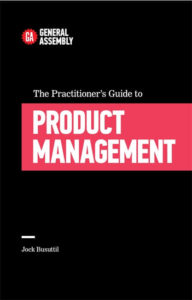
The Practitioner's Guide To Product Management
by Jock Busuttil
“I wish this book was published when I started out in product management. It gives a really wonderful overview of what product management is and involves on a day to day basis.”
— Keji Adedeji, product leader & coach

Jock Busuttil is a product management and leadership coach, product leader and author. He has spent over two decades working with technology companies to improve their product management practices, from startups to multinationals. In 2012 Jock founded Product People Limited, which provides product management consultancy, coaching and training. Its clients include BBC, University of Cambridge, Ometria, Prolific and the UK’s Ministry of Justice and Government Digital Service (GDS). Jock holds a master’s degree in Classics from the University of Cambridge. He is the author of the popular book The Practitioner’s Guide To Product Management, which was published in January 2015 by Grand Central Publishing in the US and Piatkus in the UK. He writes the blog I Manage Products and weekly product management newsletter PRODUCTHEAD. You can find him on Mastodon, X (formerly Twitter) and LinkedIn.