
PRODUCTHEAD: I’ve solved the whole genAI problem
PRODUCTHEAD is a regular newsletter of product management goodness,
curated by Jock Busuttil.
i product #
every PRODUCTHEAD edition is online for you to refer back to
tl;dr
Comprehensive introductory training on large language models (LLMs)
Nonverbal communication can make assistive robots more effective
Practical suggestions to foster greater alignment between product and go-to-market teams
hello
I reckon I’ve solved the whole generative AI problem. The problem isn’t that large language models (LLMs) are prone to making stuff up, it’s that they are absolutely confident that their answers are correct. My solution is therefore to make LLMs embrace their fallibility and be a bit less sure of themselves:
“I mean, you could try using glue to stick the cheese to your pizza, but now I’m hearing myself say it out loud, I’m not really sure that it’s a great idea. Maybe get a second opinion.”
“I think Beyoncé was the 47th president of the United States. I’m not sure if I’m honest….”
While I’m not being entirely serious, I do think there is some value in LLMs expressing a suitable degree of uncertainty when a response does not have an absolute answer (like 2 + 3), or when a LLM detects that it may be confabulating. If nothing else, it would hopefully prompt the human operator to re-engage their critical thinking faculties rather than blindly trust the machine.
For you this week #
Continuing the theme, I get the sense that there are three types of product manager: ones that don’t understand genAI, LLMs or machine learning at all; ones that do; and the ones that claim to, but actually don’t. As we’ve hit that point where it’s socially awkward and professionally embarrassing for people in tech to admit they have no clue about genAI, I’ve got your back.
Andrej Karpathy has an extensive background in LLMs from several years at OpenAI, then Tesla’s AI division. He is now the founder of Eureka Labs, a school dedicated to teaching about generative AI. He’s published an extensive (3+ hour) introductory course for free on YouTube. It covers the main technical aspects of how LLMs work, how they’re trained in different ways, and where the tech is likely heading. To get the most out of this, treat Karpathy’s video like a training course rather than a casual watch.
Only tangentially product-related, but a fun palate-cleanser, particularly if you made it all the way through the LLM training, comes from Apple’s Machine Learning Research division. They’re essentially trying to recreate the Pixar Luxo lamp in real life. The result is of course heart-warmingly cute. Slightly more interesting is their video that compares side-by-side an expressive version of robot with a purely functional version. It provides a neat demonstration of how much of a difference nonverbal communication can make to comprehension of intent and behaviour.
Lastly, a guest post from Arne Kittler on the Decision Stack discussing how to fill the gap between the product direction and the high-level corporate strategy. In particular, he focuses on the connections between product and the various other teams involved in the product’s go-to-market, and how this differs between B2B and B2c organisations. His message is simple: product can’t do it alone, so getting the collaboration right with other teams remains key.
Speak to you soon,
Jock
what to think about this week
Deep dive into LLMs like ChatGPT
This is a general audience deep dive into the Large Language Model (LLM) AI technology that powers ChatGPT and related products. It is covers the full training stack of how the models are developed, along with mental models of how to think about their “psychology”, and how to get the best use them in practical applications.
Everything you wanted to know about LLMs but were afraid to ask
[Andrej Karpathy / YouTube]
ELEGNT: Expressive and Functional Movement Design for Non-Anthropomorphic Robot
Nonverbal behaviors such as posture, gestures, and gaze are essential for conveying internal states, both consciously and unconsciously, in human interaction. For robots to interact more naturally with humans, robot movement design should likewise integrate expressive qualities—such as intention, attention, and emotions—alongside traditional functional considerations like task fulfillment, spatial constraints, and time efficiency.
[Yuhan Hu, Peide Huang, Mouli Sivapurapu, Jian Zhang / Apple Machine Learning Research]
Product direction meets revenue: Functional alignment for winning together
Product success is a team sport — here’s how to connect your product direction to the activities of your commercial teams & to the big picture of your organisation.
[Arne Kittler / The Decision Stack]
recent posts
What freelance product management is really like with Jock Busuttil
Off the back of his recent article for Mind The Product, Liam Smith interviewed me about my experiences in freelance product management.
We cover topics including:
» Should you hire freelancers in your product team?
» How to be successful as an external hire
+ more :-)
If this doesn’t put you off, nothing will
[I Manage Products]
Is coding in the open right for your organisation?
One of the design principles that underpinned the digital renaissance in UK government was — and still is — ‘Make things open: it makes things better’.
For this article, I’ve focused specifically on the ‘coding in the open’ part. I’ll cover how it benefits public sector organisations, and how — in the right circumstances — it can yield a strategic advantage to commercial organisations also.
Increased scrutiny keeps us all a bit more honest
[I Manage Products]
DevRel and Product Management with Jock Busuttil on the Voxgig podcast
I’m chatting with Voxgig’s Richard Rodger about common challenges in product management and DevRel:
» Why learning by soundbite gives a superficial understanding of the craft
» Why we’re finding it hard to communicate value to our bosses
+ more :-)
Other professions find ‘people stuff’ hard as well
[I Manage Products]
can we help you?
Product People is a product management services company. We can help you through consultancy, training and coaching. Just contact us if you need our help!

Helping people build better products, more successfully, since 2012.
PRODUCTHEAD is a newsletter for product people of all varieties, and is lovingly crafted from the most Gucci service station in the UK.
Read more from Jock
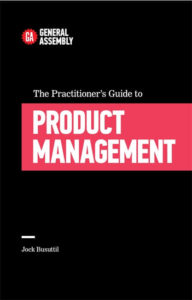
The Practitioner's Guide To Product Management
by Jock Busuttil
“I wish this book was published when I started out in product management. It gives a really wonderful overview of what product management is and involves on a day to day basis.”
— Keji Adedeji, product leader & coach

Jock Busuttil is a product management and leadership coach, product leader and author. He has spent over two decades working with technology companies to improve their product management practices, from startups to multinationals. In 2012 Jock founded Product People Limited, which provides product management consultancy, coaching and training. Its clients include BBC, University of Cambridge, Ometria, Prolific and the UK’s Ministry of Justice and Government Digital Service (GDS). Jock holds a master’s degree in Classics from the University of Cambridge. He is the author of the popular book The Practitioner’s Guide To Product Management, which was published in January 2015 by Grand Central Publishing in the US and Piatkus in the UK. He writes the blog I Manage Products and weekly product management newsletter PRODUCTHEAD. You can find him on Mastodon, X (formerly Twitter) and LinkedIn.