
PRODUCTHEAD: Negotiating freelance day rates
PRODUCTHEAD is a regular newsletter of product management goodness,
curated by Jock Busuttil.
million dollar product manager #
every PRODUCTHEAD edition is online for you to refer back to
tl;dr
Companies hire freelancers because they need to address a specific issue or are not ready to commit to a full-time hire
Excel by being a problem-solver — pay close attention to potential clients’ challenges
Don’t apologise to your client for your (hopefully reasonable) day rate
hello
This week I would like to share some advice I’ve found myself giving a few times recently about freelancer day rates. I appreciate that the supply of freelance product managers probably outstrips the demand for them at the moment. Nevertheless, I believe the market is slowly improving.
I’ll be publishing some more tips about being a successful freelance product manager on Wednesday if you’re interested. You can subscribe separately to the main blog to receive my longer-form articles by email when they’re published.
Speak to you soon,
Jock
Most people undervalue themselves at the outset
Pretty much every freelancer I’ve spoken told me that when they started out they completely undervalued themselves to clients. I did this as well, so if this is you, take comfort that it’s a common mistake for people starting out in freelance product management work.
I can’t tell you what day rate you should be charging, but it will usually be more than you start out thinking. Have a look a local freelancer sites and job advertisements to get an indication of the spread of day rates in the country in which you intend to work (ignoring obvious outliers). Don’t forget that you need to cover your tax bills and other outgoings. You should also raise your rates a little annually to take into account inflation and your (hopefully) increasing expertise.
One reason for people undervaluing themselves may be that find it easy to do what they do, and because of that they equate ‘easy’ with ‘cheap’. If anything, it’s the reverse — the things you make easy for other people (assuming good outcomes) are incredibly valuable. Perhaps this is why plumbers are paid so well.
When thinking about your value proposition as a freelancer, think about how much your potential client needs your specific help as a product person, and when they are likely to value it most. Both are variable factors.
Be dispassionate about your fees #
It’s easy to tie yourself into knots with your day rate, so try to make your negotiation as dispassionate as possible, even if you really, really want to work with that potential client. You start by telling them your day rate is X. It is what it is. You’re not asking for permission to be paid, or apologising for asking for money.
If the client increases the scope or complexity of what they want you to do, then it will take longer to achieve, or a higher rate to achieve in the same amount of time (assuming the goal remains realistic). It’s then up to the client to go away and decide whether they want what you’re offering for that amount of money.
They are welcome to come back and negotiate with you, in which case I would suggest you start by reducing the time you work for them before you reduce the day rate — otherwise it gives the impression you don’t believe you’re worth what you’re charging. And if you don’t believe you’re worth it, the client certainly won’t. However, be realistic: if you’ve been a product manager for five minutes, don’t expect you’ll be able to charge top tier rates.
Negotiation is give and take #
If you and the client do decide to negotiate on fees, remember that it’s give and take. When you offer something the client values (reducing the fees in some way), they need to give you something you value in return. In the past I’ve successfully traded small concessions on fees for partial or full up-front payment because that’s better for my company’s cash flow. Both the client and I came away from the negotiation feeling we had gained something of value.
Know your red lines #
Lastly, agree your red lines with yourself. These are the thresholds that you don’t allow yourself to cross. If the client is asking for a rate or value of the contract below your red line, you politely explain that’s not going to work for you and you walk away.
Think about your red lines in terms of the minimum you would accept that makes financial sense for you and doesn’t undermine your perceived value. It’s like sushi or baby car seats – when they’re too cheap, people start to question why. Don’t be suspiciously cheap sushi.
Further reading #
I’ve given some advice about freelancing, value and negotiation from time to time in articles and other editions of PRODUCTHEAD. Have a read:
What exactly is a freelance head of product?
What skills do I need to be a freelance product manager?
PRODUCTHEAD: The value of a drink in the desert
PRODUCTHEAD: 60 seconds to negotiate
PRODUCTHEAD: Trade-offs and negotiation
what to think about this week
What I learned from my journey into freelance product management
In 2017, I left my full-time job to work as a freelance product manager. Recently, someone was surprised to learn that I’d done this and started quizzing me. So, I thought I’d share what we talked about in case it’s useful for you too. Starting with the elephant in the room…
You’ll be hired to solve problems you’ve solved before
[Liam Smith / Mind The Product]
Here’s how you can leverage your expertise as a freelance product manager
Building a strong personal brand is crucial for advancing your career in product management. Begin by establishing a compelling online presence that highlights your expertise.
Maintain a strong support network
[Watcher Joaquim / Medium]
How to negotiate freelance rates
I was recently chatting to a [writer] friend who’d been offered 20c/word for an 800 word piece by a digital agency that should know better. It was so far beneath her very senior experience that she was, rightly, appalled. But also in the position of things being slow work-wise, she was wondering if she should just ‘suck it up’ and do it. Often, I see that as being the default position from people who a) don’t want to lose the work or b) don’t know how to negotiate freelance rates (or are too scared to try).
[Rachel Smith / Rachel’s List]
Freelance rate calculator
This day rate calculator may be useful to get you in the ballpark. If you’re not sure about your likely outgoings or how much tax you’re going to be paying, you should probably find out. Also, don’t assume you’ll be working for every single one of the approximately 220 working days in a year. Be pessimistic and assume that you won’t be working for substantial periods in the year. You can account for this in the ‘days holiday’. (Holiday — ha!)
Take results with a healthy pinch of salt
[Virtual HQ]
recent posts
DevRel and Product Management with Jock Busuttil on the Voxgig podcast
Voxgig CEO Richard Rodger explore the similarities between DevRel (Developer Relations) and product management, and we cover topics including:
» Learning product management by soundbite and from stories that gloss over the messy context has given a generation of product managers a superficial understanding of their craft.
Other professions find ‘people stuff’ hard as well
[I Manage Products]
The power of open: lessons from UK government, hosted by Product People
4 valuable product and culture lessons from the UK’s government digital teams. This was a talk I gave for Product People in September 2024. Video and transcript available.
[I Manage Products]
What to expect from your face-to-face product manager interview
Your product manager interview is as much about you getting to know your interviewers as it is the other way around. Here’s what you can expect along with my tips for standing out from the crowd.
Go a bit meta and challenge the premise of the exercise
[I Manage Products]
can we help you?
Product People is a product management services company. We can help you through consultancy, training and coaching. Just contact us if you need our help!

Helping people build better products, more successfully, since 2012.
PRODUCTHEAD is a newsletter for product people of all varieties, and is lovingly crafted from spooky costumes and unlimited Haribo.
Read more from Jock
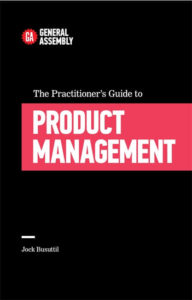
The Practitioner's Guide To Product Management
by Jock Busuttil
“I wish this book was published when I started out in product management. It gives a really wonderful overview of what product management is and involves on a day to day basis.”
— Keji Adedeji, product leader & coach

Jock Busuttil is a product management and leadership coach, product leader and author. He has spent over two decades working with technology companies to improve their product management practices, from startups to multinationals. In 2012 Jock founded Product People Limited, which provides product management consultancy, coaching and training. Its clients include BBC, University of Cambridge, Ometria, Prolific and the UK’s Ministry of Justice and Government Digital Service (GDS). Jock holds a master’s degree in Classics from the University of Cambridge. He is the author of the popular book The Practitioner’s Guide To Product Management, which was published in January 2015 by Grand Central Publishing in the US and Piatkus in the UK. He writes the blog I Manage Products and weekly product management newsletter PRODUCTHEAD. You can find him on Mastodon, X (formerly Twitter) and LinkedIn.