
PRODUCTHEAD: Organisational norms, behaviours and business models
PRODUCTHEAD is a regular newsletter of product management goodness,
curated by Jock Busuttil.
product falling into place #
every PRODUCTHEAD edition is online for you to refer back to
tl;dr
Open and sustainable dialogue across roles leads to greater organisational coherence
An organisation’s business model solidifies over time
A new venture with a different model should ideally be pursued separately to the main org
hello
It’s been a week of heavier reading than usual as I try to wrap my head around behavioural psychology concepts that are increasingly bandied around without the context of the research or articles they came from. The topics this week have been:
Stephen B. Karpman’s Drama Triangle, in which the ‘players’ assume or attribute the roles of Persecutor, Victim and Rescuer to themselves, other people or organisational entities; and
Eric Berne’s Games People Play, which amongst other models talks about the Parent, Adult and Child ‘ego states’ (shorthand for a coherent collection of behaviour patterns and feelings) that people can adopt in particular situations.
I’ve also been refamiliarising myself with with Amy C. Edmondson’s The Fearless Organization, which introduced most people to the concept of psychological safety.
I find it takes a while for ideas to percolate sufficiently through my brain to the point where I feel I actually understand them, at least superficially. Another good example of the penny only just dropping for me this week has been Chris Argyris’s Knowledge for Action. I first read his book some time ago, but struggled to grasp it at the time. Then after a coaching conversation that reminded me of something he’d written, I returned to it and things just fell into place.
Argyris talks about two types of behaviour that follow naturally from the underlying norms of the organisation. Set the underlying principles up right to begin with and you’ll end up with better behaviours.
The first is defensive behaviour when beliefs, position and justification for a particular decision or course of action are challenged. The fear of threat or embarrassment of being perceived as ‘wrong’ or ‘not in control’ triggers them to deflect, cover up and blame others, and closes them off to learning why they went off-track to begin with.
The second is when people use hard evidence over opinion to inform actions, anticipate that errors will arise, and minimise blame or embarrassment when they do. This transparency and lack of social stigma when mistakes are made avoids triggering defensive reactions and provides a basis from which everyone can learn from them.
This second, more desirable behaviour reads to me to have much in common with Edmonson’s findings about psychological safety: the underlying cultural norms in an organisation make all the difference in promoting either dysfunctional or desirable behaviour patterns in the people working there.
For you this week #
Jen Briselli writes about the invisible connective tissue of an organisation: “the informal relationships, back channels, and small acts of trust that make the formal systems actually work.”
An older article recommended by Erika Hall during a recent talk on how business models (should) develop through predictable stages over time by Clayton M. Christensen, Thomas Bartman and Derek van Bever.
That’s probably more than enough to be getting on with for now :-)
Speak to you soon,
Jock
what to think about this week
Invisible Infrastructure
What makes an organization adaptive isn’t in the org chart. Or on the roadmap.
Just enough shared understanding to move together
[Jen Briselli / Medium]
The Hard Truth About Business Model Innovation
Many attempts at business model innovation fail. To change that, executives need to understand how business models develop through predictable stages over time — and then apply that understanding to key decisions about new business models.
From Creation to Sustaining Innovation to Efficiency
[Clayton M. Christensen, Thomas Bartman & Derek van Bever / MIT Sloane Management Review]
recent posts
How to form a go-to-market strategy
A go-to-market strategy isn’t something you tack on as an afterthought to an upcoming product launch. Instead it’s about understanding where value exchanges occur, and figuring out how to make them more frequent, consistent and predictable.
Go-to-market emerges from your discovery
[I Manage Products]
We’re all addicted to AI, but it’s going to be okay
We seem to stuck in a contradiction in which we worry about AI’s effect on our critical thinking, while finding it equally hard to resist using. Why is that?
[I Manage Products]
Canary in the mine: AAA game developers are unionising
Product management has had its own fair share of problems over the last few years. Nevertheless, there are early warning signs from AAA game studios that there may be another storm brewing in tech for us to weather.
Union-busting just isn’t a good look
[I Manage Products]
can we help you?
Product People is a product management services company. We can help you through consultancy, training and coaching. Just contact us if you need our help!

Helping people build better products, more successfully, since 2012.
PRODUCTHEAD is a newsletter for product people of all varieties, and is lovingly crafted from a day of amateur beanbag throwing.
Read more from Jock
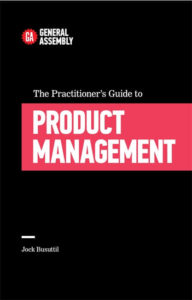
The Practitioner's Guide To Product Management
by Jock Busuttil
“I wish this book was published when I started out in product management. It gives a really wonderful overview of what product management is and involves on a day to day basis.”
— Keji Adedeji, product leader & coach

Jock Busuttil is a product management and leadership coach, product leader and author. He has spent over two decades working with technology companies to improve their product management practices, from startups to multinationals. In 2012 Jock founded Product People Limited, which provides product management consultancy, coaching and training. Its clients include BBC, University of Cambridge, Ometria, Prolific and the UK’s Ministry of Justice and Government Digital Service (GDS). Jock holds a master’s degree in Classics from the University of Cambridge. He is the author of the popular book The Practitioner’s Guide To Product Management, which was published in January 2015 by Grand Central Publishing in the US and Piatkus in the UK. He writes the blog I Manage Products and weekly product management newsletter PRODUCTHEAD. You can find him on Mastodon, X (formerly Twitter) and LinkedIn.