
PRODUCTHEAD: The anatomy of a ‘no’
PRODUCTHEAD is a regular newsletter of product management goodness,
curated by Jock Busuttil.
no products #
every PRODUCTHEAD edition is online for you to refer back to
tl;dr
Avoid ambiguity by speaking plainly
Bring the data, not the verdict
Articulate the cost and opportunity cost
A ‘yes’ is only worth something if a ‘no’ is worth something
hello
I’m not the first person to suggest that Big Tech uses the same playbook for growing their customer base that crack dealers use: give them enough free(-ish) samples to get them addicted, then jack the prices up. (For the record, it’s already happening.)
‘We’re all addicted to AI, but it’s going to be okay’, 6 May 2026
Come June 15, 2026, your dealer (Anthropic) is raising the prices. OpenAI immediately took advantage of the opportunity to grab some market share in the coding / agentic space by offering businesses two months of free Codex usage for new users. Shortly after, Anthropic announced it was increasing Claude Code weekly limits by 50 percent until July 13. What is clear is that, when the tit-for-tat freebie offers have ended, the unlimited agentic AI buffet is no more.
Operating costs for some are going to jump up; there will be the inevitable slew of ‘bill shock’ stories. Then what? In the fullness of time, prices will come back down again – every product tends towards becoming a commodity – but until then, my unsophisticated take is that businesses will respond in one of the following ways:
“We wants it, we needs it. Must have the precious!”
Some will double down on their AI usage by firing even more of the expensive fleshy meatbags, which also cost a lot of money each year, but are less good than AI on account of their annoying inability to churn out code 24/7. Eventually the company will be just one wild-eyed founder shouting at their AI agents.
“Maybe our human staff is useful after all?”
Some (but realistically not that many) will freak out at their skyrocketing bills and pull the plug on their prolific use of AI agents. Senior leadership will rediscover the value and versatility of their human developers, and will apply a more selective strategy when deciding what to build with their limited budget.
“We’re going to have to science the s**t out of this.”
The cleverer ones will look at their AI pipeline and figure out where the cost inefficiencies lie. They’ll be more sparing in their intentional usage of tokens by only using AI to do the jobs it is best suited to, and they’ll keep an eye on where unintended agent behaviour is resulting in ‘token leakage’. Some enterprising bright spark will, I’m sure, capitalise on this situation by offering a suite of profiling analytics to help with this.
Cynical? Moi?
For you this week #
I was chatting with someone about the swathes of new product managers that flooded the job market a few years ago. You know, the ones who genuinely believed they would be the ‘mini-CEO of their product’ after learning their trade from TikTok. I wonder how quickly reality set in after they first attempted to say ‘no’ to something their founder / MD had decreed?
Well, there are many ways to deflect your boss’s epiphanies from their shower that morning, and some are less career-ending than others.
Rich Mironov suggests we articulate the relative values to the organisation of what will not get done in order to create space for the new thing to be done. It would be less appealing to ditch something that’s 85 percent done and is confidently expected bring in a sizeable chunk of money, for something that would take an undefined amount of effort and has an overly optimistic guestimate of revenue potential.
For Randeep Sidhu, “sunlight is the best disinfectant”. Poorly thought-through ideas can be counteracted by opening them up to a forum of senior people. That way you’re no longer the sole voice of reason.
Bateel Fatima reframes requests as problem statements needing discovery to solidify whether they will achieve the desired outcomes: “let me make your idea stronger before we bet on it”. Rather than rejecting bad ideas, she shares the data and the level of confidence. And if she’s overruled and has to deliver it anyway, she documents the decision, the data and how to measure whether the outcome was successful.
And to finish with, Louise Deason compares motorsports scrutineers, who assess whether a racecar meets the required safety standards before allowing it to compete, and product managers, who also have to say ‘no’ from time to time. She outlines four key differences that explain why a scrutineer’s decision to say ‘no’ is respected, when so often a product manager’s is not.
Speak to you soon,
Jock
what to think about this week
My Next Word to Retire is ‘Prioritization’
I’ve been studiously avoiding the term MVP (not the concept, but the acronym) since at least 2020, since it causes endless confusion. It originally identified the leanest-possible learning experiments. Then it morphed into “revenue products we can sell for money sooner.” Then into shorthand for “just get v1.0 built faster, with no compromises or reduced functionality.”
I’m ready to add ‘prioritize’ to my list of excluded terms. (Not the concept, but the word.) Here’s why…
[Rich Mironov / Product Bytes]
Dealing with HiPPOs and big dogs in product
We catch up with Randeep Sidhu, former Head of Product for the NHS Covid 19 app, to find out what he’s doing now and how he succeeds in companies that have little to no knowledge of product management.
Ideas often come with penalties
[Eira Hayward / Mind the Product]
The Untaught PM Skill: Saying No Politically
Every stakeholder arrives with urgency and conviction. Learn the art of choosing what not to build and the political finesse to make everyone feel heard while you do it.
Pressure to say “yes” often drowns out asking “but should we?”
[Batool Fatima / Product People]
What Motorsport Scrutineers Know About Saying No
And why software’s informal version of the same job is so much worse at it.
I am the person whose car is being inspected by someone else in a high-vis jacket with a clipboard, who has the power to tell me I cannot race today, and who I will, if they do, accept the decision from without argument. That is the deal.
The job of saying no in software is everywhere, and it is bad almost everywhere
[Louise Deason / Technically Feasible]
recent posts
We’re all addicted to AI, but it’s going to be okay
We seem to stuck in a contradiction in which we worry about AI’s effect on our critical thinking, while finding it equally hard to resist using. Why is that?
[I Manage Products]
Canary in the mine: AAA game developers are unionising
Product management has had its own fair share of problems over the last few years. Nevertheless, there are early warning signs from AAA game studios that there may be another storm brewing in tech for us to weather.
Union-busting just isn’t a good look
[I Manage Products]
Are developers vibe coding themselves out of a job?
And is the increasing reliance by junior developers on AI coding assistants storing up a generational skills shortage for the future – ‘professional debt’, if you will?
So simple, anyone could do it. Wait – don’t fire me
[I Manage Products]
can we help you?
Product People is a product management services company. We can help you through consultancy, training and coaching. Just contact us if you need our help!

Helping people build better products, more successfully, since 2012.
PRODUCTHEAD is a newsletter for product people of all varieties, and is lovingly crafted from out of print books.
Read more from Jock
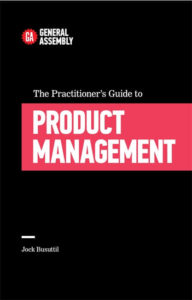
The Practitioner's Guide To Product Management
by Jock Busuttil
“I wish this book was published when I started out in product management. It gives a really wonderful overview of what product management is and involves on a day to day basis.”
— Keji Adedeji, product leader & coach

Jock Busuttil is a product management and leadership coach, product leader and author. He has spent over two decades working with technology companies to improve their product management practices, from startups to multinationals. In 2012 Jock founded Product People Limited, which provides product management consultancy, coaching and training. Its clients include BBC, University of Cambridge, Ometria, Prolific and the UK’s Ministry of Justice and Government Digital Service (GDS). Jock holds a master’s degree in Classics from the University of Cambridge. He is the author of the popular book The Practitioner’s Guide To Product Management, which was published in January 2015 by Grand Central Publishing in the US and Piatkus in the UK. He writes the blog I Manage Products and weekly product management newsletter PRODUCTHEAD. You can find him on Mastodon, X (formerly Twitter) and LinkedIn.