
PRODUCTHEAD: The right kind of conflict
PRODUCTHEAD is a regular newsletter of product management goodness,
curated by Jock Busuttil.
you and whose product? #
every PRODUCTHEAD edition is online for you to refer back to
tl;dr
Conflict in product management is unavoidable
Some conflict is actually desirable and healthy
You can learn to assess and manage conflicts more constructively
hello
It’s been a bit of surreal week. It feels like I’ve mostly spent my time baking quantities of birthday cakes. This has been a not-unwelcome distraction from the trepidation and chaos emanating from the news app on my phone. For future readers coming across this edition of PRODUCTHEAD, this was the week in which the respective presidents of Ukraine and the US clashed verbally and very publicly.
The general guiding principle for my writing is to stick firmly within the boundaries of what I feel qualified to comment on. Global politics is very much outside of my subject matter expertise, so I’ll segue into discussing conflict as it relates to product management, if that’s okay with you.
Whilst it may not be the most appealing aspect of the product management, some degree of conflict is arguably both a normal and necessary aspect of the role. We continually strive for alignment, whether across the multidisciplinary team of people we work with to create the product, or with the broader group of those with a stake in the product, both inside and outside the organisation. Even if those different groups are broadly on the same page, each often has its own unique perspective. As a result we end up forever juggling priorities and managing expectations; inevitably, it also means navigating conflict.
Everyone being like-minded and in harmonious agreement sounds ideal until we consider that such a situation tends to end up with each mediocre (or bat-shit crazy) idea ending up in the product without any challenge whatsoever. The absence of competing ideas would mean we miss out on the potentially better ones. Product managers interface with different disciplines, stakeholders and user groups precisely to broader their perspective and seek the evidence that challenges their assumptions.
Similarly, when everyone chooses to ignore the proverbial elephant in the room, the problem doesn’t go away. It persists and often worsens to the point where the constant mental strain of both living with it and trying to ignore it becomes toxic. Dissent or conflicting ideas are therefore not the enemy: they keep us honest (and perhaps mentally healthy).
However, there is conflict and there is conflict. There’s a difference between someone critiquing an idea in a respectful and informed manner, and another shooting down an idea because “only stupid words come out of your stupid face, you stupid stupid” (I paraphrase).
As various world leaders are painfully aware this week, clashes can arise from these differing viewpoints, and if handled poorly, conflict can quickly become detrimental. Relationships may suffer, collaborative efforts can stall, and (global) stress levels can escalate.
So on a more mundane level, how can product managers effectively navigate these challenges and transform conflict into a driver for innovation and progress?
Non-violent communication #
In one of the articles I share below, Roman Pichler writes about ‘non-violent communication’ (NVC), a technique developed by Marshall Rosenberg for constructively navigating conflict. NVC provides a structured method for deconstructing conflict into its fundamental elements. It is a framework centred on fostering understanding, promoting dialogue, and re-establishing trust. NVC comprises four essential components: observations, feelings, needs and requests. It is not about securing victory or assigning fault; rather, it entails establishing a dialogue, cultivating shared understanding, and identifying mutually acceptable solutions.
Productive disagreements #
Amy Gallo, author of Getting Along, gives advice on how to handle conflict more productively. She suggests that we try to normalise the presence of tensions because resolving them can lead to a better outcome than sticking with the status quo. She also encourages us to reframe how we perceive conflict. This is admittedly easier said than done in the heat of the moment. Gallo says we should try to adopt a curious stance — why is the other person in opposition? — and avoid seeing the conflict as a threat.
For you this week #
As a product manager, conflict is unavoidable; however, as Roman Pichler, Amy Gallo and Marc Abraham advise this week, we can work to manage it and recover from it more constructively.
Roman Pichler explores non-violent communication as a technique for dealing with conflict; Amy Gallo, in conversation on the Walker Webcast, discusses conflict communication and workplace dynamics; and Marc Abraham introduces Morton’s Conflict Resolution Model, which examines factors determining whether conflict is constructive or destructive.
Speak to you soon,
Jock
what to think about this week
How to leverage conflict in product management
It may not be pleasant to experience, but conflict is necessary to innovate successfully. Without competing ideas, it’s virtually impossible to create great products. Unfortunately, many conflicts are handled poorly; they are hidden or result in personal attacks. In this article, I explain how you can skilfully navigate conflict and use it as a source of creativity and innovation for your products.
Healthy conflict is not always easy
[Roman Pichler]
How to work with anyone with Amy Gallo
Amy Gallo is a contributing editor at Harvard Business Review, author of Getting Along and cohost of the Women at Work podcast.
She joined Willy to discuss important principles from her book including the four different reasons for conflict, the eight familiar types of difficult coworkers, understanding your own conflict style, and so much more.
The tools to tackle difficult situations
[Walker & Dunlop / YouTube]
What is Morton’s Conflict Resolution Model?
In my book Managing Product = Managing Tension I write about the importance of healthy conflict. If you can challenge each other’s ideas or opinions constructively, you’ll be able to resolve conflict in a productive manner. Since writing my book I’ve learned about “Morton’s Resolution Model” by Morton Deutsch. Deutsch was a social psychologist who wrote about his conflict resolution model in The Handbook of Conflict Resolution.
Understand the nature of a conflict
[Marc Abraham / LinkedIn]
recent posts
What freelance product management is really like with Jock Busuttil
Off the back of his recent article for Mind The Product, Liam Smith interviewed me about my experiences in freelance product management.
We cover topics including:
» Should you hire freelancers in your product team?
» How to be successful as an external hire
+ more :-)
If this doesn’t put you off, nothing will
[I Manage Products]
Is coding in the open right for your organisation?
One of the design principles that underpinned the digital renaissance in UK government was — and still is — ‘Make things open: it makes things better’.
For this article, I’ve focused specifically on the ‘coding in the open’ part. I’ll cover how it benefits public sector organisations, and how — in the right circumstances — it can yield a strategic advantage to commercial organisations also.
Increased scrutiny keeps us all a bit more honest
[I Manage Products]
DevRel and Product Management with Jock Busuttil on the Voxgig podcast
I’m chatting with Voxgig’s Richard Rodger about common challenges in product management and DevRel:
» Why learning by soundbite gives a superficial understanding of the craft
» Why we’re finding it hard to communicate value to our bosses
+ more :-)
Other professions find ‘people stuff’ hard as well
[I Manage Products]
can we help you?
Product People is a product management services company. We can help you through consultancy, training and coaching. Just contact us if you need our help!

Helping people build better products, more successfully, since 2012.
PRODUCTHEAD is a newsletter for product people of all varieties, and is lovingly crafted from all the birthday cakes.
Read more from Jock
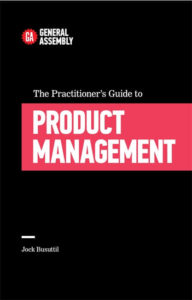
The Practitioner's Guide To Product Management
by Jock Busuttil
“I wish this book was published when I started out in product management. It gives a really wonderful overview of what product management is and involves on a day to day basis.”
— Keji Adedeji, product leader & coach

Jock Busuttil is a product management and leadership coach, product leader and author. He has spent over two decades working with technology companies to improve their product management practices, from startups to multinationals. In 2012 Jock founded Product People Limited, which provides product management consultancy, coaching and training. Its clients include BBC, University of Cambridge, Ometria, Prolific and the UK’s Ministry of Justice and Government Digital Service (GDS). Jock holds a master’s degree in Classics from the University of Cambridge. He is the author of the popular book The Practitioner’s Guide To Product Management, which was published in January 2015 by Grand Central Publishing in the US and Piatkus in the UK. He writes the blog I Manage Products and weekly product management newsletter PRODUCTHEAD. You can find him on Mastodon, X (formerly Twitter) and LinkedIn.