
Startup to Scale-up Club Q&A – 9th Dec 2025
I recently joined Anton Kooll, Naily Makangu, Mike Tempest and Mario Tomic on a panel for Anton’s Startup to Scale-up Club. The Q&A session was focused on product and technology. I’ll be participating in the panel again on 13th January 2026 if you fancy joining in the conversation.
In this session we start out with each panellist’s “do’s” and “don’ts” for startup founders, then move on to field a few questions from the attendees. Some of the highlights include:
- Why it’s important to check fundamental assumptions about the value of the proposition to the intended audience before embarking on a costly product build
- Keeping customer data segregated in the right way while avoiding over-engineering
- When on-premise servers are a more cost-effective bet than cloud services
Have a listen below!
Video #
Transcript #
[Anton Kooll]
Good afternoon, everyone. Thank you very much for joining us today. This is Startup Product and Tech Q&A.
It’s our 174th session. We’ve been doing these now for over four and a half years, where about 290,000 people have tuned in and joined us on these sessions. None of that would have obviously happened without people like Naily, Mario, Mike, and Jock.
Unfortunately, over 90% of startups fail. The top three reasons for that are one, market fit, two, running out of money, and three, not having the right people. But guess what?
When it comes down to it, there is one thing that really matters, especially on market fit, and that is building your product or tech right, which is easier than done. I know, and that’s why I’ve gone out there and annoyed the believing Jesus out of four amazing people that have been there and done it when it comes to early stage product and tech to come and help us for free today for the next hour. The way this works is that we’ll go through a quick introduction.
Then I’ll be asking my panelists for their do’s and don’ts when it comes to early stage product and tech, and then we’ll open it for questions from the audience. So we’ve only got 56 minutes to go. So my advice is if you do want to ask our team any questions, don’t leave it for last second, but drop the question in the chat ASAP so that you can get in the queue of being the first to have the question answered, that is.
Just a quick reminder to those of you that are on the live streams, please bear in mind that unfortunately we are unable to monitor your questions there live. The best thing to do for you is to join us here on Microsoft Teams. It’s an audio only call and you can easily access it by going onto our site, startuptoscaleup.club. So again, it’s startuptoscaleup.club. What you do is you scroll down a little bit, you’ll find today’s session, which is startup product and tech Q&A 174. You click join. It’s a quick registration on Luma and then there you’ll be able to find today’s link. Now I guess it’s time for some quick introductions.
So my name’s Anton Kooll, I’m an Albanian in London working with startups normally right after they get investment. I embed within their teams and help them hire and keep the right people. I also do some growth advisory work with a few other startups and accelerators and help some angels and family officers with their due diligence and assessments.
Perhaps we can start with the lady of the house and then we can go on to Mario, Mike, and last but not least, Jock.
[Naily Makangu]
Hi, I’m Naily Makangu. People know me as the Mary Poppins of startups. I started my career as a software engineer and I got lost in the world of product and leading technical team.
So I sit firmly at the intersection between the business, the founders, what needs to happen, and also being able to lead the technical teams, whether it’s more with a product focus, defining what needs to be done, or by supporting and leading the technical team. So I’ve worked with organizations from large multinationals all the way to a just first idea startup founder who is actually at the moment looking at a startup being acquired.
[Mario Tomic]
Thank you. My name is Mario Tomic. I’m Croatian living in Spain.
I work as a fractional CTO for non-technical founders. I help them with building products, hiring teams, managing teams, everything relates to technology leadership. Happy to be here.
Thank you.
[Mike Tempest]
Hey everyone, I’m Mike, Mike Tempest. I’ve been involved in tech for over 18 years now, traditionally on the tech side. So everything from working for the likes of Google and Apple to building startups that have exited.
Now I’m building a venture studio, Elysium Studios, where we aim to build MarTech solutions for lean teams so that they can compete against traditionally larger organizations. I’m looking forward to the conversation.
[Jock Busuttil]
Hello, I’m Jock Busuttil. Thank you very much for having me here. I joined my first startup in 2000.
Then I’ve been in product for over 20 years. I’ve worked with sort of large companies, established companies and so on. And then I went freelance through my company, Product People Limited in 2012, back before freelancing and product was actually a thing.
And I’ve been doing that ever since. I work with a wide range of companies from startups, scale ups all the way through to established large organizations. Typically my work these days involves helping out in an advisory capacity, mostly either coaching people one-to-one.
I work with executive teams. I work with CPOs and people trying to move up the ladder into those roles. And I also advise startups and founders on how they can build in product to their organization at an appropriate point.
I’m also the author of a book, The Practitioner’s Guide to Product Management. And yeah, I’m happy to help out and answer any questions you have today.
[Anton]
That is amazing. Thank you very much to all of you team. Really appreciate this.
How about some important do’s and don’ts when it comes to early stage product and tech building?
[Mike]
Sure. So for me, for the do’s, I think the biggest one is having quite a strict validation process. So when you’re going through planning your product essentially so that you have enough signals to kill an idea or keep going with an idea. I think that is one of the biggest that I’d recommend anyone to do.
So that can be things like ensuring that you’ve done enough market research to understand where your customers are, what they do, how to reach them, how large is the opportunity, what sort of price points are they looking at, what are those that do the numbers work essentially on that side of things, all the way up to a validation of getting cash in the door, because ultimately you’ve got to make money as a business, so you’ve got to validate that. And then my “don’t” is essentially just never build tech without actually validating it with a customer. I know it’s somewhat related, but I still see it all too often where people build before they’ve even spoken to a potential customer, so I do that as the first step.
[Mario]
So lots of good advice that people don’t follow Mike. Yeah, I can relate to it, because a lot of times they just, you know, people are saying, well, okay, we’re gonna build this and they will come, right, but nowadays it rarely happens, everyone’s so busy and, you know, there’s so many solutions out there, so finding good problems is probably the first thing to do and that’s where most of, you know, those early stage companies I work with, they fail there, they fail because they just didn’t find the right problem.
And, you know, I’m happy to help them with the technology and all of that, but technology is rarely the why they fail, you know, so just don’t focus on technology early on, because there is solution probably for what you want to build and do your initial research and do find the customers before we help for sure.
[Naily]
Yes, definitely agree with the first couple of speakers already, I think they’ve raised one of the most critical points when it comes to building a tech platform, so if I were to add something in terms of the “do”, I think I will follow along the lines of what’s already been said and highly emphasize that do get out of your comfort zone as much as possible, especially if you are a first-time founder, if it’s your first time out there taking on different roles. If you come from a technical background building a platform, then don’t just rely on the fact that, yes, I’m an engineer, I can code this, then once I’m done, I will help clients.
The biggest part and challenges of a startup, even just beyond product development in general, is making sure that you will have customers of all you are working through the real pain points, and I know that there are many, many tools that can help you to do some background research, nothing will be as important and vital as speaking to the customer, so my advice is always to get comfortable being uncomfortable and talking to people. In terms of the “don’ts”, I’m going to rely on some of the things that I’m seeing quite a lot at the moment.
I would like to first start by saying I love AI, you know, the first thing I probably do in the and then probably the last one, but there is a point where you shouldn’t base the decisions of your products, your roadmap, solely on what AI tells you. Make sure that you understand why, you understand the reasonings, and also understand that AI will always favour whatever you tell it first based on the way you ask questions, so I’m getting a lot more in my current discussions when I’m mentoring startups, a lot of people are sending me information that are clearly based on AI, and when I ask a very simple question, why are you building this feature, why is this important now and not later, what research you have done, there is barely any backing, so AI is a great tool, but it’s not the only place you should go when it comes to thinking about features for your product.
[Jock]
So on a slightly different tack, my “do’s” and “don’ts” for startups, so one of the interesting things is the question of when, so do hire a product person, but also do hire the right kind of product person, and it’s important to think about what you have, what you’re trying to achieve, and what you need right now in your own context to think about what kind of product person you need. Some startups I’ve worked with have gone down the path of, well, we see ourselves as being a large B2B SaaS, we’ve got aspirations to grow, so we need someone with B2B chops, quite senior and that kind of thing, and then they go off and they hire this person, and that person struggles because they’re not sufficiently general or hands-on enough to operate in the environment that a startup provides.
They’re more optimized for a more established company with more established processes. So think about what you’re trying to do. If your biggest challenge is around establishing product market fit, find someone who’s scrappy, who understands that you need to try lots of different things, understands the value of research and validation like everyone else has been saying up to this point, and find someone with those skill sets.
If you’re a bit further down the line and you’re looking for someone to take on more of the ownership from you as a founder because you want to focus on other aspects of running your business, then think about someone who has more of that kind of background and experience. So not all product managers are equal. Do find the right fit for your needs.
Don’t just go with the person who sounds the most glamorous on paper, if you like, and if you’re not sure what that looks like, then you can reach out to people like me to help you with that and help you see the wood for the trees.
On the “don’t” side of things, another thing that is interesting, particularly early on, is not to pivot in such a way, because you will have to pivot at some point almost certainly, but not to pivot in such a way that you effectively lose the benefit of the things you’ve learned up until that point. So it’s not a hard pivot, it’s a pivot that at least retains some aspect of the learning you’ve made up until now.
So think about that when you’re, you know, if you do need to change tack, if things aren’t working out the way you’re expecting to, think about making the most of what you’ve already learned so that you can continue to build on it and so you don’t lose that investment you’ve already made, because you’ve only got a chance to make maybe two or three pivots if you’re lucky before you run out of runway, so you might as well reuse the best of what you can from what you’ve already learned.
[Anton]
That is amazing, thank you very much to all four of you.
Well you’ve heard them people, we’ve got four brilliant panellists with us today, they’re going to be here for the next 42 minutes taking questions on how you can best build your early stage product or tech. There are no wrong questions by the way and there’s no need to be shy because it’s a learning curve for us all.
[Housekeeping chat]
Now without further ado, Hayder can you hear me, are you audible?
[Hayder Abdalla]
Yes, yes I am, can you guys hear me?
[Anton]
Brilliant, yes we can buddy, thank you very much for joining us again. Please quick introduction and then fire away with your question.
[Hayder]
Okay perfect, well hi panel, I do apologise I’m feeling quite unwell, but as you guys have correctly stated this is a full-time job. I’m building a startup currently at the pre-seed stage in the SaaS B2B2C sector on digitalizing the after payment space, so basically digital receipts and loyalties for SMEs. Instead of, basically instead of consumers giving out their emails on the till and having that whole friction process, it’ll be a one-tap system with your card which you link via our app.
So that’s just a bit of background of what we’re doing, what I’m planning on building. My question, my question is, sorry, my question is on the card linking side for when consumers would be linking their card onto our application, other than just using their last for an expiry or just matching transaction feed, is there any other efficient and effective ways for me to match consumers and their purchases to the correct receipts?
[Anton]
This is amazing, thank you very much for that. I’ll be honest with you, this isn’t really my forte, but you’re in luck. I think we might have some people here that might be able to come up with a decent answer.
So perhaps on that we can start with Mike, then Neily, then Jock and last but not least Mario please. What would you do here?
[Mike]
I would personally look at the approach of the app a little bit more. I would look at open banking APIs, I’d hook into that and then you don’t have to worry about doing any matching because you’ve got the full transaction history off the card and then you’re done. You want it to be the least effort for yourself to get this off the ground and I think also people are getting the reward, they’ll be happy to do that, you just obviously have to set up that it’s read-only access, you only get to see the transactions and all of the good stuff there.
But yeah, I don’t think you need to over-complicate this because the only thing, you don’t even necessarily need it at the till then either, that’s over-complicating it because then you’ve got to get into the whole store mentality, a store’s got to put your card machine next to it, you’ve got to do the hardware side, I just do it purely from the link up on the open banking side where you can take care of everything and the customer is the only person that has to know about it and then you can sell to the different stores of what their kickbacks are I suppose at that point.
Yeah, that would be how I’d approach it personally.
[Neily]
Yeah, I agree with what Mike said, I think you want to get out of being in the line of fire, especially whenever we talk about fintech, you kind of want to simplify your life as much as possible and if you can get it through, yeah, if you don’t have to actually plan the full journey to be able to get that information and you get that through the APIs then that’s probably the best way for you to move forward. Then to me the next question will be, once you have that information, then how are you structuring the current relationship with the other side of the marketplace?
So for example, if they’re going to get a reward, is that coming from, I don’t know, John Lewis and the likes like that, then how do you also manage that aspect of the reward system?
[Hayder]
Yeah, so to answer your questions, really and truly I was thinking of the way I was initially thinking of it was going down the POS route and partnering with them and then just launching an application via them, so already existing POS systems. But with that being said, with everything you just said with using open banking APIs, my next question for that would be, would it be possible for me to also retrieve exactly the transaction details? For example, what products were basically bought and sold and so forth?
Because initially I’m looking to charge businesses, sorry merchants, per receipt made.
[Mike]
I can answer, so you wouldn’t get like the amount of items in that, it would just purely be the receipt, but a receipt isn’t items either, right, it’s for the whole collection. So yeah, if you want itemised billing, then that’s a whole different thing that you won’t get with putting your card in a place either, you’d have to hook into their more like ERP system or how they manage stock, not just the receipt at that point, at least from my understanding.
[Mario]
So what do we have as input here? So basically what, like you’re able to put credit card transaction in one place and there’s a lot of missing parts here, right? I mean, who has the whole data in this scenario, just to make sure I understand properly?
Nobody has the full data, no? Everyone has a piece of it, right?
Like in the whole kind of scenario, right? Who has the, who is the party that has the full visibility of the, you know, like what items are being paid and how much money and like, you know, transaction charge and all of that, right? Because credit card company doesn’t have that, right?
Because they just don’t have, okay, can you take 100 USD or pounds, whatever from this card, right? So then like on the retailer side, they do know what is being sold at the moment, right? And what’s being paid for, but they don’t have, again, they don’t keep the banking data, the credit card.
So nobody has the full or I misunderstood the problem entirely.
[Mike]
No, I think you’re right. That is the ultimate problem here is that it’s a handoff process between the store and the bank provider. The store just goes, here’s everything they’ve got.
Here’s how much money I want to receive. They hand that off to the card processor who then does the transaction. But the store never really, unless they’re doing well in store, they never keep the card details.
Right. Right. So, so then it, yeah, that that’s equally where it becomes to get itemized.
It becomes a much bigger problem to solve because you have to almost do a full journey. You have to look into the card and then you also have to create the store side as well.
[Mario]
Yeah. Yeah. Because I mean, Google doesn’t have, you know, if you, if you, you know, use Google pay and they’re going to tell you, listen, you know, you spent, you bought, you spend like a euro and 50 at this place and they know it’s a bar, but they know it’s a coffee, right?
It can be whatever, right? Because they don’t, they don’t have the data. Like the data is not flowing from, from, from retailer to the card company.
Right. There’s the reason why they all have this loyalty cards and all of it, because loyalty cards, you can capture activity and then kind of, they, they, they use loyalty cards to solve this problem because then they control loyalty cards, retailers, and then can kind of, you know, keep the history of the transactions. Right.
So I’m not even sure, like, what would be the approach to, to really solve it because, you know, I don’t think retailers are crazy to share purchase information with credit card companies as well. Right.
[Hayder]
Yeah, of course. So the way I was thinking of doing it was to capture the receipt data or transaction data, it would have been going through the POS providers. So at the till, once you scan or you put in details of the item that’s purchased, the till, till worker, person working at the till, the merchant, they’ll be putting in the product from the, from my understanding of it, POS providers or the POS systems would have the information for that.
So I was thinking of putting also an application on the POS side that would capture that and then send it and then use that data to essentially make a digital receipt for customers.
[Mario]
Yeah, but it comes to the complexity of deploying all that actually physical hardware, right?
[Hayder]
No, no, no. I’ll be using existing ones. So on example, Square, Lightspeed, and a couple of POS providers, they have app marketplaces that you can, that you’re able to deploy applications on and then just a plug and download.
Instead of me creating the physical hardware, I’ll just be using existing hardware.
[Mario]
Right. But then on the retail side, they have to have that, right? They cannot use some other.
[Hayder]
Oh yeah. So they’ll have to use the POS providers that essentially we have the app on. Right.
[Naily]
But just following on from some of the stuff that Mario said as well, so if you do that and that allows you to get information directly from a POS system, one of the things that Mario raised was the fact that retailers, would they want to give the permission of knowing exactly or storing the information or the itemized information into a third-party system?
[Hayder]
That’s a very good question.
The way at least I see it is I’m targeting more the smaller merchants. So those ones that don’t currently already have the insights, right? So small-time coffee shop or independent businesses that don’t have the insights, aren’t able to really produce digital receipts or able to essentially use customer data or store customer data, or even use loyalty cards, right?
Because they don’t have the capital or the infrastructure to essentially make it. So I’ll just be providing it to the small-time and then gradually as time goes up and as demand goes up too, then looking to also get into the retail stores as well.
If that answered your question, I’m not sure if I did.
[Naily]
Yes, it does in a way because of course the way obviously I don’t know a lot about how the payment works in terms of the architecture of it, but from my understanding, one of the risks that I’ll be looking at if I was in your shoes would be the validation of the assumptions you’re making in terms of the smaller companies. It’s true that they might not have an insight in terms of the digital receipt, but they do have something in terms of whether it was stock inventory, there is something that they’re tracking for the customer to know what they’re selling from that perspective. Now the question will then be what is the benefit or the incentive for them to have that information if they’re willing to obviously pay for it.
But as goes, you know, just going back to what we were talking about the do’s and don’ts, and I’m sure you’ve probably already thought about that.
[Hayder]
Yeah.
[Naily]
But I just wanted to put it out there.
[Hayder]
Oh yeah, absolutely. To be quite honest with you, the reason why I love joining, why I joined these sessions is because I want to take as much advice and feedback as possible, right? So yeah, so I’m happy to all questions or any advice you guys do give.
To add on to basically what I was saying as well was I was also, yeah, so the way I’ll essentially like ensure or like capture them was also using the idea of the loyalty because quite a few, at least in the area and the market research that I’ve done, quite a few small time businesses are not, they have loyalty cards and loyalty programs, but there’s not anything digital. It’s either those physical ones or they literally just write it in a book, at least the ones in my area and people I’ve spoken to. So I was thinking using that, we can also keep-
[Anton]
Where are you based, Hayder?
[Hayder]
Sorry, I’m based in Wandsworth, London.
[Anton]
In Wandsworth. Well, you’re very near me. There’s a new coffee shop that has opened up.
I’m in Battersea and it’s probably the best coffee I’m yet to try in and around London nowadays. And they’ve got this app called Rewards, R-W-R-D, which does exactly what you’re saying. And there are quite a few apps out there.
My advice is always don’t build it if you don’t have to. If there’s a way, and I’m sure there would be a way, and that is to look into using other people’s infrastructure to capture the data that you want to. That’s what I would focus on.
[Hayder]
Oh, perfect. Did you say it was R-U-R-D?
[Anton]
Let me, because I had to download that myself. Reward.
Hang on. R-W-R-D. So Romeo, Whiskey, Roma, Delta.
And it’s got the image of a kettle and it’s specifically for coffee shops. I love the niche of it, you know. They can go there and say, you know, we’re going to do this for everybody.
Just coffee. Boom. That’s it.
Get a bleeding kettle on it and it does exactly what it says on the tin.
[Hayder]
Yep. Found it.
[Anton]
Good. I hope you found this helpful, Hayder.
[Hayder]
Oh, yeah. Yeah, I did. Thank you very much, guys.
[Anton]
I’m glad you did. Now, you’ll have to forgive me, panel. Is anyone that hasn’t managed to chime in?
I think you’ve all added something. Is that right? If there isn’t, please tell me.
[Jock]
I’d like to jump in briefly, if that’s OK.
[Anton]
Of course you can, buddy. Go ahead, Jock. Sorry, bud.
[Jock]
So I think, stepping aside from the specifics of this, because obviously the other panellists have very covered those in great detail already. What I would say is a more general thought is if you’re struggling to break down the assumptions you need to test and validate, there’s quite a useful technique by a chap called Randy Silver called Dragon Mapping, which is funny because it doesn’t involve dragons or indeed mapping. But what it does do is it starts off with what you’re doing, which is the desired outcome.
So in your case, you’re seeking to allow the small business owners to derive value from the insights they’re getting from aggregate analysis of receipts. So what you do is you say, great, to do that, what do I need? And you branch off several things that that outcome depends on.
And you’ll know what those things are. And then you take for each of those dependencies, you take them each in turn, you say, great, for that to happen or for that to be the case, what needs to be true? And you do that again, and you branch backwards, you get this branching thing working backwards.
And so that’s quite useful for mapping out your assumptions as a first step. But then the secondary thing, which I think is the more valuable step, is you then look at each of those items you’ve mapped out. And you say to yourself, great, how do I know each of those things are true?
And if you can’t point to evidence that you’ve gathered through research and validation, flag it. Yeah, so just stick a little checkmark next to each of the things. And obviously, the things that you do have evidence for that you’ve actually been able to prove and test out and you can, your confidence is truly the case from evidence, then you can put a checkmark next to, which is great.
And then what you do is at the end of that process, you stand back and look at your board and say, how much of this is actually validated? And you can look at all the crosses and all the checkmarks. And what you’ll probably realize is there’s a bunch of critical parts that you need to investigate in more detail, and they’re critical because they could make or break how successful your app is.
So think about breaking things down and being absolutely honest with yourself and saying, if you’ve got evidence for this, you should be able to point to it, you should be able to replicate it, and just be disciplined with breaking down all of those things that you know your ultimate outcome for your users and your customers will depend on. But Dragon Mapping by Randy Silver.
[Hayder]
Perfect, thank you very much. I have that written down.
[Anton]
Thank you very much, Steve, really appreciate that. And best of luck, Darren. Please do feel free to join us again.
We’d love to hear on your progress as well as answering some other questions, especially I saw you put some questions in the WhatsApp chats about fundraising. That might be a good one for you to join. But also tomorrow for growth, Hi Darren, in terms of going to market and getting that product sorted and how do you find out what the need is and where you need to focus and so on.
Please feel free to join us. Let’s take it from there. Perfect.
Brilliant. We now have 20 minutes to go. So I guess one quick reset and then we’ll go on to some questions.
I’ve put question two in the chat. The panellists can read it now and then refer to it later as well. But I’ll read it out loud in a minute for the live stream.
[Housekeeping]
And I’m now going to go ahead and read a question that was sent in to us. I’m a techie, a co-founder of a finance SaaS product in Birmingham that tracks expenses for small businesses. We’re new to multitenancy and need a cost effective way to segment data securely for each tenant.
Could you provide guidance on database partitioning for multitenancy and are there any pitfalls to avoid when isolating client data? Jesus, this is all foreign to me. Perhaps we can look into Mario, then Jock, then Naily, and last but not least, Mike.
Take it away.
[Mario]
Okay, sure. Database partitioning for multitenancy. Yeah, okay.
I mean, this is quite a typical, well-known, well-researched problem, right? So now, depending on the product that they’re building, right, and what kind of separation they need to have. For example, do they want to completely separate client data from each other, having separate instances or schemas per customer?
Basically, that would lead to having almost like different deployments per customer, which is not something most people do. They kind of have a, let’s say, single, to simplify, single database, and then you have something called, okay, customer ID, right? So all the data are kind of bundled together, and then you separate them by some key in this case, for example, customer ID, right?
Now, when, let’s just assume this database, this stuff is very successful, and this database becomes super big, and then you want to, they become big or a size of a single, let’s say, database server. So you need to separate, you need to have multiple servers running the database. At that point, you start to shredding them into different, sharding them into different servers, and then you can say, like, customers A, B, and C will be on server A, and customers E, F, G, whatever, are going to be on server B, right?
And there’s also approaches there, and it’s a well-known problem, and there’s solutions tooling, each popular database will support this, right? So, I mean, generally speaking, you know, I don’t think this is beyond what, you know, someone with experience with database management cannot do, right? So it’s just kind of business as usual.
It’s not trivial operation, but it’s something people are doing for, like, last, what, 40 years, right? So it’s not, there’s book, there’s resources, there’s, you know, tutorials, there’s everything, right? Now, the question is, do this, you know, founder need any of this, right?
Or maybe there’s some, you know, lack of, you know, lack of knowledge in the team, so they’re kind of fixing the problem they don’t have, because, you know, database can be very huge on a single big machine in cloud, right? You know, and, you know, they can have billions of rows that are still running on a single server without any of the drama with, cause with, you know, setting up those complex setups. So I always advise people, you know, don’t solve problems you don’t have, you know, simplify it, you know, and then move from there.
So, you know, that’s as, I mean, a little bit generic, but, you know, not knowing more details, the best I can do.
[Jock]
So to add to that, I’m not, obviously, as technical as Mario there, but I am a bit of a tinkerer and I’ve been in Linux system administration and database administration for far too long now. What I would say is, first of all, the underlying question is, why do you need to separate the data? So in other words, what’s the consideration you’re trying to legislate for?
If it’s just a simple case of you want segregation of data between customers, you don’t want customers to be able to view another customer’s data, which is, you know, obviously fairly standard practice. Then you’ve got to question, you know, do you, what makes the most sense in terms of the risk you’re trying to mitigate? And again, you can solve this in many different ways at lots of different levels.
You know, as Mario was saying, you can do this by having all of your customer data in one thing and essentially ensuring your software enforces the rules of only being able to access one customer’s data from the relevant account. You could look up a level and you could build your database in such a way that each customer has separate tables, which might be just an unnecessary restructure. You can go another level up and you can say each individual customer has their own individual database.
You could then, and multiple databases can run on the same database server. You can go one stage further. You can say, right, each customer has their own database server.
Okay. And then you can start looking at things like, you know, containerization to be able to split things at that level if you need that level of segregation. So that will, all of those options will do the job.
The question is how much of that is actually necessary. And again, that really boils down to what kind of data you’re storing. What’s the sensitivity of it?
What’s the risk of it being shared incorrectly? What volume of data is it? How frequently is it accessed?
What size and shape is it? Those all are factors that will determine what’s going to be a better solution. And, you know, without specifics, it’s kind of difficult to give anything other than the general solution.
But if you think about it, there’s going up the stack, you can go all the way up to giving people their own dedicated instance of a server if you really want to. But the point being is that’s obviously not cost effective. So the question is what’s the right trade off of achieving the desired effect and complexity of technical solution and indeed the cost of ongoing maintenance and scale up.
Because remember, if you are successful and you’re going to have dozens and dozens of these or hundreds and hundreds of thousands and thousands of these, then obviously you need to take that into consideration in terms of cost, maintenance and orchestration. So, yeah, you’ve got lots of options. It is a solvable problem.
I guess think about it in terms of what is the value of the risk you’re trying to mitigate.
[Naily]
And I completely agree here because my initial thoughts when I read your question, especially when you bring up the topic of multi-tenancy is how much is it going to cost you now? What is the stage of your startup? How many customers that you have?
And I know you’re planning for scale, but is this a problem that you are trying to tackle from a very difficult solution when there are easier alternatives to begin with, as been already mentioned by by Jock and Mario? I think that’s kind of the thing I will look into. And I also want to add one key thing is, I think this goes back to the introduction, the do’s and don’ts, and I think it was Jock who mentioned that, if he wasn’t.
Well, this idea of if you bring, for example, you bring a product person in your company and you want to go for one of the best, let’s say multinational, they come and start work for startups and then they struggle because they are used to having a lot of processes, certain types of tools, and that’s where they go with. Me reading this question and also just hearing from the panel is the first thing that comes to mind is what is your background as you are a techie founder? So I’m sure you understand some of these aspects already.
If you’re coming from a corporate background, you probably worked on similar fintech in the past and all of the issues or some of the stuff that you’re talking about from a multi-tenancy could be valid for a large organization, but using different ways of structuring your database, different ways of pulling, pushing the data and things that’s already been mentioned, would that be a better use of your, a better way for you to tackle that, especially from the cost perspective?
So my advice is not very technical or not even product-minded for here. I will, my advice is more mostly based on the mindset aspects of moving from just an engineer in a certain platform to building a startup and what kind of, and how do you need to have a solution that works, that is safe and secure, especially when you’re talking about startups, I’m sorry fintech, we’re talking about compliance, whilst at the same time avoid over-engineering your solutions too early.
I know there are best practices that you’re already worried about, but are you solving a problem that could be way out in the future when you get more investment and a stronger team way much earlier? So that would be kind of my advice and my question for you, to kind of look at it as well from the mindset perspective, as well as the pros and cons from the technical and the cost perspective.
[Mike]
I don’t really have much else to add, I think you guys have taken it pretty well. Yeah, I think the last point is actually one of the best ones though, is how much do you actually need to do now? There’s a point where you kind of have to ride the grey zone a little bit when you’re a startup and make sure you’re providing value, but you can switch into gear enough to cover any legislation and stuff like that, so know the boundaries of which you need to work and go from there.
[Anton]
Thank you very much, I think Mike was last, weren’t you Mike? Right, I think we may have time to go for one more question, I’ll put that question in the chat, I’ll read it out loud for the live streams and again I’d like to encourage live streams whether you’re on LinkedIn, YouTube, Facebook, Instagram or Twitter / X. Next time join us here on Microsoft Teams, it’s audio only which means you can tune in and join us from anywhere via any platform or device and it doesn’t matter whether you’re working from a shared office in Shoreditch or perhaps walking your dog in Norfolk or maybe cooking lunch in Liverpool or having lunch in Glasgow or maybe changing baby nappies in Bristol, you can join us from anywhere any platform or device and you can do that for future sessions by our website startuptoscaleup.com.
Now our biotech startup in Cambridge collects extensive laboratory data from gene sequencing processes which is highly storage intensive and requires frequent retrieval for analysis. We’ll need to raise series A so budget is currently a concern but we also need a scalable high-performance solution to handle data spikes. Should we consider a cloud storage solution with on-demand scaling and what specific storage configurations or optimization techniques could help minimize costs without compromising access times?
The question is in the chat panellists if you’d like to refer to it.
My quick two-pence before I pass you on to the amazing experts here is that a lot of these cloud companies especially the big ones they have some great opportunities to get you to join and you get a ton of free credits and I may even go and register with all of them and see if you can maybe although it’s not the greatest thing in the world to have different storages for your business but maybe worth it and being in Cambridge if you can get any kind of access to the some of the amazing academia that is there some of the sort of let’s call them accelerators and incubators a lot of them have opportunities to get you free credit so look into that and you know you don’t need to spend money right now until we move on to the next stage but let’s see what Neeli, Mike, Mario and Jock got to say on this.
[Jock]
I’ll dive in first if that’s okay.
[Anton]
Go ahead, Jock.
[Jock]
So having worked with Cambridge University Information Services in the past, they do have a university-based storage services which obviously have the benefit of being relatively local and take advantage of the extremely fast network that exists around Cambridge area. Whether or not you as a startup would be able to take advantage of that I think is another question.
So what I’d offer instead is from experience working with some of the biotech startups just outside of Cambridge some of them were shunting you know entire genomic sequences up to the Amazon cloud so they could do some very intensive processing using highly parallelized large numbers so think very, very wide and but for relatively short periods of time and for them the challenge was twofold: first of all obviously the intensive cost of spinning up multiple process instances to actually do the genomic sequencing; but the second problem was shifting terabytes of data around onto the cloud and bringing it back down again.
So what I would suggest particularly at the moment when storage and RAM prices in the cloud are probably going up due to various factors is I would consider building something local. I’d say build something yourself.
I know that’s not necessarily the most fashionable thing to do right now but you can get, you solve the problem of upload and download times if you’re shifting loads of data around if the thing’s on your own network, and second of all storage locally is cheaper. It’s still cheaper for you to buy either fast hard disks or solid-state drives than it is to pay for the equivalent amount of storage in the cloud. So I would say look at something like a very high spec’ed, very large redundant array using something like TrueNAS which is available both as an open source free software that you can run on any regular hardware or you can just simply buy an appliance from them.
There’s a company also called I think it’s 40 drives or something like that [actually 45 Drives] but they build very large capacity, high performance servers that would be appropriate for biotech genomic sequencing as well. So my honest take is look at basically building your own local server because the amount of time and cost you’d save shunting the data around to and from the cloud would probably pay for itself if you just bought your own server and built it yourself.
[Mike]
I kind of agree here. I think it’s the one use case where I’d say actually on-prem is the right solution for what you’re doing. I maybe look at the cloud more for just backups to make sure that none of that goes down equally if there’s a fire whatever you know.
That’s where I’d look at using the cloud for yourself. Equally you could go as far as like looking at taking advantage of like load balancing and stuff in the cloud to then push it around but yeah I’d go with exactly the recommendation there by Jock.
There’s nothing else to add really.
[Naily]
Nothing else from me except from I agree with what’s been mentioned and good luck. I’m going to be in Cambridge soon so if you wanted to say hello feel free to link up with me on LinkedIn.
[Anton]
Amazing thank you very much. Mario before you go do you want to say anything or you need to run? I think Mario’s left.
Well we are now one minute over the line so perhaps some parting words before I let everybody go. If you’ve got time that is. Maybe we can start with the lady of the house Naily and then Mike and last but not least Jock please.
[Naily]
My parting words is probably pretty much inspired by the discussion today. Think about where you are at the moment and make sure that you build the right product that obviously will scale but do not over engineer your platform by trying to solve all the potential problems of tomorrow today. As founders I mean anyone building a platform there’s always going to be some flaws some aspect of it that we wished could be better but at the end of the day it’s on do I have enough right now to get to the next stage whether it means growing, validation, getting new clients, investors or more.
So please make sure that when you are reviewing especially the technical architecture the technical decisions that is also taken into account.
[Anton]
Thank you very much Naily. Michael.
[Mike]
Yeah sure I’ll keep it quick. Yeah just it’s been a quite good chat for me it’s got my my mind thinking so yeah the biggest thing for me to take back from this is that obviously validate that someone wants to have your product that you’re building for one but then also like you say it’s it’s all about scalability at the time that it makes sense for you as a business.
So if you’re early stage don’t worry about it so much just make sure you’re providing that value. Build things with a mindset that it may need scale at some time so take the right approaches to that but don’t overdo it. It can equally kill a company as quickly too because of server costs and equally manpower to maintain that sort of thing so keep an eye on that and if you want to link up I’ve dropped my LinkedIn in the chat so drop me a note and happy to chat more.
[Anton]
Thanks Michael. Jock.
[Jock]
Yeah I’d round up by saying imagine you’re stuck on a desert island so you typically need to survive and to survive you need to figure out what you’ve got and what you need to do what you’re trying to do and just be really razor focused on thinking about what are the skills, the resources, the abilities, the people you need to be able to do the thing and try and bring those people into your organisation as quickly as possible so that you can move more quickly and ultimately get the thing out the door more effectively. I think if you’re struggling because everyone’s a bit too general or not specialised enough with whatever problem you’re trying to solve right then then I think it’s going to hold you up.
[Anton]
Thank you very much Jock. Well huge thanks to everyone that helped today, Naily, Jock, Michael and Mario who left. Thank you to all of you that joined us live as well as those that follow the live streams on Linkedin, YouTube, Facebook, Instagram and Twitter / X.
A couple of things before my parting words. Number one we run six regular sessions helping founders go from start up to scale up with on-demand tailored advice that hopefully works. They’re Monday style and Tuesdays as you saw today Product and Tech, Wednesdays Go, Thursdays Fundraising, second Friday of each month it’s UK Startup Law and third Friday of each month it’s UK Startup Finances.
They’re all from 12 to 1pm UK time. They’re all available on our site startuptoscaleup.club. Again the website it’s startuptoscaleup.club where you can RSVP to any future session and when you’re there you may also want to join our WhatsApp community. We’ve got a few groups of founders, investors, operators, product and tech specialists, obviously our mentors and panellists that you can connect with and there’s a WhatsApp icon at the top and bottom of our site and you can connect via there.
In terms of my parting words just remember the startup journey can be both exciting but also quite challenging so try to have some fun in the meantime and be kind to yourself and everyone else for that matter too. Otherwise hopefully you’ll join us tomorrow for Startup Growth Q&A where we’ll help you or try to help you go from zero to hero. That is Startup Growth Q&A tomorrow at 12pm.
Thank you very much and god bless you all. Bye-bye for now.
Read more from Jock
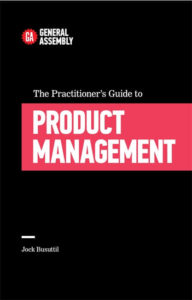
The Practitioner's Guide To Product Management
by Jock Busuttil
“I wish this book was published when I started out in product management. It gives a really wonderful overview of what product management is and involves on a day to day basis.”
— Keji Adedeji, product leader & coach

Jock Busuttil is a product management and leadership coach, product leader and author. He has spent over two decades working with technology companies to improve their product management practices, from startups to multinationals. In 2012 Jock founded Product People Limited, which provides product management consultancy, coaching and training. Its clients include BBC, University of Cambridge, Ometria, Prolific and the UK’s Ministry of Justice and Government Digital Service (GDS). Jock holds a master’s degree in Classics from the University of Cambridge. He is the author of the popular book The Practitioner’s Guide To Product Management, which was published in January 2015 by Grand Central Publishing in the US and Piatkus in the UK. He writes the blog I Manage Products and weekly product management newsletter PRODUCTHEAD. You can find him on Mastodon, X (formerly Twitter) and LinkedIn.
