
PRODUCTHEAD: Good OKR, bad OKR
PRODUCTHEAD is a regular newsletter of product management goodness,
curated by Jock Busuttil.
lotus product #
every PRODUCTHEAD edition is online for you to refer back to
tl;dr
KPIs measure what you’re already doing, OKRs are for change
Problematic OKRs are too big in scope, activity-focused and disconnected from strategy
The Narrative, Commitments, Tasks (NCT) framework offers an alternative to OKRs
hello
I’ll be joining Anton Kooll of Startup to Scale-Up Club again tomorrow (Tuesday 13 January, 12-1pm UK time) to answer questions on Product & Tech from startup and scale-up founders.
Anton brings together a great mixture of product leaders and CTOs on the panel, who each offer great insights and advice. If you or someone you know is a founder, encourage them to join the audio-only call and ask away. I’ll publish the audio and transcript on I Manage Products shortly after transmission.
Following Twelfth Night, when it’s traditional to pack up all the festive decorations back into their boxes for another year, I’ve been doing a bit of similar tidying, albeit virtually, behind the scenes.
I self-host pretty much everything I need to run Product People, from the email to the websites to the backups (and the rest). I used to run everything all jumbled together on a single server. That worked fine, but it became increasingly problematic when one bit of software relied on something (say, a database) that other services also used, but wanted a more recent version that would break everything else.
To solve this, I’ve been using containers to allow otherwise incompatible versions of software to coexist without conflict (Incus, if you’re interested). Everything goes neatly in its own little box. Handily, this also makes backups far simpler for me and a more consistent process.
You’ll probably notice little difference, but it’s been a real time-saver for me.
For you this week #
It’s also that time of the year when people return to work from break thinking about what they want to get done this year. For many, Objectives and Key Results (OKRs) are top of mind. This week I’ve pulled together for you some recent articles discussing what makes for bettor or worse OKRs, and offering a potential alternative.
Christina Wodtke clarifies the difference between KPIs (maintain steady state) and OKRs (drive transformation). Randy Silver points out that ‘BAD’ OKRs are usually too Big, focused on Activities rather than results, or Disconnected from strategy.
Adding to this, Matt Jukes argues that for OKRs to actually work, they require significant strategic scaffolding and a shift in focus toward outcomes rather than just pithy titles. Finally, Ravi Mehta and Natalie Rothfels write about the NCT (Narrative, Commitments, Tasks) framework, which aims to fix the perceived strategy gap in traditional OKRs by providing the motivating context and the ‘why’ behind every goal.
Speak to you soon,
Jock
what to think about this week
KPIs Are Your Dashboard. OKRs Are Your GPS to Somewhere New.
I got asked again last week: “What’s the difference between KPIs and OKRs?”
The person asking was a PM at a mid-sized company. Smart guy. Been in product for five years. His company had just rolled out OKRs and he was staring at a template, genuinely confused about what to write. Here’s what he’d drafted as his objective: “Be a high-performing team.”
Keeping things running versus going somewhere new
[Christina Wodtke / Eleganthack]
When BAD OKRs happen to good people
The days grow short, the season’s end draws near, and, naturally, our thoughts turn to OKRs. Three little letters, and yet they’re the source of so much consternation – when they go wrong, they can go very wrong. But there’s nothing inherently wrong with OKRs, and they can be a powerful force for alignment. So why do so many of us have bad experiences with them?
The 3 most common causes of OKR failures
[Randy Silver / Out of Owls]
[IMHO] Okay OKRs and unproblematic prioritisation
I have a complicated relationship with OKRs and that doesn’t seem to be changing any time soon. It is complicated primarily because I don’t have any issue with them in theory – I kind of like them in fact – it is just that I haven’t encountered many environments where the assumptions that OKRs make for success actually exist.
Inspiring outcomes rather than just outputs
[Matt Jukes / Digital by Default]
Trouble Hitting Your Goals? Here’s Why, and How to Make a Shift
The hallmark of high-performing teams is their ability to effectively set, execute against, and predictably achieve the right set of ambitious goals. A company full of exceptionally operating teams can be the driving engine that separates companies that thrive from those that flop.
Easier said than done.
Reconnecting objectives to company strategy
[Ravi Mehta & Natalie Rothfels / Reforge]
recent posts
Are developers vibe coding themselves out of a job?
And is the increasing reliance by junior developers on AI coding assistants storing up a generational skills shortage for the future – ‘professional debt’, if you will?
So simple, anyone could do it. Wait – don’t fire me
[I Manage Products]
Cloud computing for non-technical product managers
To understand how cloud computing works, we’re going to start with the basic building blocks and work our way up.
[I Manage Products]
Navigating your product management career
Ross Webb and I have been chatting about product management career progression.
We cover topics including:
» Thinking of visibility as a strategic competency, not self-promotion
» Controlling your narrative through regular updates
» Building cross-organisational relationships deliberately
» Mapping your stakeholders’ preferred communication styles
A roundtable chat on moving into product leadership
[I Manage Products]
can we help you?
Product People is a product management services company. We can help you through consultancy, training and coaching. Just contact us if you need our help!

Helping people build better products, more successfully, since 2012.
PRODUCTHEAD is a newsletter for product people of all varieties, and is lovingly crafted from hearty stew with dumplings.
Read more from Jock
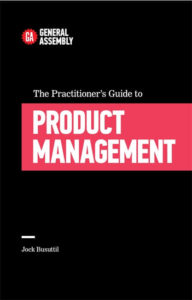
The Practitioner's Guide To Product Management
by Jock Busuttil
“I wish this book was published when I started out in product management. It gives a really wonderful overview of what product management is and involves on a day to day basis.”
— Keji Adedeji, product leader & coach

Jock Busuttil is a product management and leadership coach, product leader and author. He has spent over two decades working with technology companies to improve their product management practices, from startups to multinationals. In 2012 Jock founded Product People Limited, which provides product management consultancy, coaching and training. Its clients include BBC, University of Cambridge, Ometria, Prolific and the UK’s Ministry of Justice and Government Digital Service (GDS). Jock holds a master’s degree in Classics from the University of Cambridge. He is the author of the popular book The Practitioner’s Guide To Product Management, which was published in January 2015 by Grand Central Publishing in the US and Piatkus in the UK. He writes the blog I Manage Products and weekly product management newsletter PRODUCTHEAD. You can find him on Mastodon, X (formerly Twitter) and LinkedIn.