
PRODUCTHEAD: I’m finally beginning to understand Wardley Mapping
PRODUCTHEAD is a regular newsletter of product management goodness,
curated by Jock Busuttil.
arrest this man / he talks in maths / he buzzes like a fridge #
every PRODUCTHEAD edition is online for you to refer back to
tl;dr
Strategy without a map is like chess without a board
There are economic and competitor patterns that affect your strategy whether you want them to or not
There are also strategic moves you can make that are either universal or context-specific
hello
Much like the word ‘unprecedented’, I’m beginning to think that ‘strategy’ has become overused and diluted to the point that it’s lost its meaning for me. I’ve recently been revisiting Simon Wardley’s work on using maps to understand and deduce strategy. Rather shamefully – after over ten years – I think I’m only really beginning to understand the nuance that had previously eluded me.
The foundation Wardley lays out early on in his book [PDF] is densely packed with meaning and, at least for me, it was easy to miss details that unlock later concepts. Many of the articles I write here on PRODUCTHEAD or over on I Manage Products are my way of consolidating what I’ve learned. They just so happen to be helpful to others, which is nice.
This week I’m sharing a few articles and resources that have helped to enlighten me recently, which I’ve drawn on for a long-form article on the foundations of Wardley Mapping to be published on Wednesday. You can subscribe to a separate list to receive it and similar long-form articles in your inbox as soon as they’re published.
Speak to you soon,
Jock
what to think about this week
Chess in Business
I want you to imagine you’re playing a game of chess on a computer against another opponent. But rather than looking at the board, I want you to pretend that you’re unaware that a chess board even exists. When you play Chess, you have a control panel and it looks like this …
Mapping is like suddenly exposing the chess board in business
[Simon Wardley]
A good enough map
When you create a Wardley map, you first start by identifying users and their needs. For example, a Tea Shop has users like the business that wants to sell cups of tea to members of the public who will hopefully drink it. The Public and the Business are connected through a cup of tea.
[Simon Wardley]
Doctrine, Climate and Context Specific gameplay
One of the main advantages of mapping a competitive environment is it provides a mechanism of not only communication but learning. What you quickly discover is there a basic economic patterns and competitor actions which influence your environment (the Climate), there are universal approaches applicable to all (the Doctrine) and then there’s context specific forms of Gameplay.
Copying strategy leads to “surge pricing for funeral parlours”
[Simon Wardley]
Wardley’s Doctrine
Whenever examining an industry then there is the landscape, the common economic patterns and the context specific forms of gameplay that need to be used to determine strategy. However, these are context specific and vary from industry to industry and player to player. This area of strategic play is the most fun part of leadership and where your true Machiavellian spirit can let rip. There are however some basic principles i.e. doctrine that are applicable to all industries regardless of context. These are universal.
[Simon Wardley]
recent posts
How to form a go-to-market strategy
A go-to-market strategy isn’t something you tack on as an afterthought to an upcoming product launch. Instead it’s about understanding where value exchanges occur, and figuring out how to make them more frequent, consistent and predictable.
Go-to-market emerges from your discovery
[I Manage Products]
We’re all addicted to AI, but it’s going to be okay
We seem to stuck in a contradiction in which we worry about AI’s effect on our critical thinking, while finding it equally hard to resist using. Why is that?
[I Manage Products]
Canary in the mine: AAA game developers are unionising
Product management has had its own fair share of problems over the last few years. Nevertheless, there are early warning signs from AAA game studios that there may be another storm brewing in tech for us to weather.
Union-busting just isn’t a good look
[I Manage Products]
can we help you?
Product People is a product management services company. We can help you through consultancy, training and coaching. Just contact us if you need our help!

Helping people build better products, more successfully, since 2012.
PRODUCTHEAD is a newsletter for product people of all varieties, and is lovingly crafted from unhelpful back spasms.
Read more from Jock
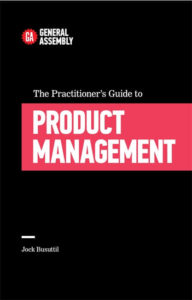
The Practitioner's Guide To Product Management
by Jock Busuttil
“I wish this book was published when I started out in product management. It gives a really wonderful overview of what product management is and involves on a day to day basis.”
— Keji Adedeji, product leader & coach

Jock Busuttil is a product management and leadership coach, product leader and author. He has spent over two decades working with technology companies to improve their product management practices, from startups to multinationals. In 2012 Jock founded Product People Limited, which provides product management consultancy, coaching and training. Its clients include BBC, University of Cambridge, Ometria, Prolific and the UK’s Ministry of Justice and Government Digital Service (GDS). Jock holds a master’s degree in Classics from the University of Cambridge. He is the author of the popular book The Practitioner’s Guide To Product Management, which was published in January 2015 by Grand Central Publishing in the US and Piatkus in the UK. He writes the blog I Manage Products and weekly product management newsletter PRODUCTHEAD. You can find him on Mastodon, X (formerly Twitter) and LinkedIn.