
PRODUCTHEAD: Platform product management
PRODUCTHEAD is a regular newsletter of product management goodness,
curated by Jock Busuttil.
planet product #
every PRODUCTHEAD edition is online for you to refer back to
tl;dr
Platform product management dials everything up to 11
A successful platform is continually evolving in line with user needs and emerging tech
Platform teams must recognise and respect the varying needs of their community of users
hello
Platform product management is arguably product management on ‘hard mode’. You have to consider the needs of the direct users of the platform as well as (to an extent) the users of the stuff built using your platform.
Just because your main users might be people from other teams in your organisation doesn’t mean you have a captive audience. If your platform is too onerous or unreliable for teams to use, or if it doesn’t keep up with their increasingly sophisticated or evolving user needs, they’ll simply build their own or source something equivalent from elsewhere. Whichever services your platform provides, they have to be so much quicker, easier and cheaper to use than alternatives that they become a no-brainer.
Another potential pitfall is when your platform reinvents services that satisfy well-established needs and already have a mature solution available elsewhere as a commodity. It’s all too easy to believe that your organisation’s needs are completely unique and so requires something built from the ground up, when in fact 90 per cent of what you’re looking for already exists in a form you can take advantage of. Wardley Mapping is a useful technique for revealing which aspects are which.
The third thing to think about draws on the concept of ‘whole product’. In a nutshell, there’s the thing you build (the core product), then there are all the other products and services that unlock the value of your core product for the user. Think of a smartphone without a SIM card, operating system, apps or wifi to connect to, and you get the idea. To your users, your platform is but one piece in a much larger puzzle. You can increase the value of your platform services by playing nicely with the other things that your users will be deploying alongside them.
For you this week #
Wyatt Jenkins, formerly of Shutterstock, Patreon and Optimizely, knows a thing or two about platforms. He writes about some of the pitfalls associated with shifting strategy from product to platform.
Co-author of Team Topologies Manual Pais explains which team behaviours and characteristics are needed to create a successful platform.
OpenCredo CTO Nicki Watt talks about what is needed to make a platform fit for purpose from an engineering standpoint. Spoiler alert: a platform is only as successful as its community; it’s not simply a fun technical project.
Creator of the eponymous mapping technique Simon Wardley predicted back in 2016 how AWS was going to eat the lunch of many other software platforms. He explains his analysis through use of Wardley maps, so it serves as a useful worked example for applying the same technique to your own platform strategy.
Nima Torabi has published a comprehensive ebook covering platform product management and it’s all available on Medium for you to refer to.
I’ve also written about the characteristics of organisations that have built billion dollar platforms before, so I’ll include this in the links below.
Speak to you soon,
Jock
what to think about this week
Making the shift to platform product management
Many startups begin with a great product — something that gets traction in a market, but then stumble trying to make the transition to a platform. This article describes the not often discussed shift in product management philosophy required to be a platform.
[Wyatt Jenkins / Medium]
Platform as a product
Using ideas & patterns from Team Topologies — including Thinnest Viable Platform, team cognitive load, and the evolutionary team interaction modes — Manuel explains how organisations like Adidas and Uswitch have successfully used the platform-as-product model to accelerate and simplify the delivery of software at scale.
Knowing when a platform is the right move
[Manual Pais / Platform Engineering]
Platform engineering as a (community) service
… every engineer and their boss wants a platform. But what does it take to build such a platform, and build it well? Especially when it needs to accommodate multiple teams, of varying skills, doing similar as well as very different things. How do you build a platform which is fit for purpose?
Build a platform for the right reasons, not (just) because it’s shiny
[Nicki Watt / GOTO Conferences]
Amazon is eating the software (which is eating the world)
Continuing from my post on the fuss about serverless, I thought I’d riff off Marc Andreessen’s famous statement and explain one possible future scenario where all your software belongs to Amazon.
On AWS you pay Amazon and still do their R&D for them for free
[Simon Wardley / Bits or pieces?]
Harnessing the Power of Platforms: Strategies for Effective Product Management (for Non-Tech Professionals)
In today’s rapidly evolving business environment, platform companies have emerged as powerful players, reshaping industries and redefining consumer experiences. This comprehensive guide delves into the essential principles of platform product management, offering insights into measuring success, enhancing user engagement, and navigating the complexities of long-term strategies.
How to build a robust platform that thrives in competitive landscapes
[Nima Torabi / Medium]
recent posts
Billion-dollar platforms — how they did it
I was asked recently whether platforms will conquer the world. My view? They already have. In this article I share how they’ve done it, and how you can successfully bring your own platform to market.
Platforms take all the usual product challenges and dial them up to 11
[I Manage Products]
New technology alone is not the answer
New technology is not going to suddenly make all the challenges facing an organisation disappear overnight. Why? Because more often than not, those challenges are social not technological. Technology alone rarely solves ‘people problems’.
AI is neither a panacea nor a magic bullet just as digital wasn’t for UK gov
[I Manage Products]
What freelance product management is really like with Jock Busuttil
Off the back of his recent article for Mind The Product, Liam Smith interviewed me about my experiences in freelance product management.
We cover topics including:
» Should you hire freelancers in your product team?
» How to be successful as an external hire
+ more :-)
If this doesn’t put you off, nothing will
[I Manage Products]
can we help you?
Product People is a product management services company. We can help you through consultancy, training and coaching. Just contact us if you need our help!
Helping people build better products, more successfully, since 2012.
PRODUCTHEAD is a newsletter for product people of all varieties, and is lovingly crafted from a pizza with a hole in the middle.
Read more from Jock
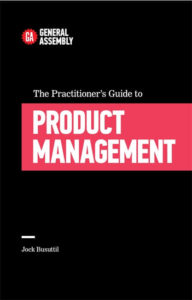
The Practitioner's Guide To Product Management
by Jock Busuttil
“I wish this book was published when I started out in product management. It gives a really wonderful overview of what product management is and involves on a day to day basis.”
— Keji Adedeji, product leader & coach

Jock Busuttil is a product management and leadership coach, product leader and author. He has spent over two decades working with technology companies to improve their product management practices, from startups to multinationals. In 2012 Jock founded Product People Limited, which provides product management consultancy, coaching and training. Its clients include BBC, University of Cambridge, Ometria, Prolific and the UK’s Ministry of Justice and Government Digital Service (GDS). Jock holds a master’s degree in Classics from the University of Cambridge. He is the author of the popular book The Practitioner’s Guide To Product Management, which was published in January 2015 by Grand Central Publishing in the US and Piatkus in the UK. He writes the blog I Manage Products and weekly product management newsletter PRODUCTHEAD. You can find him on Mastodon, X (formerly Twitter) and LinkedIn.