
PRODUCTHEAD: ROI is wildly imprecise / Product operating system
PRODUCTHEAD is a regular newsletter of product management goodness,
curated by Jock Busuttil.
how can you product sure? #
every PRODUCTHEAD edition is online for you to refer back to
tl;dr
With ROI, development estimates may be optimistic; revenue estimates are often more so
Your organisation has an operating system — the way it works — even if it’s not consciously designed
hello
This week Rich Mironov highlights the vagueness inherent in the estimates of both the ‘R and ‘I’ in ROI (return on investment) and what to do instead. For every optimistic estimate from the development team of how long something will take to build, there’s an even more optimistic revenue opportunity associated with it. This may not be a new problem but, as always, Rich unpacks it clearly and offers practical suggestions to overcome it.
John Cutler advances the product model discussion towards a more designed ‘product operating system’, and identifies the patterns and behaviours he believes are intrinsic to how an organisation operates. The bite-size nature of this article makes it a quick and value-packed read. The patterns reminded me of the ‘principles that guide how we work’ style of content that Government Digital Service (GDS) used to be particularly good at producing.
Speak to you soon,
Jock
what to think about this week
ROI: Seductive but of limited value in product planning
I’m part of many discussions where tech company execs try to apply Return on Investment (ROI) tools to make hard choices about what to build, or where to invest costly-and-scarce development resources. It rarely turns out to be as useful as we hoped.
Where ROI is absolutely fundamental to pure financial decisions, it’s typically a very poor fit for the uncertainty and complexity of product/engineering planning and trade-offs. And often makes the product team appear incompetent. (Or makes Engineering appear lazy and disorganized.) Let’s unpack some ROI challenges and propose alternatives.
It’s still a guess even when it’s to 5 decimal places
[Rich Mironov / Product Bytes]
Product OS design tips and principles
Lately, I’ve been spending more time talking with product leaders about exactly how they operate. For lack of a better term, I’m calling it their company’s product operating system (to contrast it with the broader and less specific idea of a Model). No two product operating systems are alike, because no two companies are alike.
It might sound like a boring process discussion, but it’s far from that. It’s a dynamic mix of leadership, service design, organizational design, systems thinking, human factors, behavior design, cultural anthropology, communication design, organizational development, and (even some) game design. In some companies, the product operating system is implicit. In others, leaders make painstaking efforts to clarify how things work.
Either way, it’s a designed system.
[John Cutler / The Beautiful Mess]
recent posts
What freelance product management is really like with Jock Busuttil
Off the back of his recent article for Mind The Product, Liam Smith interviewed me about my experiences in freelance product management.
We cover topics including:
» Should you hire freelancers in your product team?
» How to be successful as an external hire
+ more :-)
If this doesn’t put you off, nothing will
[I Manage Products]
Is coding in the open right for your organisation?
One of the design principles that underpinned the digital renaissance in UK government was — and still is — ‘Make things open: it makes things better’.
For this article, I’ve focused specifically on the ‘coding in the open’ part. I’ll cover how it benefits public sector organisations, and how — in the right circumstances — it can yield a strategic advantage to commercial organisations also.
Increased scrutiny keeps us all a bit more honest
[I Manage Products]
DevRel and Product Management with Jock Busuttil on the Voxgig podcast
I’m chatting with Voxgig’s Richard Rodger about common challenges in product management and DevRel:
» Why learning by soundbite gives a superficial understanding of the craft
» Why we’re finding it hard to communicate value to our bosses
+ more :-)
Other professions find ‘people stuff’ hard as well
[I Manage Products]
can we help you?
Product People is a product management services company. We can help you through consultancy, training and coaching. Just contact us if you need our help!

Helping people build better products, more successfully, since 2012.
PRODUCTHEAD is a newsletter for product people of all varieties, and is lovingly crafted from book shenanigans.
Read more from Jock
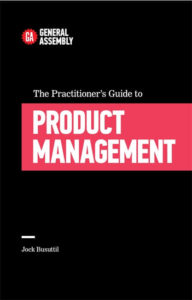
The Practitioner's Guide To Product Management
by Jock Busuttil
“I wish this book was published when I started out in product management. It gives a really wonderful overview of what product management is and involves on a day to day basis.”
— Keji Adedeji, product leader & coach

Jock Busuttil is a product management and leadership coach, product leader and author. He has spent over two decades working with technology companies to improve their product management practices, from startups to multinationals. In 2012 Jock founded Product People Limited, which provides product management consultancy, coaching and training. Its clients include BBC, University of Cambridge, Ometria, Prolific and the UK’s Ministry of Justice and Government Digital Service (GDS). Jock holds a master’s degree in Classics from the University of Cambridge. He is the author of the popular book The Practitioner’s Guide To Product Management, which was published in January 2015 by Grand Central Publishing in the US and Piatkus in the UK. He writes the blog I Manage Products and weekly product management newsletter PRODUCTHEAD. You can find him on Mastodon, X (formerly Twitter) and LinkedIn.