
PRODUCTHEAD: Time passes …
PRODUCTHEAD is a regular newsletter of product management goodness,
curated by Jock Busuttil.
the daily product #
every PRODUCTHEAD edition is online for you to refer back to
tl;dr
Achieving ambitious goals takes years of slog and perseverance — there’s no fast-forward button
Successful companies such as IKEA use time as a strategic advantage
There’s no single ‘right’ strategy — what matters more is choosing a good one and sticking with it long-term
hello
There’s a long-running series on YouTube called Project Binky*. It chronicles how two obsessive car engineers, Nik Blackhurst and Richard Brunning, have been attempting to shoe-horn a large, turbocharged engine into a 1980 Austin Mini, crucially without altering its diminutive dimensions.
The series has a strong ‘mad Englishmen in shed’ vibe, and Blackhurst and Brunning wear their comedy influences on the sleeves of their oily boilersuits: TV classics such as Police Squad! and Monty Python, as well as Terry Pratchett, Douglas Adams and so on. It’s niche, silly and a little chaotic, yet they’re clearly both extremely talented and experienced fabricators.
Since 2014, there have been 39 episodes, 4 or 5 a year. Wry commenters on YouTube remark that they started watching as a kid and are looking forward to watching Binky’s completion with their own grandchildren. I however have binged most of the episodes over a couple of weeks. A couple of hours’ watching for me often equates to a year or more of their progress.
My compressed experience of their journey so far is therefore a rather different one to the faithful subscribers who have waited patiently over a decade just to see the Mini moving under its own power for the first time. They’ve been following along in real-time, I in fast-forward.
All of which brings me to think about time: for the people putting the work in, time means slog and perseverance; for the people on the outside, the passing of time in heavily-edited highlights hides the true effort involved.
Regardless of how tech founders spin their ‘hero’s journey’ after the fact, there is no convenient fast-forward button when what you’re trying to do is ambitious and difficult. If it makes it that far, a startup typically only hits its stride after 3-5 years of trial and error. They are almost never ‘overnight’ successes.
Figuring out the long-term strategy for your company and products takes months of research, discussion and iteration. It’s not something that can be thrashed out meaningfully at a two-day offsite retreat at a swanky hotel.
Time can also be a strategic advantage. As with compound interest, continuous investment in learning and experimentation, little and often, will yield far greater returns than one big discovery push every 3 years.
The companies that are using time strategically have figured out that what is not possible right now will probably become so in the near future. Commodities such as computing power (and in turn, access to that which depends on it, such as generative AI) will only become more ubiquitous and less expensive over time. They know that every unique thing they can charge a premium for right now will be copied and made mass market in short order.
These time-aware companies are already planning for the obsolescence of the products they’re about to release because they’re working to a far longer timescale than everyone else. That’s not to say that their current work is meaningless — far from it. The work right now is necessary for the company to be ready by the time that future state arrives. Nor is it that they have every detail mapped out and will blindly follow the plan, regardless of what happens around them. When encountering an obstacle, they remove it or move around it. Likewise, they take advantages of opportunities that present a way to move forward in the right direction more quickly.
Above all, they maintain a good understanding of where they’re trying to get to and why, what they reckon it will look when they get there, and broadly what they will need to have in place to get there. The rest is variable.
Nik Blackhurst and Richard Brunning have a vision of terrorising the leafy English countryside in what may end up as the world’s fastest, road-legal Mini. Despite all the larking about, they’ve already proven they have a more solid vision and strategy than most tech companies, as well as the engineering chops and years of hard work invested to make their vision a reality.
For you this week #
Martin Eriksson has been listening to the Acquired podcast and the stories of luxury goods companies Hermès and LVMH and their diverging strategies. Referencing Hamilton Helmer’s 7 Powers, Martin observes that LVMH chose to pursue the economies of scale, while Hermès instead focused on cornering a vital resource (the artisans making the items). Despite the different choices of strategy, both companies have achieved great success. There’s no single ‘right’ strategy, Martin argues, rather it is more important to commit to a ‘good’ strategy and see it through over the long-term.
While investigating the Acquired podcast for myself, I listened to their episode on IKEA, a truly unique company grown with strong principles and no outside investment. IKEA has never stood still over its 80-plus years, and thus is a great example of company that has used time as a strategic advantage. As Ben Gilbert puts it to his co-host David Rosenthal, “if there was going to be an IKEA competitor, they would’ve needed to start 50–80 years ago”. I was fascinated by how IKEA temporarily reshaped its business in response to the COVID-19 pandemic without sacrificing its vision or principles, and used it as a case study to help you form your own vision and strategy.
Simon Wardley rounds off this week’s PRODUCTHEAD with a deep dive into the three different kinds of people you’re going to need as your company and products evolve over time from ‘magic’ to commodities: explorers, villagers and town planners. Notably, he discourages companies from attempting to restructure themselves in this way because they tend to skip over necessary steps and end up in a worse mess than when they started. For the tenacious, he explains the 6 steps needed to complete the journey successfully.
Speak to you soon,
Jock
* Binky was the delightfully incongruous name for Death’s horse in Terry Pratchett’s beloved Discworld series of books.
what to think about this week
Hermès and LVMH prove that there is no “right” strategy
The success of luxury titans Hermès and LVMH underline that strategy is about making choices – and then executing coherently on those choices.
Deliberately choose to be different
[Martin Eriksson / The Decision Stack]
The complete history & strategy of IKEA
IKEA may be the most singular company we’ve ever studied on Acquired. They’re a globally scaled, $50B annual revenue company with no direct competitors — yet have only ~5% market share. They’re one of the largest retailers in the world — yet sell only their own products. They generate a few billion in free cash flow every year — yet have no shareholders. And oh yeah, they also sell hot dogs cheaper than Costco! (Sort of.)
There are many big tech companies. There is only one IKEA.
[Ben Gilbert & David Rosenthal / Acquired]
How to organise yourself — the dangerous path to Explorer, Villager and Town Planners (EVTP)
At the heart of EVTP is the idea that as things evolve then the characteristics of such things also changes e.g. the first ever computer is not the same as a highly industrialised cloud instance of a virtual server. Because of this, the manner in which we manage and deal with those things must also change as it evolves e.g. the techniques by which we manage computing infrastructure at a hyperscale today are not the same as the techniques we used in the past. To effectively cope with an evolving space, therefore, requires different aptitudes (as in skillsets such as engineering or finance) and different attitudes (as in mindsets). The three essential mindsets that we need are explorers, villagers and town planners and they can all be brilliant people.
This journey is not for the faint-hearted
[Simon Wardley / Bits or Pieces?]
recent posts
What freelance product management is really like with Jock Busuttil
Off the back of his recent article for Mind The Product, Liam Smith interviewed me about my experiences in freelance product management.
We cover topics including:
» Should you hire freelancers in your product team?
» How to be successful as an external hire
+ more :-)
If this doesn’t put you off, nothing will
[I Manage Products]
Is coding in the open right for your organisation?
One of the design principles that underpinned the digital renaissance in UK government was — and still is — ‘Make things open: it makes things better’.
For this article, I’ve focused specifically on the ‘coding in the open’ part. I’ll cover how it benefits public sector organisations, and how — in the right circumstances — it can yield a strategic advantage to commercial organisations also.
Increased scrutiny keeps us all a bit more honest
[I Manage Products]
DevRel and Product Management with Jock Busuttil on the Voxgig podcast
I’m chatting with Voxgig’s Richard Rodger about common challenges in product management and DevRel:
» Why learning by soundbite gives a superficial understanding of the craft
» Why we’re finding it hard to communicate value to our bosses
+ more :-)
Other professions find ‘people stuff’ hard as well
[I Manage Products]
can we help you?
Product People is a product management services company. We can help you through consultancy, training and coaching. Just contact us if you need our help!

Helping people build better products, more successfully, since 2012.
PRODUCTHEAD is a newsletter for product people of all varieties, and is lovingly crafted from a surplus of weight.
Read more from Jock
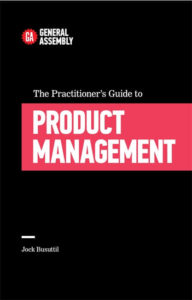
The Practitioner's Guide To Product Management
by Jock Busuttil
“I wish this book was published when I started out in product management. It gives a really wonderful overview of what product management is and involves on a day to day basis.”
— Keji Adedeji, product leader & coach

Jock Busuttil is a product management and leadership coach, product leader and author. He has spent over two decades working with technology companies to improve their product management practices, from startups to multinationals. In 2012 Jock founded Product People Limited, which provides product management consultancy, coaching and training. Its clients include BBC, University of Cambridge, Ometria, Prolific and the UK’s Ministry of Justice and Government Digital Service (GDS). Jock holds a master’s degree in Classics from the University of Cambridge. He is the author of the popular book The Practitioner’s Guide To Product Management, which was published in January 2015 by Grand Central Publishing in the US and Piatkus in the UK. He writes the blog I Manage Products and weekly product management newsletter PRODUCTHEAD. You can find him on Mastodon, X (formerly Twitter) and LinkedIn.