
PRODUCTHEAD: The pendulum swings back to business impact
PRODUCTHEAD is a regular newsletter of product management goodness,
curated by Jock Busuttil.
if you say the product #
every PRODUCTHEAD edition is online for you to refer back to
tl;dr
What product work will deliver the greatest positive impact for the business?
Rather than multiple levels of abstraction, team goals should be 1 step away from the corporate goal
Enabling teams can have impact by prioritising the teams doing the most impactful work
hello
A lifetime ago, product managers fell into one of two camps: those accountable for the financial performance of their product, and those who weren’t. Although, because most companies were even more departmentally siloed than they are today, it was rare for a product manager to also have any direct control over the financial performance of their products. Product pricing and sales incentives were usually the domain of the sales or marketing teams, sometimes the senior leadership team; revenue, retention and profit reporting was often closely guarded by the finance team, as if muggles looking at the spreadsheets too closely caused the $$$$$$ to escape.
Thus product managers found themselves in a special circle of hell reserved for being required to report monthly on the financial performance of their products, while being blocked from the data at almost every turn by the finance team, and having to improve their products’ financial performance without any degree of control or influence over the way the product was priced, marketed or sold. It was like having to compile a report on how well the bus you’re strapped in to was being driven, while the bus driver blithely raced up the wrong side of the road into traffic. Nevertheless, product managers with ‘responsibility for P&L’ (profit and loss) always seemed to have bragging rights over the poor wretches who didn’t.
Despite my time at Experian being more stressful than a crappy bar job I took in the roughest pub in Edinburgh, for which I was never paid, there they did at least afford their product managers a degree of actual control over the finances of their product. We could define the list pricing for our software and subscriptions, then watch helplessly while salespeople gave it all away for free to secure a big professional services deal “because people cost money, software doesn’t”†.
The saving grace came once the data & insights team became so sick and tired of being finance’s query jockeys that they implemented a straightforward way for anyone to interrogate the data themselves, straight from Excel. By removing themselves as a bottleneck, they ‘accidentally’ democratised access to everyone. All of a sudden, anyone could check granular profitability and retention, call bullshit on ‘creative’ reporting against financial targets (*cough* *sales director* *cough*), and highlight how software tended to be discounted by an unreasonable amount by certain individuals, because there was now a single source of the truth.
Notionally then, product managers were always meant to be commercially minded, even in the dark and distant past.
Roll forward in time a bit. Martin Eriksson wrote that product management was a balance of three things: business acumen, focus on user needs, and collaborating to make the technology work in context (remember that famous Venn diagram?). If anything, the challenge at the time was that product managers were too focused on the needs of the business – because this often was mistranslated to ‘build whatever the sales team / CEO tells us to’. Eriksson and others were pointing out that oft-neglected user needs were just as important for a successful product, if not more so.
Somewhere along the way from then to now, it seems as though the mantra of ‘user needs first, business needs second’ became distorted to forget about the commercial responsibility bit. This is myopic at best. For non-profits and profit-making companies alike, any product has to reach a point (soon) where it can sustain itself commercially at the very least‡. If it’s burning many times more cash to make something than you get back from selling it – and that’s looking unlikely to change – even the deepest pocketed financial backers will eventually give up because that product is a rubbish investment (*cough* *every AI company* *cough*).
The signal emerging from employers is that we’ve accidentally created a generation of product people that somehow believe their products can transcend the constraints of return on investment. But before the pendulum swings back too far towards commerciality at the expense of everything else, let’s try remember that product management has always been a balancing act between user needs, business needs and technical implementation. Problems always arise when that balance is lost.
† Only going to show that the concept of fixed and variable operating costs was entirely lost on them, and the dangers arising from incentivising revenue targets not profit targets.
‡ For the sake of simplicity, I’m conveniently ignoring loss-leader products or those subsidised by other products. Don’t judge me.
For you this week #
Eira Hayward summarises the views of Dave Wascha, Nacho Bassino and Matt LeMay on the need for product people to have commercial acumen and how to go about about strengthening that muscle.
Then in discussion with Lily Smith and Randy Silver on The Product Experience podcast, Matt LeMay dives into more detail about how we find ourselves being distracted by the theatre of of work about the work (meaningless quarterly OKR planning, and the rest). Instead, we should be able to draw a direct line between the work our team is working on and the direct impact it has on furthering the goals of the organisation. (And no, the solution isn’t another framework.)
Speak to you soon,
Jock
what to think about this week
Why thinking commercially is now an essential skill for product managers
It’s a cry you hear from product leaders all over Europe – product people need to improve their commercial skills. They should be able to understand and navigate the business, financial, and market dynamics of a company’s success so that they can make decisions to maximise revenue, profitability, and market growth all the while aligning with customer needs and business goals.
Product people should avoid alienating the business
[Eira Hayward / Mind The Product]
Everything you need to know about impact-first product teams
In this episode of The Product Experience, we welcome back Matt LeMay – author, consultant, and champion of no-nonsense product thinking. We dig deep into the ideas behind his new book, Impact First Product Teams, and explore how teams can focus on what really matters: delivering business impact.
“If you were the CEO, would you fund this team?”
[Matt LeMay / Mind The Product]
recent posts
Navigating your product management career
Ross Webb and I have been chatting about product management career progression.
We cover topics including:
» Thinking of visibility as a strategic competency, not self-promotion
» Controlling your narrative through regular updates
» Building cross-organisational relationships deliberately
» Mapping your stakeholders’ preferred communication styles
A roundtable chat on moving into product leadership
[I Manage Products]
New technology alone is not the answer
New technology is not going to suddenly make all the challenges facing an organisation disappear overnight. Why? Because more often than not, those challenges are social not technological. Technology alone rarely solves ‘people problems’.
AI is neither a panacea nor a magic bullet just as digital wasn’t for UK gov
[I Manage Products]
What freelance product management is really like with Jock Busuttil
Off the back of his recent article for Mind The Product, Liam Smith interviewed me about my experiences in freelance product management.
We cover topics including:
» Should you hire freelancers in your product team?
» How to be successful as an external hire
+ more :-)
can we help you?
Product People is a product management services company. We can help you through consultancy, training and coaching. Just contact us if you need our help!

Helping people build better products, more successfully, since 2012.
PRODUCTHEAD is a newsletter for product people of all varieties, and is lovingly crafted from a distinct absence of carbohydrates.
Read more from Jock
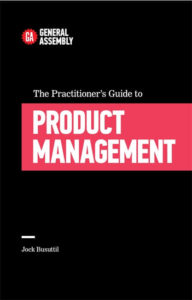
The Practitioner's Guide To Product Management
by Jock Busuttil
“I wish this book was published when I started out in product management. It gives a really wonderful overview of what product management is and involves on a day to day basis.”
— Keji Adedeji, product leader & coach

Jock Busuttil is a product management and leadership coach, product leader and author. He has spent over two decades working with technology companies to improve their product management practices, from startups to multinationals. In 2012 Jock founded Product People Limited, which provides product management consultancy, coaching and training. Its clients include BBC, University of Cambridge, Ometria, Prolific and the UK’s Ministry of Justice and Government Digital Service (GDS). Jock holds a master’s degree in Classics from the University of Cambridge. He is the author of the popular book The Practitioner’s Guide To Product Management, which was published in January 2015 by Grand Central Publishing in the US and Piatkus in the UK. He writes the blog I Manage Products and weekly product management newsletter PRODUCTHEAD. You can find him on Mastodon, X (formerly Twitter) and LinkedIn.