PRODUCTHEAD: What is a product? What is a service?
PRODUCTHEAD is a regular newsletter of product management goodness,
curated by Jock Busuttil.
packt like products in a crushd tin box #
every PRODUCTHEAD edition is online for you to refer back to
tl;dr
Services are best identified as verbs rather than nouns
You cannot have services without products, nor products without services
A service is something that helps someone to do something
hello
In the world of product management, we often find ourselves getting hung up on trying to define things absolutely. What is a product? What is a service? How do they relate?
When you’re too product-centric #
A common anti-pattern is for an organisation, usually but not always a startup, to be too product-centric. They’re focused on meeting a particular need for a specific segment and their product or app is how they’re going to do it. They seek to find product-market fit as quickly as possible, then to grow their market share as quickly as possible. All sounds familiar, right?
While there’s nothing inherently wrong in this, what can be missed is the wider context. They can forget that what they’re actually providing is a service to their users. Before building a product or app or whatever, they first have to be clear on what is the valuable thing they are doing for their users, then establish whether creating a product will make that easier for their users and fit in with what they’re doing before, during and after that particular task.
It’s a common story to hear about startups that spent ages creating an app for some task, only to find that users never ended up adopting it because they were perfectly happy doing that task the way they always had done. Sometimes the right choice should be not to build the product.
You see, the product is not actually the important thing. It might feel that way for the founders of a startup 100 percent focused on revolutionising doing your laundry (or whatever). But to the people who you hope will use your product, it’s just a means to an end. It’s simply a step in the chain of a longer, more complex process they’re following. While the product has to do its job well, even delightfully, it has to work in concert with the broader user journey.
Before, during and after your product #
One way of looking at this broader journey is how the user (or customer) engages with your organisation before, during and after your product. You could look at this in terms of engagement, brand awareness, support and customer success. All good, but a perspective still confined to the boundaries of your organisation.
So another way of looking at the broader journey is how your product and organisation fit into the wider ecosystem of tasks and objectives that a person is trying to complete. If I want to take a holiday somewhere, I need to complete a number of tasks with different organisations, using different services and products in order to achieve that.
To illustrate the example, when I organised my recent family holiday, I needed to:
check whether there were any entry visa requirements for a UK passport holder
renew an expired passport
read up on the places I wanted to visit in the country
translate web sites that didn’t offer English language versions
see what sights and attractions would be suitable for the people going
figure out whether any of them needed advance booking
plan out how and when to travel, including connections, and how much it would cost
establish a ‘plan B’ for any risky connections (which we ended up using)
buy a suitcase that met the size restrictions
find and book suitable accommodation in hotels with decent reviews, useful locations
get travel insurance
check real-time travel updates in each of the different places for disruption
buy local travel tickets and navigate in different cities
… and so on, you get the idea. Some of these were self-contained tasks; some naturally led on to other tasks in the list. Each of the items above could involve dealing with different organisations, multi-step services, web sites, apps, all for the seemingly innocuous overarching user need of “I want to plan and go on holiday in Europe”.
Each product and service had to play its part, and some were more aware of their users’ context (someone from another country booking a holiday) than others. The aspects that were more aware had provision for my particular use case, whether it was relevant information, or simple things such as allowing someone who lived abroad to buy local travel tickets online. Others less so.
The important thing to note is that, for all these different products and services operated by different organisations in multiple countries, it was clear when somebody had been thinking about the bigger picture and when they hadn’t.
Detail and big picture #
In product terms, we sometimes refer to this as thinking about the whole product, not just what you happen to build. In service terms, we might think of this as service design. Which one is more familiar to you will depend on your background.
Both perspectives are compatible, although it’s useful to think in terms of how much detail you’re concerned with.
Someone needs to be at the level of a specific product meeting a specific need (“I need a hotel room meeting my criteria”).
Someone needs to be thinking about what a user is doing before, during and after using that product (“How am I going to get to and from the hotel?” “What’s there to do nearby?” “What am I going to do with my luggage in the two hours between checkout and travelling?”).
Someone needs to be thinking about the broader user journey (“I want to plan a holiday in Europe”).
For you this week #
To attempt to answer the questions posed by this week’s PRODUCTHEAD, I’ve turned to Kate Tarling and Lou Downe for help.
Author and consultant Kate Tarling writes about what makes up a service and offers a way to talk about it meaningfully with other teams in your organisation.
I’ve also included a couple of articles by Lou Downe, former director of design for the UK government. They tackle the distinction between product and service, and how to define a service that isn’t too big (tries to do everything) or too small (way too specific).
Speak to you soon,
Jock
what to think about this week
A common language to understand services
When we build teams to work on services, the individuals may have never worked together before, and may have different ways of describing their work.
When we try to get to a common understanding of a service and its constituent parts — or what they could be in future — the words we use matter.
It takes time to understand what everyone means when they say things like ‘service’, ‘product’, ‘user need’, ‘platform’, ‘channel’, ‘architecture’, ‘policy’, ‘data’ and ‘strategy’. We all have our own definitions.
[Kate Tarling]
How products and services work together
What’s the difference between a product and a service? Do we all need to become more service-focused? If so, what can we do about it?
We get a lot of questions about the difference between what makes a ‘product’ vs what makes a ‘service’ here at the School.
Whilst it’s tempting to be puritanical about the definition of words that mean so much to us, the question of how you define the difference between a ‘product’ and a ‘service’ is about much more than just semantics.
The intrinsic connection between products and services
[Lou Downe / The School of Good Services]
What is a service?
When designing a service, there are many questions we need to answer – who are our users? What do they need from us? What could we do to help them achieve their goal?
But there is one question we’re often afraid to ask. It’s by far the most common question that comes up in Good Services courses, and that’s ‘what is my service?’
This question often comes allong with an apology for the ‘stupid question’. But it’s far from a stupid question.
A service is something that helps someone to do something
[Lou Downe / The School of Good Services]
recent posts
Manage the whole product
A whole product is often a complex combination of several products and services. Some you create yourself, some are created by others. You’re responsible for the whole lot, even if they’re not all directly in your control.
Understand how your product fits into the bigger picture
[I Manage Products]
Service design and product management
The work of service designers and product managers intersect at many points. A product manager needs to know the wider context for their product — it’s almost always part of something bigger. And that “something bigger” is what the service designer is thinking about.
And for exactly that reason, product managers and service designers are often looking at different levels of detail.
A necessary abstraction to ensure there is a quality, cohesive whole
[I Manage Products]
What to expect from your face-to-face product manager interview
Your product manager interview is as much about you getting to know your interviewers as it is the other way around. Here’s what you can expect along with my tips for standing out from the crowd.
Go a bit meta and challenge the premise of the exercise
[I Manage Products]
can we help you?
Product People is a product management services company. We can help you through consultancy, training and coaching. Just contact us if you need our help!
Helping people build better products, more successfully, since 2012.
PRODUCTHEAD is a newsletter for product people of all varieties, and is lovingly crafted from words, glorious words.
Read more from Jock
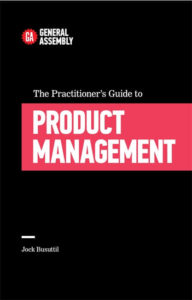
The Practitioner's Guide To Product Management
by Jock Busuttil
“I wish this book was published when I started out in product management. It gives a really wonderful overview of what product management is and involves on a day to day basis.”
— Keji Adedeji, product leader & coach

Jock Busuttil is a product management and leadership coach, product leader and author. He has spent over two decades working with technology companies to improve their product management practices, from startups to multinationals. In 2012 Jock founded Product People Limited, which provides product management consultancy, coaching and training. Its clients include BBC, University of Cambridge, Ometria, Prolific and the UK’s Ministry of Justice and Government Digital Service (GDS). Jock holds a master’s degree in Classics from the University of Cambridge. He is the author of the popular book The Practitioner’s Guide To Product Management, which was published in January 2015 by Grand Central Publishing in the US and Piatkus in the UK. He writes the blog I Manage Products and weekly product management newsletter PRODUCTHEAD. You can find him on Mastodon, X (formerly Twitter) and LinkedIn.