
What freelance product management is really like with Jock Busuttil
Off the back of his recent article for Mind The Product, Liam Smith interviewed me about my experiences in freelance product management.
I started as a freelance product manager in 2012 when I founded Product People Limited, and had been blogging about product management for a couple of years before that. (You can read my first ever blog post if you like.)
We cover topics including:
» What’s the difference between a freelancer and a contractor?
» Should you hire freelancers in your product team?
» How to be successful as an external hire?
» How has product management changed over the last 10 years?
» How did Jock find his first project as a freelancer?
» Should you start freelancing (and reasons you shouldn’t)?
Liam and I had a good chat, which you can watch below. A full transcript is available below the video.
You may also be interested in a couple of other articles I’ve written about freelance product management:
What exactly is a freelance head of product?
What skills do I need to be a freelance product manager?
Video #
Show notes #
In this conversation, Liam Smith is joined by Jock Busuttil, an experienced product management and leadership coach, product leader, and author, to explore the intricacies of product management careers, particularly focusing on freelancing and consulting roles.
They discuss the differences between permanent and freelance positions, the importance of personal branding, and the evolution of product management practices. Jock shares insights on networking, building a reputation, and the challenges of self-employment, while also providing practical advice for those considering a freelance career in product management.
Transcript #
[Liam Smith]
Well, I suppose, Jock, first of all, thanks for taking the time today. I don’t think I actually introduced myself properly. So my name is Liam, as you know, Liam Smith.
I’ve worked in software and product management for over a decade. Started off in technology consulting, where I had exposure to software, project management, business analysis, all that good stuff. And then a few years after that, I moved into product and actually started with a contract role and ended up continuing in an external capacity, similar to yourself in some ways.
I think you’re a little bit further ahead in your journey. You’ve done certainly a wider variety of things than I have. Just looking through your LinkedIn, and I’ll ask you to sort of, you know, keep me honest here in a second, but you started in software, then moved into product management full time.
Then you founded Product People in 2012. So I suppose that was your move into self-employment where you’ve held titles such as product management consultant, product management coach, interim head of product. You’ve been a training author and a trainer with, for example, Mind the Product.
You’ve been an instructor with General Assembly. You’ve authored a book. So the practitioners guide the product management, which you can see in the background.
You’ve also done some content and some work with GDS, the government digital service, so used by the UK government. So it’s quite an enviable CV and list of achievements, I would say. But yeah, anything to add to that?
How would you describe what you do to people?
[Jock Busuttil]
So I suppose the best way of putting it is, nowadays I am mostly a product coach. So I help people with their product management career, whether they’re just starting out, whether they’re midway through and looking to kind of step up a bit, or indeed if they’re kind of, you know, they’re head of product, CPO, VP product, product director, I can help those. I’ve also worked with other members of the C-suite who maybe don’t necessarily have a CPO or a VP product on their team, but are responsible for the product function within their organization regardless.
So that can be quite interesting. I do a bit of training here and there where needed, and I still do a bit of hands-on consultancy. So going into organizations, either in an advisory capacity or actually helping them to build something.
[Liam]
Yeah, yeah, great. And one question I have had recently, someone asked me on LinkedIn, you hear the title, you know, freelancer, contractor, consultant, coach, mentor, trainer. Some of those things are a bit clearer, like maybe a trainer, a coach maybe has a quite a defined title to it.
But when we talk about, say, a freelancer or a coach, consultant, career and fractional, but how do you think about it, the differences between those sort of role titles, if that makes sense?
[Jock]
So it’s kind of interesting. So I think the, in the UK at least, I can’t really speak for how other countries operate. Thinking about what you’re being asked to do and how it’s set up to work is kind of an interesting or a useful thing to think about.
So for example, if you are coming in to cover, say, some parental leave, so somebody is away for a fixed period of time, maybe three to six months, and you’re effectively stepping into their shoes and fulfilling that same role while they’re away on parental leave, then you can kind of think of that as being more like a short-term contract. You’re going in, you look like an employee, you smell like an employee, you know, you’re given the same kind of benefits as an employee, but you’re just there for a short period of time. That’s kind of one piece of work.
And that’s kind of like maybe thinking about that in terms of contracting. Another kind of way of going in is you’re there to do a very specific thing. So it’s closed-ended.
It’s almost like a mini project. You’re there to help do a specific thing, and when that specific thing is done, you finish and you go. And there’s no kind of obligation or promise of future work beyond that.
So that kind of role is more like freelancing. You’re there just to do a very specific thing. You’re working on your own basis.
You’re there. Once you’ve achieved that thing, you’re out again. So those are kind of the two broad categories of work.
And in the UK, at least, that’s important to understand the difference, because if you look like an employee, then HMRC will tax you like an employee. And if you don’t look like an employee, as in you’re a freelancer, you’re going on your own account, then you are outside of those off-payroll rules, as it were, IR35 is the kind of key thing here. I should hasten to add, I am not a tax expert.
I am not allowed to give advice on tax or anything like that. So don’t take this. Go and do your own research.
But in terms of how you structure the work, it’s either I am going in like an employee, albeit for a short period of time, or I’m going in to do a very specific closed-ended thing. And broadly speaking, those are kind of the two groups of work. And whether you do that five days a week, one day a week, fractional, whatever, kind of is irrelevant.
It’s more what does the actual work involve.
[Liam]
Yeah. Yeah. And it sort of ties into another point I was discussing with someone recently.
Someone I respect massively. He works as a CPTO currently. And we were talking and he, I’ll paraphrase, but basically said, I’ll only hire full-time people into my product team.
Words to the effect of, I basically don’t want mercenaries. I want to keep the knowledge in the team. And obviously, my experience is that, and I believe my clients would tell you the same, I’ve been able to deliver some good work as an external person.
Clients have rehired me on that basis. The scope of work and the type of work might be different, but what would you say to someone who is maybe of that mindset? Look, I will only hire full-time people into my product team.
Have you had that feedback from people before? Have you had that objection?
[Jock]
It’s funny, because actually I agree entirely with the sentiment. I think where you have the opportunity to hire people permanently, then you absolutely should, because we are people who, as freelancers, we come in, we do some work and we leave again. And whatever time and effort that organization has spent bringing us up to speed is effectively wasted the moment we walk out the door again.
However, the reason why people do bring in freelancers or contractors is because they have a short-term unfulfilled need and they don’t have the time to wait for somebody’s notice period or to go through a hiring process, which will take three to six months minimum to get in someone decent into the door. So the trade-off is essentially about availability and how rapidly they can start. I would always stress that if you have the option to hire someone full-time and keep them a permanent member of your team and invest in their growth and give them reasons to stay with you, then that’s always going to be the better choice.
Even when I was interim head of product at the Ministry of Justice and at GDS, I was there to make myself redundant. I was there to hire my own replacements into the civil service as quickly as possible because they were paying a premium for freelancers, for contractors. And the sooner they could get people into the civil service as permanent employees, the better use of taxpayers’ money we’re making.
And therefore, it was kind of on me to ensure that happened as quickly as possible. It’s a terrible business model as a freelancer, trying to make yourself redundant as quickly as possible, but absolutely the right way to go about it. When you’re no longer needed as a freelancer, you should get out the door.
If you’re hanging around like a bad smell, then you’re overstaying your welcome, I think.
[Liam]
Yeah, I agree. And in my experience, it’s usually been when I’ve been contracted or I’ve worked more as a consultant, there has been a piece of work that a client needs delivering and they know or they don’t know if there’s going to be a need for that skill, basically the skills I’m bringing, beyond the initial scope of that piece of work being delivered. Often, sometimes there is, and sometimes they’ll be moving on to other things.
But yeah, it makes sense. And so you’ve worked in-house and you’ve worked externally as a product person in various guises. What would you say are some of the biggest differences in terms of maybe the skillset and the sort of challenges you face on a day-to-day basis?
And ultimately what I’m getting at is like, how do you think about trying to be successful on an engagement where you might only be there for three months, maybe less, maybe more, depending on what it is?
[Jock]
Yeah, it’s a really good question. So the game changes quite a lot when you know you’re only going to be there for a short period of time. And that means thinking about things in a couple of different ways.
So whenever you’re going in as a freelancer or as a contractor, you’re thinking about, first of all, doing the job that you’re there to do, but you’re also thinking kind of one level up in terms of running you as a business. How do you make sure that you deliver the best possible service to your client over and above the actual product work you happen to be doing for them? So what that means is, on the one hand, you want to deliver as much value to your customer or your client as quickly as possible to justify them hiring you.
You don’t have the luxury of taking your time to get up to speed. So you have to go in there, you have to understand, you have to do your homework, you have to understand their market, you have to get up to speed with what’s going on in their teams, what’s going on with their products, what’s going on with their customers, where the fires are, as quickly as you can. When you go into a permanent role as a permanent employee, you might sort of take, you know, 30, 60, 90 days.
You know, you see all those guides about what do you do in the first 90 days when you start a role. You’re doing that, but effectively you’re doing that in the first week or so, yeah? You’ve got to do it very, very compressed.
You’ve got to get a lot of information into you. That means rushing around and gathering as much information by talking to people and doing your homework and your reading in as quickly as you can, because the whole purpose is to get up to speed and to start delivering value to your clients as quickly as possible. So that’s the first thing.
The second thing is you have a limited amount of time in which you can make an impact. And if you’ve only got a few months there, then focus on what was the one major thing they wanted you to do by the time you finished. And if that isn’t clear, make absolutely sure you clarify that at the outset, ideally before anyone signs any contracts.
The worst thing in the world is to be in a contractual relationship with someone where nobody’s entirely clear what finished looks like. Figuring out what’s the one thing you want me to have finished or done by the time this contract is over and make absolutely certain that above all else is prioritized. If you can bring additional value while you’re there, fantastic, but making absolutely certain you’ve done the thing they wanted you to do is really, really important.
[Liam]
Yeah, I totally agree. And like you said, as well as trying to think like a product person, product manager, whatever your role might be, it’s trying to think like a business owner. I suppose it’s applying very much the same sort of prioritization and focus that a product person would bring to their work, but to the project, the engagement as an external person.
And like you said, what are we actually trying to do here? And that might come in the form of a statement of work or something like that, which I’ve had to get quite good at writing. I’m sure you have too.
So you’ve been working on the product people. You founded the product people over a decade ago. If you had to distill your biggest challenge as a self-employed person in the product space, what would you say it is?
And this is maybe a leading question. I’m hoping for a specific answer, but we’ll see.
[Jock]
So for me, the biggest challenge is whatever work you do to build up your brand and your reputation should have started about five years ago. So a lot of people kind of come to me saying, I want to get into freelancing or I want to start doing something. Great.
What have you been doing up until now to promote yourself as a thought leader, as someone that an organization would trust to come in and get the job done? And they say, well, I haven’t really thought about that. I mean, for me, so I kind of fell on my feet and I kind of didn’t necessarily plan things out the way it may look.
But as it happens, I was working at Experian and I was head of product there for the team of product managers and a bit of the large Experian group. While I was there, I started blogging about product management. And to be honest, it was mainly because I was needed something to channel the frustrations that I was having, but also then reflect on them and say, right, is it just me being, you know, shouting at the waves, you know, or is it, or should I actually try to do something vaguely constructive and how can I, you know, do this better?
So I’d started writing for about two or three years. And at the time, there weren’t that many product management bloggers. So, you know, it got a few reads and that kind of thing.
So, but nothing spectacular. But the point being was when I left Experian and to be honest, I didn’t really have a particular plan to go into freelancing. I had already had some element of brand reputation.
People kind of, oh yeah, you write that blog or, you know, I’ve read some of your articles because let’s face it, there wasn’t that much content around and Google was quite, you know, quite complimentary about giving you organic views. And then I didn’t actually have a plan to go into freelancing, but I ended up talking to someone at a conference and they said, well, what do you do? And I said, well, I didn’t want to say, well, I’m unemployed because I’ve left my last job at Experian.
So I said, I’m doing this thing called product people and it’s kind of interim, you know, freelancing product work. And they went, oh right, it’s really interesting. And that particular person didn’t take it forward, but off the back of that, I kind of did the minimal viable company, you know, got the business website set up, got a business bank account set up within like the week.
And then I could actually claim to be who I just said I was because I’d actually retrospectively set up the company to fit. But it wasn’t planned in that way. And it just then so happened that when I said, look, I’ve started up on my own, I’m available for work and LinkedIn not being the noisy place quite it is today, somebody got in touch that I’d worked with years and years ago and said, look, we need someone short term to help with the product side of things.
Could you come in for a few months and help us? And it just started from there.
[Liam]
I can totally relate. And one of the things I did note down, like you started product people in 2012. I started at Accenture around the same time in technology consulting in sort of project management, business analysis.
And one or two years later, I started to hear about product ownership and agile and product management in the technology and software space. It was starting to sort of seep into the enterprise, but not that many people were doing it still in-house. And this is 2014, 2015 now.
So when I made the decision to leave Accenture and like you, I’d written a couple of things. I’d rebranded my LinkedIn as a product manager. It was quite easy then for people to say, actually, yeah, we need some help.
And we don’t really know anyone in this space. We don’t have an in-house team. And things flowed a lot more organically.
It feels like things are a little bit different now. It feels like there are a lot more organizations that have in-house product teams or are already transitioning to the product operating model. Maybe the type of work has changed from delivery to, like you said, maybe more coaching and sort of the operating model side of things.
But what are your thoughts on how things have changed since you started? I do want to go back to what we were talking about in terms of finding work and personal branding in a minute. How do you think things have changed since starting Product People today?
[Jock]
So I think that and actually the personal branding thing are kind of related in some ways. Before, the challenge was nobody knew what product management was. And so people didn’t really know if they needed it.
So in that situation, the challenge was more about having sufficient conversations with people so that even if they didn’t know this thing they needed was called product management, they at least knew people who could help with the particular set of problems they were facing. So that was kind of the challenge early on. In terms of how it’s changed and evolved, so as product management has become better known, we have that whole thing of people adopting it, maybe not really understanding the principles behind it, maybe kind of copy pasting people’s approaches because they’ve read it’s a really great idea, but, you know, and just want the benefits without really understanding how it works or what should work for them. And so then you get this kind of superficial product management and kind of the mid phase where, and you had a bit of that when that kind of whole the agile thing started to get adopted by everyone and then consultancy started springing up, you know, kind of providing frameworks and methodologies and training because as soon as you’ve got a new trend, of course, you’re going to get those people thinking we can capitalize on this. And so, but you ended up with a whole bunch of people. I wouldn’t say doing product management wrong, but doing product management superficially.
And so they were doing it, they were following the processes, they’re maybe implementing something like Scrum and they’re walking through the motions, but they weren’t necessarily understanding why they were doing those things. And so on the one hand, that’s good because it’s progress in the right kind of direction. On the other hand, it presents new problems because now you’ve got people who are saying, well, this product management thing is overrated because we’ve done it and invested all this time changing our teams around and it’s not delivering any of the benefits.
In fact, we’re probably going slower and things have got worse because they’ve not realized there’s this kind of trough of disillusionment as you start to realize what your actual problems are and then figure out how to change the process to suit your actual needs. But that meant that there was then more opportunity for people who did understand product management to come in and actually help sort stuff out. So that was fine.
And of course, then we started to get organizations providing training and you have the people who kind of knew what they’re doing. The people who claim to know what they’re doing and then all the rest. And that’s always going to be the case.
And now you’ve kind of got the situation where it’s become almost so well-known that there’s almost been a bit of a backlash to it. Okay, so people go, oh, we don’t need this product management thing. It’s overrated.
We can do it better this way. And you’ve got all of this thing. Everyone’s writing an article saying the death of product management or the death of this or death of that.
And it’s like, yeah, it hasn’t died. It’s just going to change, settle and emerge again because fundamentally, the kind of things you need to do in an organization that builds tech products are the same. And product management is still the way to go about doing that in the best way possible so that you deliver something that people will actually need and buy.
So I’m not too concerned about that. But I think there’s still going to be opportunity and value for product managers, both obviously employed and as freelancers. But now that this kind of shakeout has occurred, it’s going to take a little time to kind of get back into it.
And who knows, maybe the cycle will begin again.
[Liam]
Yeah, I agree. Yeah, totally agree. I think on that point, I think, yeah, we can go back to, I suppose, one of the broader challenges we’re talking about, which is just finding work.
I suppose that’s what you’re alluding to in terms of the personal branding piece and that leading to things. And before we actually talk about what you’re planning to do going forward, I’m curious how the opportunities with Mind the Product and General Assembly came up. Like I said, both enviable organizations to work with.
[Jock]
Yeah, so I think part of it was there was an element of the product management community was back then relatively small. I mean, with the Mind the Product stuff. So before even Mind the Product became a thing, it actually started off with the ProductTanks, the kind of the informal meetups.
And back when it was small enough that it could be like sort of 10, 15, 20 people in a pub. That’s kind of how it started off. Now, I wasn’t right there at the very, very beginning, but pretty early on.
And so there was like people like Martin Eriksson, Janna Bastow, Simon Cast. Who else was there? Lucy Spence.
These kind of people who you see now doing fantastic and amazing things. I mean, they’re doing pretty amazing things at the time as well, to be honest. But we were kind of getting there and go, what is this thing called products management?
And, you know, how do we do it better? And is it just me? Am I crazy?
Am I doing this wrong? Or is this something? So we just started talking things through.
So back then, but it was basically networking, but effectively a support group for product people. Yeah, and as a result of that, when one or two of us started doing this more freelance, then there was an element of, well, I’m busy or I can’t do this. Maybe try Jock.
Yeah. And so that kind of, you know, referral within the kind of freelancer network was really valuable because there was more work than there were freelancers. And there was loads of demand and people really needed that kind of help.
So it was relatively easy to kind of pass work around and make sure that good people that you knew could do good jobs and would recommend. Because ultimately your recommendations reflect back on you as an individual as well. You know, you’d be able to put in people who could do a good job.
And it kind of worked like that for a certain period of time. That led to me doing some work with General Assembly when they opened up their first UK branch. So again, early doors, a bunch of guys in a loft near Farringdon, no idea what they were doing really.
Who knows something they can teach? Who can get going on teaching this product management course we’ve got from the US? Well, you know, they asked me, I said, yeah, sure, I can do that.
And it kind of went from there. And then off the back of that, they asked me to write this book, which I did. And it kind of just one thing led to another. With the Mind The Product stuff they wanted to move into training. So they asked me and Kate Leto, again, another freelancer, very well-known writer and author in her own right now as well, to write their first training course. And that foundational product management course then started their training business.
But it was very much that case of you’re going out there, you’re meeting with people, you’re networking, you’re building up your contacts. And sometimes you’re just reminding people that you exist and that you’re doing this and that you’re available so that when something, when an opportunity does come up to do something, people think, oh, maybe I should give Jock a shout or maybe I should give so-and-so a shout to see if they’re available and if they can help. And that’s really kind of how it goes.
I don’t think that advertising necessarily works, particularly now because it’s too noisy. I don’t even necessarily think that generating tons of content is that useful either because again, it gets drowned out by everything else. There’s too much volume.
People tried blogging, they tried podcasts, they’ve tried YouTube videos, they’ve tried newsletters. And some people are obviously more successful than others, but you can’t all be in a Lenny’s newsletter. You can’t all be one night in products podcast.
You know what I mean? There’s only so much content to go around. And as a result, you can’t rely on that as being a valuable or reliable way to bring in business.
When it comes down to it, it’s about working your network of people and contacts so that when the appropriate roles do come up, they consider you without having to be reminded.
[Liam]
Yeah, definitely. And I think, yeah, it totally reflects my experiences as well. I think I’ve had some positive benefits from writing things like some blog content for Mind the Product, for example, but I’ve not written that much.
It’s normally something that I think is interesting, has a different viewpoint, hasn’t been written about before or is a personal experience. Like, for example, an article I wrote about freelancing in product management, which led to me wanting to do a miniseries with yourself and a few of the guests because I’m getting very specific questions about that because it isn’t something that’s widely written about so much as the general sort of product, how to do a roadmap or whatever it might be.
[Jock]
Of course.
[Liam]
So I agree. So I think you sort of answered it, but how are you thinking about, say, the next five years in terms of how to position yourself and the product people? Like, is there a specific sort of area you’re planning to focus on or a niche, as you might call it?
Both in terms of what you offer, but also then how you market. Like, you’ve mentioned networking, of course, but you still write a blog. You still have a newsletter.
You’re writing a new book. You do talks. You do other things.
So what are you planning to focus on? How are you thinking about the next five years?
[Jock]
Well, you see, here’s where I should have a really fantastic and well-thought-out plan, right? Applying the whole principles of product management and growth to my own business. The reality is that not every business needs to grow.
And for me, I’m quite happy kind of with things running at the level they are. I think if I can reach out to more people who need, you know, particularly the coaching side of things, that’ll be a good thing. So you mentioned the book, and I’m not kind of plugging something I haven’t written yet.
But what I’m trying to do with the book is essentially create coaching for the people stuff that people encounter, like stakeholder management, dealing with teams, resolving team conflicts, handling, you know, higher-ups, handling your direct reports, all of that kind of stuff. And it’s not kind of to be like coaching, you know, as with coaching, rather, I should say, it’s not meant to be directive in the sense of you must do this, you must do this, you must do this. That’s not how coaching works.
But what I do want to do is kind of create something that allows people to coach themselves, to prompt themselves to figure out solutions to their own tricky people problems, and then hopefully allow them to do that more effectively as product people, because product management is actually about 80% people stuff. So the reason for that book is because it’s about increasing the reach. I can only coach so many people a day, yeah?
And even if I was doing it, you know, full-time, five days a week, I could only coach so many people. However, if I create a book that allows people to coach themselves, then hopefully that opens it up to a much wider audience and lets people kind of handle the kind of things that typically come up in coaching anyway. So that’s one way I’m trying to broaden the reach.
And it’s not about necessarily, it’s not about self-promotion. It’s about how can I have a bigger impact on, you know, what I’m doing? You know, that’s the reason why, you know, what I blog is free.
You know, I don’t have it behind a paywall. Ditto for the newsletter. I publish all this stuff for free because I think it needs to be out there, yeah?
Not because I want to make money from it. However, by writing all that stuff, if people say, looks like Jock knows what he’s talking about. Maybe we should get him in for a conversation to see if he can help.
Then great, that’s all for the better. But that’s very much kind of a secondary, you know, bonus side effect, if you like. Yeah.
[Liam]
I think I’m more like yourself in the sense of being a little bit more organic and sort of being a bit more receptive to what’s happening. You know, if I do something, put something out there and it sort of strikes a chord, then maybe that’s an avenue I’ll explore. Again, like this sort of mini series of content I’m doing because I’ve had quite a good reception to an article I wrote. Um, I’m the same. I don’t have a five-year plan. Just curious, yeah, how you think about it? And, um, another benefit, benefit I think of writing and other people do talk about this, for me, it helps just formulate all of these views.
You probably have a million and one experiences, ideas, pains, gripes about working and managing stakeholders, whatever you want to call it, putting it in a book, make it forces you to write through it, to work through it in your own mind. And I think then when you, then when you work with a client or in a coaching capacity, you’re so much more articulate about it and correct me if I’m wrong. I think you’re also looking to interview people for the book.
I think on your website, you had a form and that in itself allows you to gain insight, doesn’t it? Into other people’s challenges. Again, like me being able to speak to you allows me to get an insight into how you run your business and things I might learn from it.
[Jock]
Well, I mean, with the, with the interviews and stuff, it was, um, applying the very same principles to the book as anything else, which is, does anyone need this? Is it a problem for anyone? You know, cause if there’s no need, if people don’t see this as, as much of a problem as I think it is, don’t write the book, you know, so, you know, very much getting my discovery done first.
And then once I figured out there was some kind of need and problem, then kind of doing a second round to kind of delve a bit more deeper into it and say, well, what kind of things typically affect people? But, you know, this is exactly the same process you’d follow with a product. Does anyone have this problem?
Then once I’ve established there is a problem, what’s the nuance behind the problem, what’s the context, but yeah. Um, hopefully I’m applying at least some degree of product management principles to the book writing side of things as well.
[Liam]
Yeah, definitely. So the last couple of questions to wrap up, what advice would give, give, what advice would you give to someone who is perhaps wanting to start working in more of a freelance or contracting capacity within the product space? And I suppose you can tie in, into the second question, which is what reasons might you give for not doing it as well?
Pros and cons, maybe, or, you know, do’s and don’ts.
[Jock]
So I would say if you’re considering moving from the comparative security of a permanent salaried role into freelancing, know what you’re letting yourself in for. Um, so it’s easy to forget how much admin, how much business development, how much marketing, how much behind the scenes stuff you need to do in addition to any actual paid work that you’re doing for a client. So if you’re thinking that freelancing is going to be a way to a path to a lower workload, shall we say, that’s not necessarily the case if you want to actually make any money.
So there’s all of that stuff you need to be doing alongside winning, securing those contracts. You need to get good at doing things that you probably haven’t done before. So you need to have a decent contract that you can use with your clients.
You need to have a good sense of what basis you’re going to be working on, how you structure your fees, how you ensure you get paid, how you ensure you don’t end up in a situation where you and the clients are at odds. So part of that is thinking also about how you structure yourself. I’m set up in the UK as a limited company.
And there is a very specific reason for that, which is if something goes wrong and a client sues me, they’re suing the company, not me personally, which means that the company is the one that goes bankrupt, not me personally. I really quite like the house I’m in. And whilst I don’t intend to do a bad job and get sued, there’s always the possibility, you know?
So it’s very much a case of hope for the best, plan for the worst. So having a separate legal entity, i.e. a limited company, can be a very valuable thing if you’re going to be doing the kind of work where potentially the things you are doing with a client might have a blow back on you. So that’s a consideration.
You don’t have to. You can absolutely work self-employed and that works as well. But for me, this has always worked better.
You have that separation of the personal and the professional. Tied into that as well is, make sure you’ve got insurance. Bare minimum, you need some public liability, professional indemnity insurance to make sure that if, for whatever reason, something doesn’t go right, you’re covered and you’re not immediately on the hook for it.
So that’s really, really important to do your research on that side of things again, and again, I can only speak for what you need in the UK. If you’re operating in different countries, check what you need to do there. Then I guess the other advice is think about what your outgoings are going to be and think about realistically how much you’re going to earn.
So when I first started out, I made an agreement with my wife that I would give it one year and I had to make this amount of money in one year. Otherwise I had to get my sorry ass back into a job again. Yeah.
So there’s very much a kind of figure out what you actually need. You’ve got maybe a mortgage to pay, maybe rent to pay, whatever. The point being is you need to live and you can’t have this pipe dream of stepping into full time permanent high rate work from day one.
It’s going to take you a while to build up your practice. It’s going to take you time to find your clients. You’re going to get ghosted more times than is reasonable.
You’re going to find stuff that doesn’t pan out and you’ll have whole periods of time where you’re not doing anything useful work wise and you’re doing stuff that maybe helps to then build up your business for later on. So figure out how much is the bare minimum of work you can actually survive on and make sure that if you go below that, you start thinking about getting a job again. And really beyond that, it’s just a case of figure out what kind of lifestyle you want.
If you want to be full on and work, you know, five days a week, you will make a lot of money and you’ll be very busy, but my goodness me, you’ll have a terrible work life balance. Yeah. Alternatively, if you want to have a more flexible approach to stuff and have time to do other projects, side hustles and so on and so forth, then think about realistically how much work you want.
You may not have necessarily as much control over that if there’s not much work going around and there’s lots of competition for that work, but at least have an idea of what kind of lifestyle you want and be gentle with yourself. You don’t kind of hit the ground running, as it were. You’ve got to take time to build things up.
[Liam]
Yeah, totally agree. And I think a lot of those ideas can be applied to just business, working for yourself in general. I think the dream is often sold as this amazing lifestyle and whether it’s in product or something else, certainly in the early stages, it is tough.
And I’ve had large gaps in contracts and reminding yourself of being regimented in doing the work that can lead to project work later, like maybe writing blog content, just network, attending events, getting to know people, whatever it might be. Business development stuff, cold outreach or whatever, it’s hard to do. It’s hard to keep yourself motivated sometimes when you don’t see immediate results.
And yes, the rewards can be good when you have extended, you know, I’ve had periods where I’ve been working on two or three sort of contract or projects and the money’s been really good, but then you’ve got to balance that over the periods where you don’t have work coming in. And actually the income after tax, et cetera, you know, it’s not significantly different from working in a full-time job unless you really grow the practice, I think. And there’s also then the role progression.
It’s a lot harder to move into different areas, I think, because people will often hire you for stuff you’ve done in the past unless you can, like you said, get really good at sort of selling yourself, selling your work and what you can do to deliver results. But those are all new skills that I think are really valuable skills to develop, hard to develop, but valuable. And yeah, I think I sometimes worry, like even the article I wrote about freelancing and product, although I try to sort of give the pros and cons, people will skim read it and think, oh, that sounds great.
I want to do it because this guy’s done it and it sounds, you know, because it’s an article, it sounds like a soundbite, but hey-ho.
[Jock]
Well, it’s like anything else, I was going to say, like anything else, it’s never a one-way manoeuvre. If it doesn’t work out for you, you can always go back.
[Liam]
And also, like you said earlier, I think, find ways to test it, dip your toe in the water, you know, whilst you’re still in a full-time job, see if there is appetite, like you’re doing with your book, but, you know, on a project basis. So, yeah, I think we’ve covered a lot there. Yeah, I’ve learned a lot.
Anything else to add? Anything else you want to share?
[Jock]
There’s probably some pearl of wisdom somewhere, I can’t think of anything in particular, but I think the grass can always be greener. I think that’s maybe one thing of thinking about, is if you go, if you work solo, either self-employed or through your own like personal limited company kind of thing, there is a kind of pressure that you don’t get necessarily when you’re employed. And that pressure is waking up in the morning and going, if I don’t do anything today, nothing will happen and there won’t be anyone else I can blame.
It’s on me and no one else. And certainly at the outset, before you’ve got any employees, that’s going to be the way it is. If that freaks you out, freelancing might not be for you or contracting or self-employment might not be for you.
I always say to people thinking when they are considering a move into freelancing, is the problem that you don’t like your current job or is the problem that you just don’t like being a permanent employee? Or you just want to do something different? Because if it’s, you don’t like your current job, go for another job, stay a permanent employee, have a regular salary, have that kind of safety belt, safety net rather, of a regular predictable salary.
Yeah. If you are confident that you can cope with completely variable incomings and outgoings and all that burden on you to kind of generate your own revenue stream, give it a go. But like I said, don’t think it’s the easy option.
A job is always going to be a safer, more predictable option than going freelance.
[Liam]
Yeah, totally agree. I think examining your motivations for doing it is so important. And I think in hindsight, after I took on my first contract role, I think I did have an appetite and do have an appetite for self-employment because it also gave me the opportunity and gives me the opportunity to explore, for example, my own products, like I founded a B2B SaaS product, which had a small exit last year, and I used a lot of the work from the consultancy work I was doing to actually get that off the ground and hire people to help me build that. And that’s something that’s a lot harder to do in full-time employment.
And even exploring, even writing a book, there can be certain things that are harder to do when you’re in the rigmarole of a nine to five, going for the next promotion, whatever it is. But, you know, like you said, the grass is always greener. So I think definitely explore your own motivations.
And I think very last, you know, last thing, like I said, I think, you know, you’re looking to speak to people for your new book and also for people to learn more about you, where can people find you?
[Jock]
Yep. So the easiest way to find me, jockbusuttil.com, and because my surname is unspellable, I’m sure we could put a link somewhere to find that. Equally, if you search for me online, you’ll find me, my personal websites, you’ll find me on LinkedIn and you will find me at my company, which is Product People Limited.
There is a different Product People based in Germany, which is much, much, much, much bigger. That’s not me. So yeah, you can find me at productpeo.pl, which is Product People Limited. But yeah, otherwise have a look at my blog, have a look at my newsletter, whatever, there’s loads of stuff I write and it’s all available for free if you’re interested.
[Liam]
Well, thanks again, Jock. I really appreciate the time and yeah, it’s been really insightful for me. And I’m sure other people that have been contacting me on LinkedIn with 101 questions will find all of this information really useful as well.
Read more from Jock
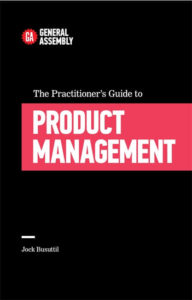
The Practitioner's Guide To Product Management
by Jock Busuttil
“I wish this book was published when I started out in product management. It gives a really wonderful overview of what product management is and involves on a day to day basis.”
— Keji Adedeji, product leader & coach

Jock Busuttil is a product management and leadership coach, product leader and author. He has spent over two decades working with technology companies to improve their product management practices, from startups to multinationals. In 2012 Jock founded Product People Limited, which provides product management consultancy, coaching and training. Its clients include BBC, University of Cambridge, Ometria, Prolific and the UK’s Ministry of Justice and Government Digital Service (GDS). Jock holds a master’s degree in Classics from the University of Cambridge. He is the author of the popular book The Practitioner’s Guide To Product Management, which was published in January 2015 by Grand Central Publishing in the US and Piatkus in the UK. He writes the blog I Manage Products and weekly product management newsletter PRODUCTHEAD. You can find him on Mastodon, X (formerly Twitter) and LinkedIn.

0 Comments on “What freelance product management is really like with Jock Busuttil”