
PRODUCTHEAD: Dealing with handwavy strategy
PRODUCTHEAD is a regular newsletter of product management goodness,
curated by Jock Busuttil.
subterranean homesick product #
every PRODUCTHEAD edition is online for you to refer back to
tl;dr
Product managers have to fill the gap when strategy is absent
When taking a decision, first consider how reversible it it is
Communities of practice evolve through different stages, which need different approaches
hello
Despite narrowly missing out on Radiohead’s first – and very likely last – tour for a long while, I remain philosophical. Given the inevitably ridiculous demand, I had at best a slim chance, not a stone-clad guarantee of securing a ticket. I shouldn’t feel a sense of loss for something I never had to begin with.
The last time I saw them play was in 1997 at Brixton Academy in London, not long after they’d released OK Computer. Compared to the massive arenas they will easy pack out these days, the venue was small and intimate. Their support band was a forgettable New Age percussion act that repelled everyone to the bar at the back of the venue, leaving me free to anchor myself in a prime position right up against the stage barriers before Radiohead came on.
Let’s face it, cool as it would have been to see my favourite band play live again this year at the O2, realistically I’d have been sat so far away from the stage that I’d probably have been watching them mostly on the big screens instead. Not quite the same experience :-)
For you this week #
As Martin Eriksson writes this week, at some point or other in our careers, we’ll find ourselves on the receiving end of a company strategy presentation that boils down to something like ‘grow 25%’, because shut-up-that’s-why.
Absent strategy – or a wishlist item masquerading as strategy – and what to do about it also formed part of an unserious talk I gave in lockdown for the lovely Product Anonymous mob in Melbourne, Australia. In a nutshell, if senior management have no clear product strategy, then it’s up to you as the product manager to craft one instead.
Martin provides direction on the questions you should be asking to figure out what financial levers are available to you, and how to identify the valuable opportunities your users and customers are hinting at. All of which is filtered through the principles that guide what things you value over others.
Emily Webber has been using James Clear’s neat little analogy for thinking about the reversibility of different types of decisions: hats, haircuts and tattoos.
And to wrap up this week, Scott Colfer writes from experience about how a community of practice grows and adapts over an extended period of time. He describes the challenges that necessitated the evolutionary changes during his time as head of product at Ministry of Justice Digital.
Speak to you soon,
Jock
what to think about this week
From “Grow 25%” to Real Strategy: How to Create Direction When None Exists
Stop waiting for strategy from above. Here’s how you can turn vague growth targets into strategic choices that actually help deliver results.
A goal masquerading as direction
[Martin Eriksson / The Decision Stack]
Decision making at the right level with Hats, Haircuts and Tattoos
I recently led a leadership training session for a client. During the planning, the evergreen question of “how do we make decisions” came up; this post talks about the framework I introduced to help answer that question.
[Emily Webber]
5-Year Blueprint for Community of Practice
Most blog posts about communities of practice cover the first couple of years. I had the unusual chance to lead one for six (the product management profession at the Ministry of Justice).
That gave me a front-row seat to how a community evolves: fragile beginnings, growing pains, and eventually becoming part of something bigger than itself. I’ve framed it using a leadership arc: Explorer → Builder → Architect.
Mental models, tools and lessons learned
[Scott Colfer]
recent posts
Are developers vibe coding themselves out of a job?
And is the increasing reliance by junior developers on AI coding assistants storing up a generational skills shortage for the future – ‘professional debt’, if you will?
So simple, anyone could do it. Wait – don’t fire me
[I Manage Products]
Cloud computing for non-technical product managers
To understand how cloud computing works, we’re going to start with the basic building blocks and work our way up.
And why is it a cloud anyway? (All is revealed)
[I Manage Products]
Navigating your product management career
Ross Webb and I have been chatting about product management career progression.
We cover topics including:
» Thinking of visibility as a strategic competency, not self-promotion
» Controlling your narrative through regular updates
» Building cross-organisational relationships deliberately
» Mapping your stakeholders’ preferred communication styles
A roundtable chat on moving into product leadership
[I Manage Products]
can we help you?
Product People is a product management services company. We can help you through consultancy, training and coaching. Just contact us if you need our help!

Helping people build better products, more successfully, since 2012.
PRODUCTHEAD is a newsletter for product people of all varieties, and is lovingly crafted from overzealous bot protection.
Read more from Jock
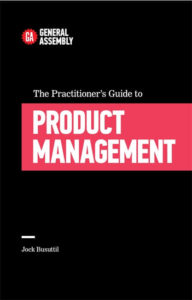
The Practitioner's Guide To Product Management
by Jock Busuttil
“I wish this book was published when I started out in product management. It gives a really wonderful overview of what product management is and involves on a day to day basis.”
— Keji Adedeji, product leader & coach

Jock Busuttil is a product management and leadership coach, product leader and author. He has spent over two decades working with technology companies to improve their product management practices, from startups to multinationals. In 2012 Jock founded Product People Limited, which provides product management consultancy, coaching and training. Its clients include BBC, University of Cambridge, Ometria, Prolific and the UK’s Ministry of Justice and Government Digital Service (GDS). Jock holds a master’s degree in Classics from the University of Cambridge. He is the author of the popular book The Practitioner’s Guide To Product Management, which was published in January 2015 by Grand Central Publishing in the US and Piatkus in the UK. He writes the blog I Manage Products and weekly product management newsletter PRODUCTHEAD. You can find him on Mastodon, X (formerly Twitter) and LinkedIn.