
PRODUCTHEAD: Yanking, coupling, bubbles and massive gaps
PRODUCTHEAD is a regular newsletter of product management goodness,
curated by Jock Busuttil.
product on the ladder #
every PRODUCTHEAD edition is online for you to refer back to
tl;dr
Rank stacking has fallen out of favour because it breeds internal sabotage and mediocrity
Orgs drift between varying degrees of horizontal and vertical ‘coupling’
We are arguably in 3 AI bubbles: speculative, infrastructure and hype
Better methods than roadmaps exist when there’s a broad gap between vision and execution
hello
As part of my product management coaching, I invite the people I coach to start with a self-assessment of their skills. I don’t expect everyone to be an expert at everything; that’s not how people get into product management from other disciplines. Rather, by exploring the skill areas where the individual feels they are capable or otherwise, it can be a useful conversation starter and a way to delve a little deeper.
The self-assessment system is not particularly complex. I wrote about it on the blog and made it available under a Creative Commons licence (CC-BY-NC 4.0) for others to use. I created it as a response to a request to ‘stack rank’ the product managers on my team, a practice I strongly objected to. My making the measurements multi-dimensional, I was still able to assess my team while making it nigh on impossible for senior management to stack rank them.
For you this week #
The first article from Margaret Heffernan (hat tip to Emily Webber) describes why rank stacking (or ‘rank and yank’) was a terrible idea. Forced ranking systems, once widespread and advocated by leaders like Jack Welch at GE, frequently caused internal competition, sabotage, and overall organisational dysfunction. Instead of fostering ambition, the system often encouraged employees to seek safety, conformity and mediocrity, and was ultimately dropped by GE.
John Cutler is musing on the right amount of ‘coupling’ for organisations. There’s vertical coupling (connection to the big picture/control) and horizontal coupling (cross-team dependencies). Leaders are often insulated from high horizontal coupling, while front-line teams swim (drown) in dependencies. However, the ‘right’ amount of coupling varies from organisation to organisation, and on context.
Faisal Hoque argues that we’re in three AI bubbles: speculative, infrastructure, and hype. Unless you’re trading on the value of AI companies, or in the business of building data centres, you probably don’t need to worry too much about the first two bubbles, Hoque writes. Just as with earlier tech bubbles, the companies that will survive are the ones that figure out how that over-hyped tech can meet actual user needs.
To finish up, Tom Kerwin and Ben Sauer are talking through what to do when a huge gap exists between current work and the long-term vision. Traditional product roadmaps fall short because of the ‘vision chasm’ that exists. Instead, they propose other methods such as visual modelling (‘multiverse mapping’) to prioritise the areas of greatest uncertainty first. The ultimate goal is to influence executive strategy by using these models to communicate risks, present multiple stories, and generate options for action.
Speak to you soon,
Jock
what to think about this week
Rank and Yank Always Stank
Ten years ago, when I was researching my book A Bigger Prize, about half of the Fortune 500 companies had adopted a process of showering the top 5% with rewards and professional development programmes while eagerly expelling the under-performing bottom 5 percent. But since then, the process seemed to go out of fashion. Why?
Perpetual fear for your job doesn’t exactly motivate
[Margaret Heffernan / On The Level]
Vertical vs. Horizontal Org Coupling
Perspectives differ! It can be tempting to fall into the trap of believing that everyone in the company sees the company in the same way. For example, leaders are often insulated from high horizontal coupling. They see their role primarily as finding the sweet spot between low and high vertical coupling (connected enough with the big picture, but able to move fast and innovate). Meanwhile, on the front lines, people are swimming in dependencies. When things get bad, they might even crave some top-down control (“at this point, some command and control would be welcome!”).
Finding the right amount of coupling for your organisation
[John Cutler / The Beautiful Mess]
There isn’t an AI bubble – there are three
When even Sam Altman thinks there is an AI bubble, then there most likely is an AI bubble. But it’s even worse than that. There isn’t just one AI bubble: there are three. First, AI is almost certainly in what economists call an asset bubble or a speculative bubble.
Focus on solving valuable problems for real people
[Faisal Hoque / Fast Company]
Why there’s no roadmap over a vision chasm (and what to use instead)
Strategic planning breaks down when you’re dealing with genuine uncertainty. In this deep-dive conversation, Tom and Ben explore 5 constraints that are relatively small and easy to apply but create big effects. These help leaders and their teams navigate unclear territory without falling into common planning traps.
[Tom Kerwin & Ben Sauer / Crown & Reach]
recent posts
Are developers vibe coding themselves out of a job?
And is the increasing reliance by junior developers on AI coding assistants storing up a generational skills shortage for the future – ‘professional debt’, if you will?
So simple, anyone could do it. Wait – don’t fire me
[I Manage Products]
Cloud computing for non-technical product managers
To understand how cloud computing works, we’re going to start with the basic building blocks and work our way up.
And why is it a cloud anyway? (All is revealed)
[I Manage Products]
Navigating your product management career
Ross Webb and I have been chatting about product management career progression.
We cover topics including:
» Thinking of visibility as a strategic competency, not self-promotion
» Controlling your narrative through regular updates
» Building cross-organisational relationships deliberately
» Mapping your stakeholders’ preferred communication styles
A roundtable chat on moving into product leadership
[I Manage Products]
can we help you?
Product People is a product management services company. We can help you through consultancy, training and coaching. Just contact us if you need our help!

Helping people build better products, more successfully, since 2012.
PRODUCTHEAD is a newsletter for product people of all varieties, and is lovingly crafted from an acute inability to count.
Read more from Jock
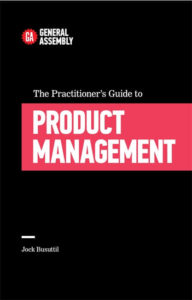
The Practitioner's Guide To Product Management
by Jock Busuttil
“I wish this book was published when I started out in product management. It gives a really wonderful overview of what product management is and involves on a day to day basis.”
— Keji Adedeji, product leader & coach

Jock Busuttil is a product management and leadership coach, product leader and author. He has spent over two decades working with technology companies to improve their product management practices, from startups to multinationals. In 2012 Jock founded Product People Limited, which provides product management consultancy, coaching and training. Its clients include BBC, University of Cambridge, Ometria, Prolific and the UK’s Ministry of Justice and Government Digital Service (GDS). Jock holds a master’s degree in Classics from the University of Cambridge. He is the author of the popular book The Practitioner’s Guide To Product Management, which was published in January 2015 by Grand Central Publishing in the US and Piatkus in the UK. He writes the blog I Manage Products and weekly product management newsletter PRODUCTHEAD. You can find him on Mastodon, X (formerly Twitter) and LinkedIn.