
PRODUCTHEAD: How work actually gets done
PRODUCTHEAD is a regular newsletter of product management goodness,
curated by Jock Busuttil.
product police #
every PRODUCTHEAD edition is online for you to refer back to
tl;dr
Visible and invisible process both contribute to how work actually gets done
Orgs should not rely on individual heroic efforts in place of designed-in capacity
Accelerating the build reintroduces a bottleneck and results in wasteful overproduction
Context comes from not just sharing information but engaging with it
hello
This week I’d like you to consider how work actually gets done in your organisation. There always seems to be a tipping point when a team has grown sufficiently large. This is when the informal, undocumented way things actually work emerges and lurks in the shadows alongside the formal process.
Sean Goedecke has noticed this – he calls them ‘illegible’ and ‘legible’ work – and argues why organisation typically need both to function, and why it can sometimes be desirable to trade the efficiency of illegible work for the less efficient but legible work.
Himal Mandalia has been writing a series of articles about the conditions needed for organisational and cultural change and I would recommend you read each of them. For this week’s edition of PRODUCTHEAD, I’ve picked one piece in particular that focuses on the difference between effort and capacity. They can look outwardly similar, however effort “is what happens when you keep going by drawing on yourself”, while capacity “is what exists when the system supports the work”.
He highlights how a lack of capacity in an over-stretched system can be masked by people putting in extra effort – the couple of hours each night after everyone else has gone home, the ‘informal heroics’ – and often willingly. Over time this extra effort becomes the norm, and is mistaken for the system having enough capacity. The system stretches further, becomes increasingly unsustainable, and people begin to burn out.
Switching tack slightly, Tom Peperkamp explains how generative AI has accelerated the ‘build’ part of the process, but that wasn’t the bottleneck. And by speeding up this non-bottleneck, although we feel like we’re being more productive (in a literal sense), we are in fact inadvertently reintroducing a new variant of an old bottleneck: the QA stage. He also suggests that this overproduction of code is the very definition of one of the lean wastes.
A concept that often underpins the theory of corporate strategy work is that alignment (of intent, of action) is achieved by people sharing enough context with each other. John Cutler challenges this idea by reminding us that context is not only the information individuals bring with them and share, but is also created by the act of those individuals interacting with each other while discussing those sets of information. Alignment is achieved not by broadcast, but by dialogue.
Speak to you soon,
Jock
what to think about this week
Seeing like a software company
The big idea of James C. Scott’s Seeing Like A State can be expressed in three points:
1. Modern organizations exert control by maximising “legibility”: by altering the system so that all parts of it can be measured, reported on, and so on.
2. However, these organizations are dependent on a huge amount of “illegible” work: work that cannot be tracked or planned for, but is nonetheless essential.
3. Increasing legibility thus often actually lowers efficiency – but the other benefits are high enough that organizations are typically willing to do so regardless.
Invisible backchannels emerge to overcome the friction of formal processes
[Sean Goedecke]
Effort Is Not Capacity
One of the most persistent confusions I see in organisations under pressure is this:
Effort quietly replaces capacity and then gets mistaken for it.
This shows up most clearly in organisations under pressure, where delivery continues but at increasing human cost.
Sustainable performance is a result of intentional system design not informal heroics
[Himal Mandalia / Conditions for Change]
Lean in the Age of AI: Optimizing the Stream, Not the Coder
In IT, we don’t talk much about lean anymore. And for a long time, that made perfect sense. We didn’t need to talk about it because we had successfully baked it into our systems. We adopted agile to tackle the waste of large batch sizes. We built DevOps pipelines to eliminate the waste of waiting and handoffs. We structured stream-aligned teams (team topologies) to minimize cognitive overload and dependencies.
Focus on flow efficiency rather than just raw coding speed
[Tom Peperkamp / Lean Enterprise Institute]
TBM 406: Seeing Everything, Understanding Nothing (The Context Trap)
AI is supercharging legacy leadership assumptions about context and control. In AI discourse, “context” is increasingly framed as the new source of truth. It’s a familiar and seductive idea that if only enough information can be assembled and surfaced, clarity and control will follow.
Context is not a data transfer problem but a dynamic state
[John Cutler / The Beautiful Mess]
recent posts
Canary in the mine: AAA game developers are unionising
Product management has had its own fair share of problems over the last few years. Nevertheless, there are early warning signs from AAA game studios that there may be another storm brewing in tech for us to weather.
Union-busting just isn’t a good look
[I Manage Products]
Are developers vibe coding themselves out of a job?
And is the increasing reliance by junior developers on AI coding assistants storing up a generational skills shortage for the future – ‘professional debt’, if you will?
So simple, anyone could do it. Wait – don’t fire me
[I Manage Products]
Navigating your product management career
Ross Webb and I have been chatting about product management career progression.
We cover topics including:
» Thinking of visibility as a strategic competency, not self-promotion
» Controlling your narrative through regular updates
» Building cross-organisational relationships deliberately
» Mapping your stakeholders’ preferred communication styles
A roundtable chat on moving into product leadership
[I Manage Products]
can we help you?
Product People is a product management services company. We can help you through consultancy, training and coaching. Just contact us if you need our help!

Helping people build better products, more successfully, since 2012.
PRODUCTHEAD is a newsletter for product people of all varieties, and is lovingly crafted from the incredible depleting phone battery.
Read more from Jock
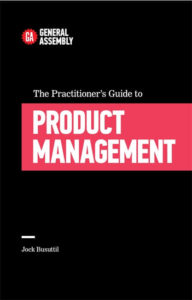
The Practitioner's Guide To Product Management
by Jock Busuttil
“I wish this book was published when I started out in product management. It gives a really wonderful overview of what product management is and involves on a day to day basis.”
— Keji Adedeji, product leader & coach

Jock Busuttil is a product management and leadership coach, product leader and author. He has spent over two decades working with technology companies to improve their product management practices, from startups to multinationals. In 2012 Jock founded Product People Limited, which provides product management consultancy, coaching and training. Its clients include BBC, University of Cambridge, Ometria, Prolific and the UK’s Ministry of Justice and Government Digital Service (GDS). Jock holds a master’s degree in Classics from the University of Cambridge. He is the author of the popular book The Practitioner’s Guide To Product Management, which was published in January 2015 by Grand Central Publishing in the US and Piatkus in the UK. He writes the blog I Manage Products and weekly product management newsletter PRODUCTHEAD. You can find him on Mastodon, X (formerly Twitter) and LinkedIn.