
PRODUCTHEAD: What AI really gives you is time back for the hard things
PRODUCTHEAD is a regular newsletter of product management goodness,
curated by Jock Busuttil.
fitter happier, more productive #
every PRODUCTHEAD edition is online for you to refer back to
tl;dr
AI frees you up for thinking, learning and judgement
IKEA found €1.3B using AI as a growth lever, not a cost lever
AI should not be a further excuse to avoid human collaboration
hello
We’re beginning to reach that tipping point when we realise that neither a new technology, nor even its direct output, are as important as what they free you up to do instead.
Take the dishwasher as a daft example. Although we do need clean dishes at some point (unless you’re happy eating cereal out of a saucepan), washing dishes was always a chore. A necessary but undesirable extra task we have to do after a meal because the dishes won’t wash themselves. A dishwasher accelerates that process to a large extent, but replaces the original chore with smaller, new ones (loading and unloading etc.). What we actually want is for fresh, clean dishes to be in the cupboard whenever we need them, but that’s not going to be happening anytime soon.
However, what the dishwasher gives us is a bit of time back to do something more meaningful than playing ‘OMG what’s the squishy thing in the dirty dishwater?’
For you this week #
Barry O’Reilly, Martin Eriksson and John Cutler are all making similar points this week, albeit in marginally more profound ways.
Barry appears on The Product Experience with Randy Silver to talk about the main themes from his new book, Artificial Organizations. Using AI effectively is not about the tools, providing they do the intended task competently – just as we’re not really bother about the make and model of dishwasher we use as long as it reliably cleans the dishes.
Instead, Barry found that the more effective people using AI were using it to reduce time spent on chores that shouldn’t need a human being involved in the first place. They then used the time they got back to spend more time thinking, listening, learning and ultimately deciding more effectively. In other words, they didn’t care so much about the tools themselves, or the output (providing it was competent), but what they could do more usefully with the time they got back.
Martin illustrates this same point with a case study from IKEA. Just under half of customer queries to their tier one customer service channel were straightforward to resolve: routine order tracking, returns, product questions and so on. The kinds of question that were using the customer support person more as human search engine or API to the order system. So they automated these types of interactions with a chatbot called Billie.
But rather than cutting their customer support team in half to save costs, they looked at the other half of queries that couldn’t be handled by Billie. Most of them were asking for home design advice, something that requires human creativity and judgement. So they retrained the customer service agents as interior designers and unlocked a €1.3 billion annual revenue stream. Which was nice.
John’s article explores how compartmentalisation in business (or ‘fiefdoms’ as he calls them) was meant to create self-contained and independent areas of focus for the general manager to exert greater autonomous control over. However, this inadvertently created silos, discouraging collaboration between the fiefdoms. AI, he argues, potentially provides a further excuse not to actually collaborate. ‘Just get our AI agents to talk to yours – that’s collaboration right?’
The hard and more important part was always the human collaboration and the coordination between increasingly large parts of the organisation. To turn a disjointed collection of things into a cohesive, functional unit, rather than to avoid doing so by using AI in place of actual coordination.
Speak to you soon,
Jock
what to think about this week
Why your AI strategy is failing
Barry O’Reilly is an entrepreneur, author, and founder of Nobody Studios, an early-stage venture studio focused on building AI companies. In this episode, Barry explains why AI adoption fails when companies focus on tools instead of behaviour change, why judgement is becoming the most important human skill, and how teams can use AI to improve collaboration rather than replace people.
[VIDEO] Judgement is the human skill we need to hold on to
[Barry O’Reilly & Randy Silver / The Product Experience]
AI is a Growth Lever. Most Companies Are Using It as a Cost Lever.
Most companies use AI to cut costs. IKEA used it to launch a billion-euro business line. Here’s what that says about your AI strategy.
What can we now do that we couldn’t do before?
[Martin Eriksson / The Decision Stack]
AI Won’t Save the Kingdoms We Built
This post is about the people who built the fiefdoms now looking to AI to save them from the fiefdoms, and why that will only work if we are honest about what those fiefdoms were built to avoid in the first place.
Unfiltered Saturday morning coffee writing engaged.
Context transfer is not the same thing as shared understanding
[John Cutler / The Beautiful Mess]
recent posts
We’re all addicted to AI, but it’s going to be okay
We seem to stuck in a contradiction in which we worry about AI’s effect on our critical thinking, while finding it equally hard to resist using. Why is that?
[I Manage Products]
Canary in the mine: AAA game developers are unionising
Product management has had its own fair share of problems over the last few years. Nevertheless, there are early warning signs from AAA game studios that there may be another storm brewing in tech for us to weather.
Union-busting just isn’t a good look
[I Manage Products]
Are developers vibe coding themselves out of a job?
And is the increasing reliance by junior developers on AI coding assistants storing up a generational skills shortage for the future – ‘professional debt’, if you will?
So simple, anyone could do it. Wait – don’t fire me
[I Manage Products]
can we help you?
Product People is a product management services company. We can help you through consultancy, training and coaching. Just contact us if you need our help!

Helping people build better products, more successfully, since 2012.
PRODUCTHEAD is a newsletter for product people of all varieties, and is lovingly crafted from stinking headaches.
Read more from Jock
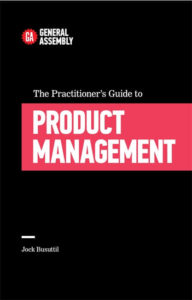
The Practitioner's Guide To Product Management
by Jock Busuttil
“I wish this book was published when I started out in product management. It gives a really wonderful overview of what product management is and involves on a day to day basis.”
— Keji Adedeji, product leader & coach

Jock Busuttil is a product management and leadership coach, product leader and author. He has spent over two decades working with technology companies to improve their product management practices, from startups to multinationals. In 2012 Jock founded Product People Limited, which provides product management consultancy, coaching and training. Its clients include BBC, University of Cambridge, Ometria, Prolific and the UK’s Ministry of Justice and Government Digital Service (GDS). Jock holds a master’s degree in Classics from the University of Cambridge. He is the author of the popular book The Practitioner’s Guide To Product Management, which was published in January 2015 by Grand Central Publishing in the US and Piatkus in the UK. He writes the blog I Manage Products and weekly product management newsletter PRODUCTHEAD. You can find him on Mastodon, X (formerly Twitter) and LinkedIn.