
PRODUCTHEAD: Is your subscription really a rental?
PRODUCTHEAD is a regular newsletter of product management goodness,
curated by Jock Busuttil.
motion product soundtrack #
every PRODUCTHEAD edition is online for you to refer back to
tl;dr
10 tactics for subscription value creation
10 tactics for reducing subscription churn
When switching to a subscription model, initially costs will go up and revenue will decrease
hello
If there’s a trend for technology companies that doesn’t explicitly mention AI in some way, it’s the shift to a subscription model. Ownership is deader than dungarees. Subscriptions are the new hotness.
Renting an antique television #
Many years ago, my parents’ ancient Rediffusion television finally packed in. It had a faux-wood case and was one of the first CRT models with an actual infrared remote. It was so old, the ‘off’ button on the remote actuated a motor that physically released the spring-loaded power button on the TV itself. By the end of its life, crucial parts had worn away to the point that turning the telly off in this manner would fire the little plastic button across the room in dramatic fashion. One had to find and re-fit the button before the TV could be turned on again. Happy days.
After the TV had shown its final picture, I was aghast to learn that my parents had been renting it the whole time. Aside from the fact that they could have upgraded to a far superior model several years earlier for exactly the same monthly fee, the amount they’d spent in total renting meant that they could easily have bought a new TV outright many times over.
I get that renting lowers the bar to purchase for people without vast piles of cash to hand and may be the only option available, but long-term there quickly comes a point when you’ve paid way more than the actual value of the thing and yet you end up with nothing to show for your financial bondage.
Jobs To Be Done to the max
Tech companies have clearly been drinking a little too heavily from the Jobs To Be Done wellspring. They’re not creating products any more, they’re hiring out services. It’s as if somebody has decided that we’re simply not allowed to own nice things any more. Even car manufacturer BMW tried to convince everyone that using the heated seats already fitted in the car they’d paid for was somehow a service worthy of a subscription. It didn’t end well. As Brandon Vigliarolo memorably wrote at the time, it feels like “buying a mug and having to rent the handle.”
Where my parents’ TV rental went wrong was that they rented the same, static model for too long. The value of the thing they were renting essentially depreciated to nothing. They could have switched to renting an newer, improved model earlier on for the same fee, or could have simply bought a new TV outright as affordability had improved dramatically over time.
With BMW, their misstep was two-fold: it was asking its customers to rent a feature either that they felt they already owned as the hardware was present in the car, or that was already affordable for a negligible one-off fee relative to the price of the car. The price bar to ownership was insufficiently high to justify a rental model.
Subscriptions and rentals are different beasts #
Subscriptions have a nuance that sets them apart from plain old renting. With renting, you’re paying to make use of a thing — a car or an apartment — for a fixed period of time. Renting makes sense because it gives you immediate access to something that you otherwise couldn’t afford to buy outright; or it may be that you only need to use it for that relatively short period of time so buying and selling it a short time later is costly and impractical. Over time that thing remains static — it doesn’t really change or improve over time. Arguably it loses value as it ages (unless it’s in short supply and demand keeps pushing the value up, as with an apartment).
In contrast, a subscription implies that the subscriber will receive new value over the course of the subscription, creating an incentive to continue paying the regular fee in perpetuity. The thing you’re subscribing to needs to become incrementally better over time to more than offset the natural depreciation in value, otherwise customers will inevitably churn to a competing solution. Or to put it another way, subscriptions force you to constantly re-evaluate and nail product-market fit.
The challenge of creating novel value #
Lenny Rachitsky creates novel value in addition to his newsletter and podcast by bundling in adjacent products and services such as access to a community of peers and extended free trials of products from other vendors with high relevance to his audience.
And there’s a reason why many traditional newspapers have successfully transitioned to digital subscriptions — people remain willing to pay a small regular fee to read exclusive articles and features written by their favourite columnists. Each new edition creates novel value for the subscriber.
The same goes for streaming services. You’re paying mainly for exclusive access to new content (‘new to you’ at least, even if not ‘newly released’) that you’d actually consume. Offering new content frequently enough is relatively easy for Netflix, Spotify, Apple TV+ and Amazon Prime, which each draw on different proportions of first-party originals and licensed third-party content. It’s harder for first-party-only streamers such as Disney+ and Paramount+ to keep up the pace and quality of new content.
When translated to software subscriptions, the creation of new value is incredibly hard to sustain in the long term. Unlike newspapers and newsletters, whose archive of old articles costs effectively zero to keep around, existing software and features have to be maintained — the more you add, the greater your maintenance costs. Streaming services that rely heavily on licensing third-party content have a similar problem. It’s no surprise that Netflix pushed early into original, exclusive content, with Amazon and Apple following suit. Failing to keep on top of escalating licensing (or software maintenance) costs would be ruinous.
Software subscriptions are not like content subscriptions #
Many companies also fall into the ‘featuritis’ trap popularised by Kathy Sierra, where ‘more features’ is mistakenly equated with ‘more value’. This in turn means you have to be really effective at identifying and killing off minimal value features or services, so as to reduce your maintenance footprint and keep costs under control. But on the flipside, if you stop adding to your product, you’re effectively shifting from a subscription (= frequent new value) to a rental model (= static value depreciating over time).
Assuming you keep adding features to your core product your fee must inevitably rise over time to maintain profit margin. This then opens you up to attack by cheaper, equivalent competitors without the cost burden of a legacy feature set to maintain.
Artificial lock-in = hostage-taking #
Many companies attempt to combat customer churn by engineering subscriber lock-in. Some do this artificially through punitive termination fees, deliberately complicated cancellation processes, or by making it difficult for customers to take their data with them. At best, this amounts to taking your customers hostage. They’ll resent you for it — often vocally — and it will only be a matter of time before they find a way to unshackle themselves.
Final thoughts #
Subscriptions necessitate regular generation of new value for subscribers, but in software land this becomes increasingly difficult and costly to achieve. Adding new features yields diminishing returns in user value and increases your operating costs. Cheaper, more focused or capable competing offerings will entice away the customer segments which were only using your product for one or two key tasks.
Software subscriptions are here to stay, however they’re not a perpetual money-making machine — they have a finite lifespan for any given product.
For you this week #
Phil Carter expands on his earlier work on the Subscription Value Loop for Lenny’s Newsletter. I mentioned earlier that constantly creating novel value for subscribers is effectively a continual re-evaluation of product-market fit. Phil describes how Superhuman turns Sean Ellis’s 40% test into a rolling metric to help it track and improve product-market fit. His deep dive also looks at other examples and suggests other measurable tactics to drive greater value for subscribers.
On the other side of things, Elena Verna provides industry and personal churn benchmarks to see how your own business is doing in comparison. She also dives into different types of customer churn and when they crop up, then closes out the article with her ten recommended tactics for tackling churn.
And lastly, Jenny Luna interviews author Tien Tzuo in 2018 for Stanford Graduate School of Business. He sets out his views that ownership is dead and that a business school education is worthless.
Speak to you soon,
Jock
what to think about this week
The Subscription Value Loop: A framework for growing consumer subscription businesses
Over the past year, Phil Carter has been developing a framework for growing consumer subscription businesses, called the Subscription Value Loop. In this post, Phil pulls it all together to give you a comprehensive blueprint for growing your consumer subscription business. The post includes a plug-and-play benchmarking tool to identify your biggest growth opportunities, 10 of the most powerful levers for scaling your app, and case studies from the world’s top consumer subscription companies.
Everything you wanted to know about subscription value but were afraid to ask
[Phil Carter / Lenny’s Newsletter]
Subscription churn metrics and benchmarks for operators
SEO – dead. Paid Marketing – dead. Engineering – dead too. (kidding!)
But you know what’s never dead? Churn.
Once you find product-market fit and start scaling, churn becomes the invisible ceiling on your business. No matter how strong your acquisition game is, if you don’t address churn, it will hold you back.
In this post, I’ll break down both published and personal churn benchmarks to help you understand how your retention efforts really stack up.
When different kinds of churn happen, why, and what to do about them
[Elena Verna / Elena’s Growth Scoop]
Why every business will soon be a subscription business
After scrolling headlines in the New York Times, you head into the kitchen and open today’s Blue Apron box to prepare a shrimp risotto before turning on Netflix for an episode of Comedians in Cars Getting Coffee. You may not have noticed, but you’re now fully enmeshed in the subscription model.
How flooring can be a subscription service
[Jenny Luma / Insights by Stanford Business]
recent posts
Navigating your product management career
Ross Webb and I have been chatting about product management career progression.
We cover topics including:
» Thinking of visibility as a strategic competency, not self-promotion
» Controlling your narrative through regular updates
» Building cross-organisational relationships deliberately
» Mapping your stakeholders’ preferred communication styles
A roundtable chat on moving into product leadership
[I Manage Products]
New technology alone is not the answer
New technology is not going to suddenly make all the challenges facing an organisation disappear overnight. Why? Because more often than not, those challenges are social not technological. Technology alone rarely solves ‘people problems’.
AI is neither a panacea nor a magic bullet just as digital wasn’t for UK gov
[I Manage Products]
What freelance product management is really like with Jock Busuttil
Off the back of his recent article for Mind The Product, Liam Smith interviewed me about my experiences in freelance product management.
We cover topics including:
» Should you hire freelancers in your product team?
» How to be successful as an external hire
+ more :-)
can we help you?
Product People is a product management services company. We can help you through consultancy, training and coaching. Just contact us if you need our help!
Helping people build better products, more successfully, since 2012.
PRODUCTHEAD is a newsletter for product people of all varieties, and is lovingly crafted from a premature end to Spring sunshine.
Read more from Jock
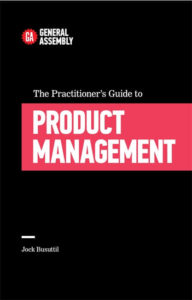
The Practitioner's Guide To Product Management
by Jock Busuttil
“I wish this book was published when I started out in product management. It gives a really wonderful overview of what product management is and involves on a day to day basis.”
— Keji Adedeji, product leader & coach

Jock Busuttil is a product management and leadership coach, product leader and author. He has spent over two decades working with technology companies to improve their product management practices, from startups to multinationals. In 2012 Jock founded Product People Limited, which provides product management consultancy, coaching and training. Its clients include BBC, University of Cambridge, Ometria, Prolific and the UK’s Ministry of Justice and Government Digital Service (GDS). Jock holds a master’s degree in Classics from the University of Cambridge. He is the author of the popular book The Practitioner’s Guide To Product Management, which was published in January 2015 by Grand Central Publishing in the US and Piatkus in the UK. He writes the blog I Manage Products and weekly product management newsletter PRODUCTHEAD. You can find him on Mastodon, X (formerly Twitter) and LinkedIn.